
Join our mobile Rapid Response Network!
You can be the first to hear about how we’re going to hold this administration accountable and how you can fight back for wildlife!
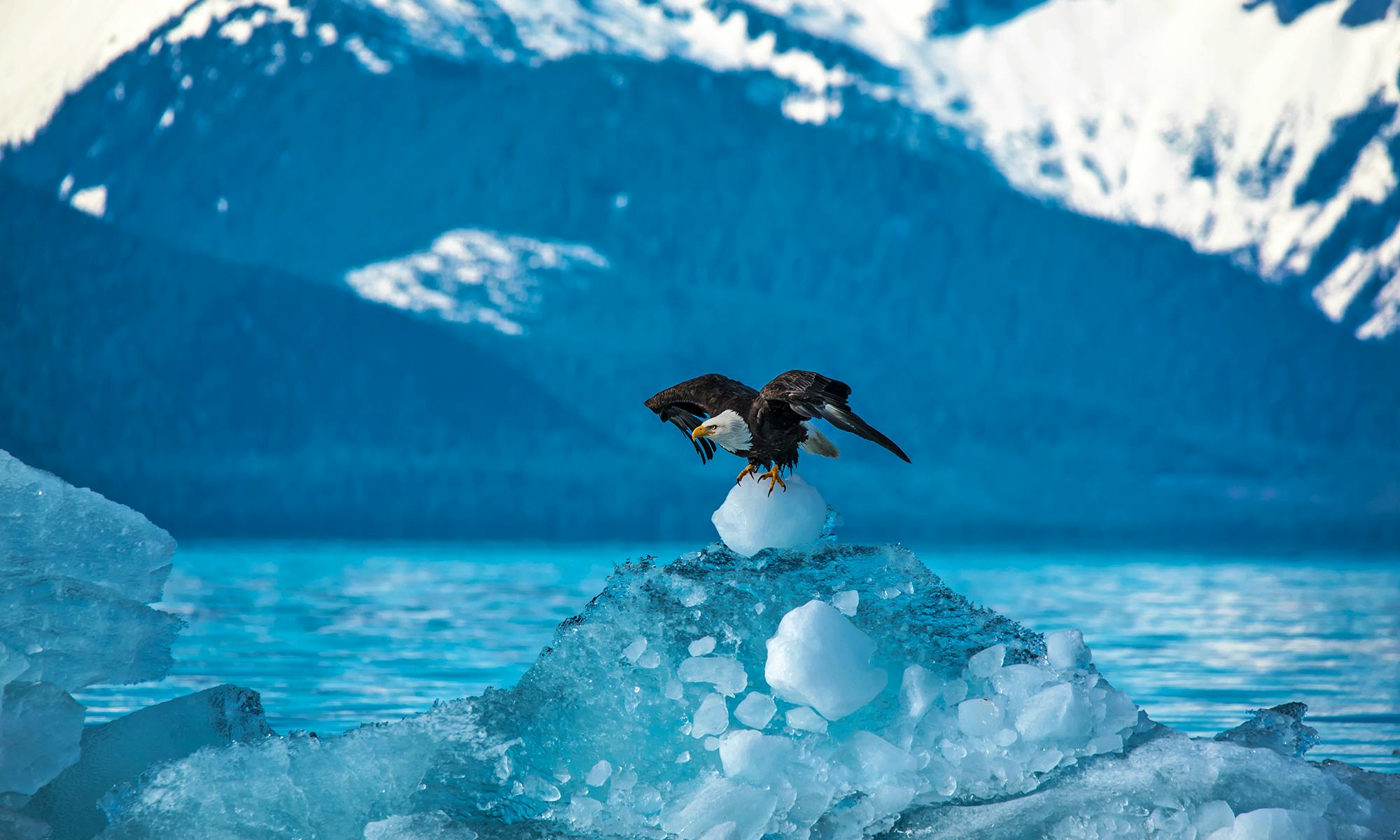
The bald eagle is the only eagle unique to North America.
Its distinctive brown body and white head and tail make it easy to identify as our national symbol, even from a distance. Under the Endangered Species Act, the bald eagle’s recovery was made possible through captive-breeding programs, reintroduction efforts, vigorous law enforcement and habitat protection—including the designation of national wildlife refuges and the protection of nest sites during the breeding season.
Are bald eagles endangered?
As of June 2007, bald eagles are no longer listed as endangered and are considered a recovered species.
The alarming decline of bald eagle populations in the 1940s through 1960s, due to pesticides and habitat loss, spurred efforts that led to a remarkable recovery. Under the Endangered Species Act, efforts included captive-breeding programs, reintroduction efforts, vigorous law enforcement and habitat protection, including the designation of national wildlife refuges and the protection of nest sites during the breeding season. Today, residents of every state but Hawaii have a chance to glimpse bald eagles in the wild.
The recovery of the bald eagle shows that when we work together, we can make conservation miracles happen. To ensure that our national icon never ends up back on the endangered species list, the Fish and Wildlife Service is required to continue to monitor the eagle’s status and to use its authority under the ESA to prevent significant threats from driving the species back toward extinction. Moreover, eagles remain protected by the Bald and Golden Eagle Protection Act and the Migratory Bird Treaty Act.
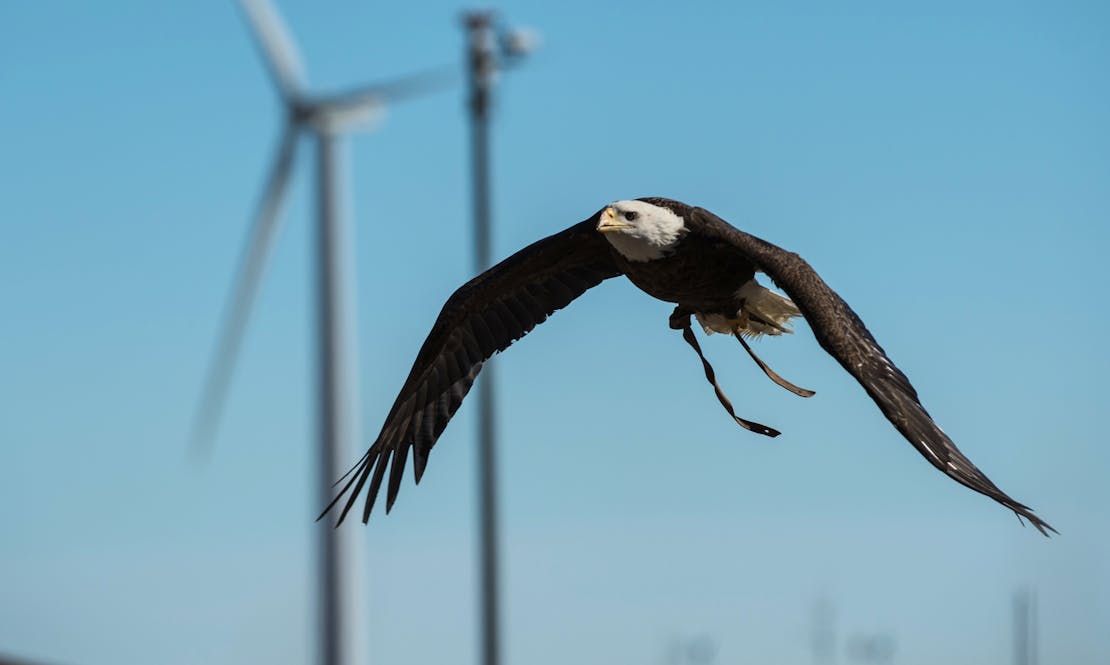
Illegal shooting and lead poisoning are among the primary threats to bald eagles. Habitat loss, power line electrocution and collisions with vehicles and structures also play a role in eagle deaths.

Defenders' Impact
Now that the bald eagle is no longer on the Endangered Species list, we must ensure it is adequately protected against reckless development and other threats that can disturb eagles and affect their survival.
Defenders is currently involved in protecting the Migratory Bird Treaty Act from those in power who want to weaken it. In 2025, the Interior Department resurrected a legal opinion from the first Trump administration, changing enforcement under the MBTA. Under these changes, the government will no longer hold most industries responsible for the accidental, or “incidental,” deaths of eagle and other birds, due to causes like oil spills, pollution and collisions. Notably, however, the administration has signaled they still intend to hold the wind industry accountable for incidental deaths, even though turbine deaths are a relatively small cause of deaths of bald eagles and most other birds.
Defenders is fighting this administration’s efforts to preference dirty fossil fuel energy. We also promote “Smart from the Start” renewable energy siting, to keep wind farms out of migratory pathways, and we promote innovative technology that deters eagles and other birds from turbines.
What You Can Do
Encourage hunters to seek out lead-free, non-toxic ammunition. Adopt “No Trace” ethics and organize clean-up activities in eagle habitat. Do not disturb nesting eagles. Support “Smart from the Start” renewable energy siting. "Smart from the Start" planning ensures that renewable energy facilities are built in the right places that minimize the impact on wildlife and habitat. Support Defenders work to save endangered and imperiled species and the habitat they need to survive!
About
Bald eagles live near bodies of water in Canada and Alaska, and in scattered locations all throughout the lower 48 states and Mexico.
As a result of conservation efforts, the bald eagle population has risen from a mere 417 nesting pairs in 1963 to more than 71,400 nesting pairs and an estimated 316,700 individual birds in the Lower 48 today.
The haunting cry you may hear in a move or on TV associated with bald eagles is actually the call of a red-tailed hawk. Bald eagles actually make a high-pitched squeaking sound.
Other interesting behaviors include “talon clasping” or “cartwheel display,” where two eagles clasp each other’s talons in midair and spin down, letting go only when they’ve almost reached the ground. This may be a courtship ritual as well as a territorial battle.
During breeding season, the male and female work together to build a nest of sticks, usually located at the top of a tree. The nests can weigh up to a ton and measure up to 8 feet across. Once paired, bald eagles remain with each other until one mate dies, then the surviving bird will find another mate.
Mating season: Anywhere from late September to early April, depending on the region.
Gestation: The female lays her first egg 5-10 days after mating. The eggs are incubated for about 35 days.
Clutch size: 1-3 eggs.
The bald eagle is not picky about how it gets its food. It will eat carrion, steal fish from other birds or hunt for its own. Their most important non-carrion food is fish, which they catch by swooping down and grabbing fish that are near the surface of the lake or stream.
Featured

Coexisting with Birds
As wind energy replaces carbon-emitting fossil fuels, careful turbine siting and innovative technology promise to protect eagles and other birds and the ecosystems on which they depend.
Publications
News


