
Content
A Quarter-Century of Forest Conservation on the Chopping Block
What is the Roadless Rule?
The Roadless Area Conservation Rule, or Roadless Rule, is one of our country’s most important conservation policies. Established a quarter of a century ago, its primary goal is to protect some of the nation’s last remaining intact forests. These areas are referred to as roadless areas because they are natural forests, without roads or industrial logging, where wildlife can thrive undisturbed by clearcuts and bulldozers.
The Roadless Rule benefits nearly one-third of our national forest lands from Alaska to Florida. Now, the Trump Administration is proposing to repeal the Roadless Rule, opening 45 million acres of national forests to road construction, destructive timber harvest and energy development. This is an area approximately the size of the state of Washington.
Roadless areas are vital for elk, salmon, grizzly bears and many other animals.
The Ecological Importance of Roadless Areas
Roadless areas are natural forests free from roads and clearcuts, making them quality habitat for wildlife. In fact, even though roadless areas only make up 2% of land in the lower 48 states, they contain habitat for 57% of vulnerable terrestrial wildlife. As many as 414 plants and animals listed as endangered, threatened or proposed for listing under the Endangered Species Act have ranges that overlap with roadless areas.
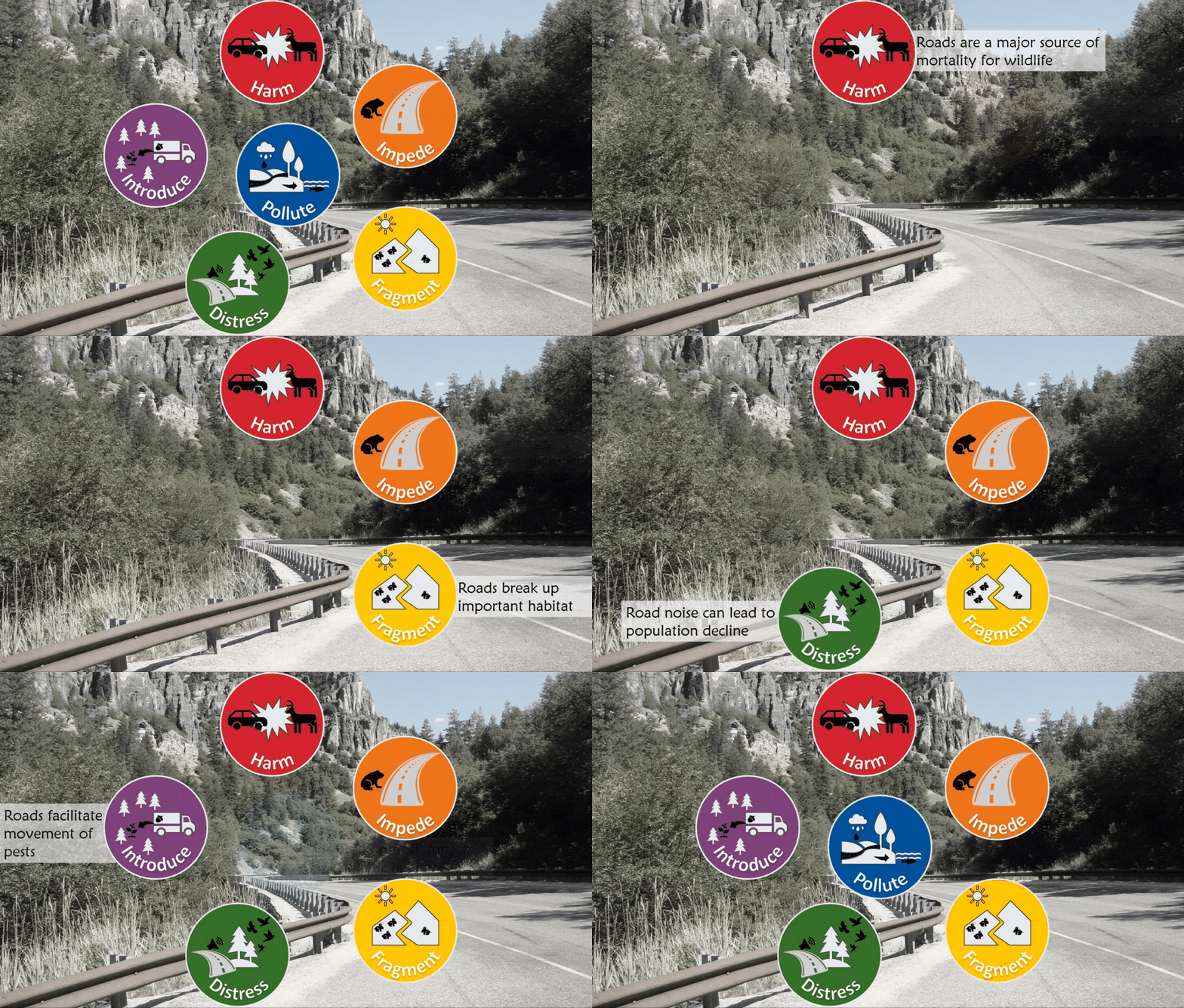
Roads and clearcut logging disrupt the important processes that provide for healthy wildlife populations and ecosystems. Roadless areas keep wildlife safe from destructive human activities. The help provide connectivity between existing protected lands, such as national parks and wilderness areas, and serve as large, relatively undisturbed blocks of secure habitat. This habitat is essential for wide-ranging animals like the grizzly bear, which require large tracts of land away from human disturbance and roads to safely roam across their range.
Roadless areas also keep water clean and plentiful by protecting our nation’s headwaters. National Forests are the headwaters of our great rivers and roadless areas contain all or portions of 354 municipal watersheds that provide clean drinking water to millions of people. Dirt roads bleed sediment into rivers, impairing water quality and harming fish, including the threatened bull trout, and other aquatic animals.
As expanding human development continues to impact natural landscapes, roadless areas are of increasing ecological importance. Learn more about the wildlife that benefits from Roadless Rule protections with our interactive map and storymap.

The Roadless Rule is not, however, a complete ban on forest management. The U.S. Forest Service retains the management flexibility to conduct work to reduce fire risk and restore ecological health. Since the Rule’s adoption in 2001, nearly 2 million acres of roadless areas have been treated to reduce fire risk.
The Cost of Losing the Roadless Rule
The U.S. Forest Service not only manages our national forests but also a vast road system, over 370,000 miles of road (enough to encircle the earth nearly fifteen times), that costs billions and that is not all properly maintained. Unmaintained roads can wreak costly ecological and infrastructure damage. The Roadless Rule helps prioritize limited funds toward necessary transportation infrastructure.
The Enduring Popularity of the Roadless Rule

Passage of the Roadless Rule represented the most extensive public involvement process in the history of federal rulemaking and demonstrated overwhelming public support for a national policy protecting our remaining roadless forests.
In August 2025, the Trump administration announced its intent to rescind the Roadless Rule, initiating a short public comment period. In just three weeks, 625,737 comments were submitted, with 95% or more supporting roadless protections. The public clearly supports keeping portions of our national forests unroaded. In the words of Aldo Leopold, “Our remaining unroaded wildlands are a national treasure, a ‘wealth to the human spirit.’”
Despite overwhelming public opposition, the administration is continuing toward repealing the Rule. Join Defenders of Wildlife in urging the U.S. Department of Agriculture to protect roadless areas in our national forests as essential, connected habitat for wildlife.
Help Defend the Roadless Rule
The Roadless Rule is integral to protecting undisturbed forest habitats from industrial logging, oil and gas drilling, and other development. You can help us defend the Roadless Rule and conserve wildlife by:

Reach out to...
your Representative and Senators. Ask them to support the Roadless Area Conservation Act (H.R.3930 and S.2042), which would make the Roadless Rule permanent.
Share...
this site and why roadless areas are important to you on social media.


