
“No man ever steps in the same river twice, for it is not the same river and he is not the same man.” - Greek Philosopher Heraclitus
In the beautiful state of Oregon, rivers are abundant. They carve through the cascade mountain range, spread like veins along the floor of the old-growth forests and eventually reach the Pacific Ocean.

Rivers were not just a backdrop for me growing up, but a constant presence. They shaped after school activities, weekends, hobbies and memories. Most of all, they taught me the natural world is always leaving us gifts while carrying the unnecessary away downstream.
I spent much of my youth wading in Oregon’s rivers with a fly rod in my hand. Sometimes I was focused on the catch of the day. Other times I would wander the river’s edge, flip over rocks for bugs, watch salmon swim upstream or gaze up high at the birds calling to one another.

Fly fishing taught me that success on the river depends on far more than the fish themselves. Standing waist deep in moving water, I began to understand rivers as living systems rather than scenery. Every fish caught and released felt connected to something larger, something that I, too, played a part in. The river was the underlying beat to the rhythm of the natural world.
Rivers are Teachers of Change
Every river felt different, even when returning to the same bank.
In the winter, the riverbanks would be lined with icicles, and the tree branches would shake in the wind. In the spring and summer, the river water would run high and fast, carrying leaves downstream.

The change was something I would embrace. You never really knew what the river would look like and every season brought something new. This shaped how I viewed my life. Change was exciting and constant. Change was the bringer of something new.
The river always brought me experiences. New fish returning from their journey to the ocean, like the beautiful hues of blue, red and silver flash under the water during the Chinook Salmon spawning runs, or the shock of seeing a pacific lamprey cling to rocks against the brutal current, a species who has existed in these rivers for millions of years.

There were new flowers after heavy rain. Animals, like river otters, deer and osprey, dotted the river’s edge, relying on the terrain for shelter and food.
Seasons ended. Time moved on. The river evolved.
A Foundation for Understanding Conservation
The mountains are tied to the rivers; the rivers are tied to the forests; the forests are tied to the insects and fish; and all of them are connected in ways that are easy to overlook until something is lost.

Ecosystems are interconnected. Each species depends on one another. Steelhead trout depend on access to cold water and connected migration routes so they can travel from the Pacific Ocean into inland rivers. Bald eagles flying overhead depend on these intact river systems, too! Canopies of old growth forests along Oregon’s river corridors provide nest habitats and healthy rivers provide food.
Several rivers in the state, like the Metolius River and the Deschutes River, are fed by underground aquifers.

Because the system is connected, it makes both the rivers and the wildlife calling it home extremely sensitive to changes. Groundwater pumping for homes and irrigation, as well as changes in the snowpack throughout the Cascade Mountain Range, eventually reduces water flowing into rivers. This is then a depleted habitat for all wildlife.
As we humans continue to grow as a species, development, city lights, mechanical sounds and roads are inevitably going to follow us. But it’s our responsibility to understand how each impacts our world and to protect the delicate ecosystems to ensure both wildlife and people continue to thrive.
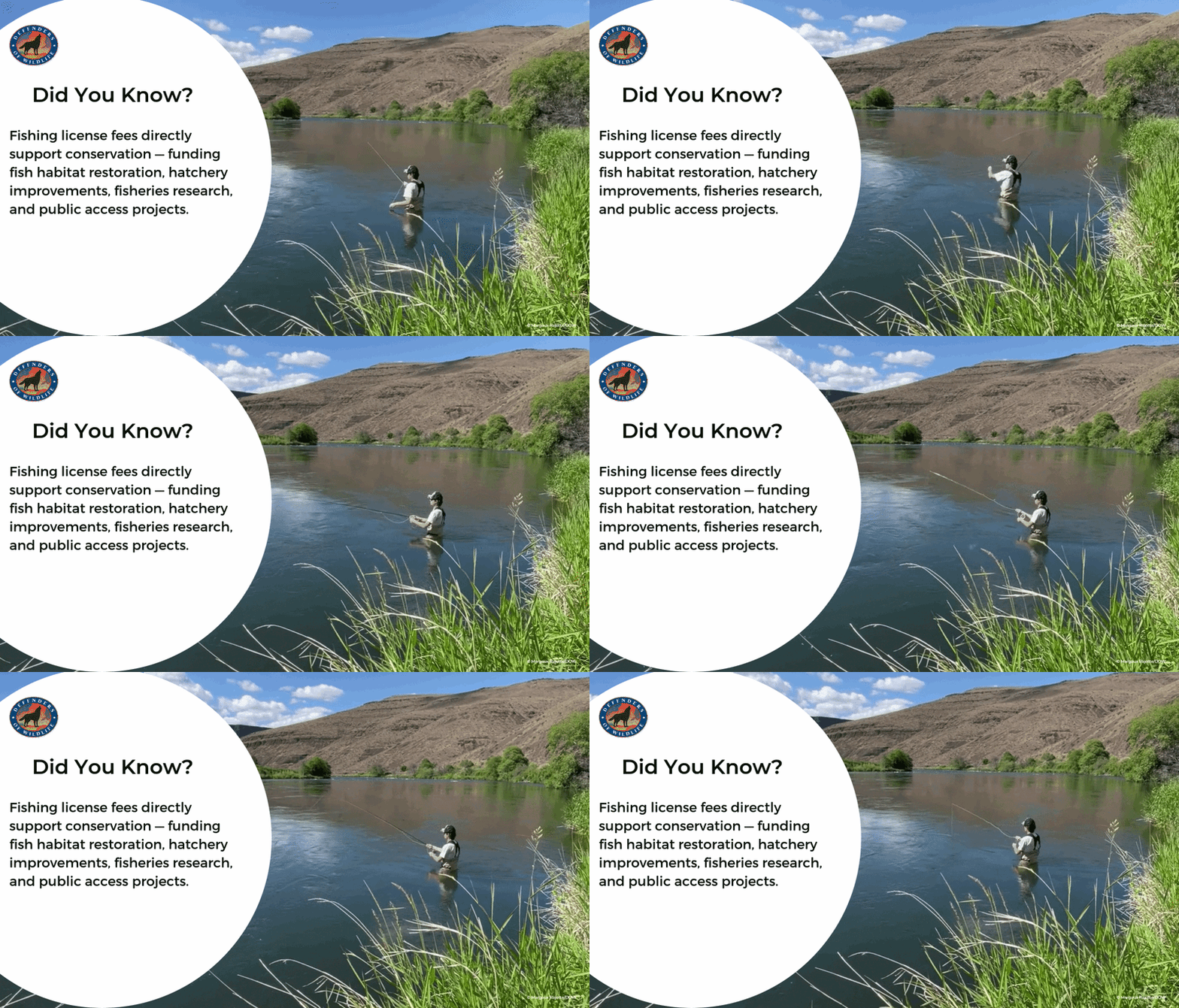
Fishing and conservation are often seen as opposites, but conservation is woven into the sport. Through license fees, and catch and release practices, anglers can actually help protect the fish and the rivers' balance.
When I return to Oregon’s rivers, I notice something different every time. Water levels shift, rivers reshape themselves and wildlife appears when I least expect it. This is the beauty of rivers: they are never truly still. Always moving, always adapting and always carrying life forward. Just like conservation.
And just as it is never the same river, we are never the same person. Oregon’s rivers shaped the way I see the natural world. Not as separate pieces, but as one living connected ecosystem that we must protect. As I step back into the moving water, I am reminded that what we choose to protect today will shape what flows tomorrow.
Author


