Throughout the country, massive data centers are rapidly being built to fuel the growth of artificial intelligence and our ever-increasing digital lives. But this spike in data center development does not come without costs. In fact, the costs to our natural resources are steep as they require land to develop, as well as energy and water to sustain their operation. As a result, data centers are increasingly encroaching on land that may overlap sensitive landscapes. What does this mean for wildlife and their homes?

Though data centers are gaining more attention in the media, they are not a new phenomenon. Technology has relied on data centers since the dawn of the computer age in the 1940s, when they were referred to as “mainframe computers.” The expansion of internet access in the 1990s and cloud computing in the 2000s brought an additional proliferation of data centers.
The country is now seeing a surge of “hyperscale” data centers, which are the backbone of cloud computing and AI systems; both of which require huge amounts of energy to operate. This presents new challenges — including how to curb their impact on local wildlife.
More Data Centers, Less Habitat?
Data centers built without careful consideration for wildlife could contribute to habitat loss and fragmentation.
The physical footprint occupied by data center facilities ranges from a few hundred to millions of square feet. One data center complex planned in Utah could stretch over thousands of acres, and companies are increasingly eyeing public lands in the arid western U.S. as new development sites. One study found that two-thirds of data centers built since 2022 are in arid or drought-stressed areas that offer plenty of vacant land. As a result, there is the potential for tremendous stress on water systems and freshwater ecosystems. That’s a huge red flag as many imperiled animals are fish, mussels and other aquatic animals.
Defenders of Wildlife mapped current data centers and projections for future expansion, revealing “hot spots” where development could push species into extinction:

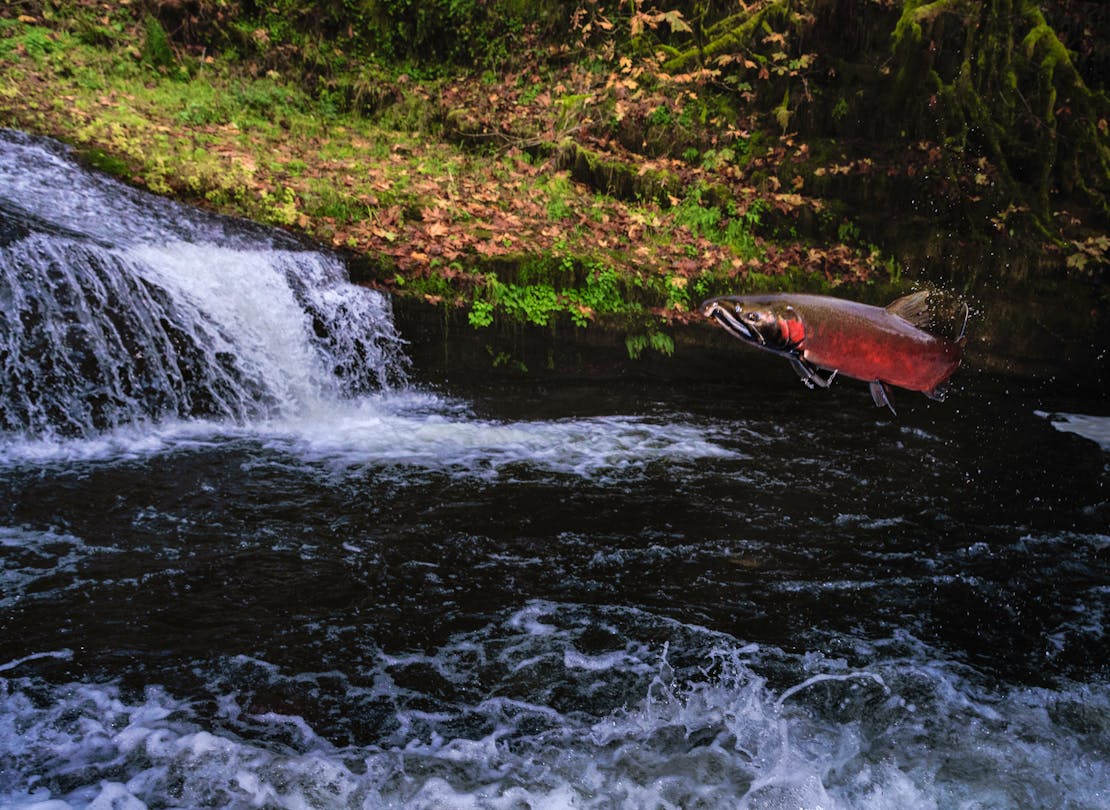
A hub of data centers operated by Google in The Dalles, Oregon demonstrates how endangered species could be threatened by data centers. A bill was introduced in 2025 that would allow the city of The Dalles to more easily divert water from the nearby Dog River, a tributary of the Columbia River, to meet the growing water demand from development. But the Endangered Species Act-listed coho salmon and bull trout both call this watershed home and rely on cold-water habitat. Withdrawing water from the Dog River will likely lead to an increase in water temperature. Similarly, wastewater discharge could raise water temperatures and introduce chemicals to the habitat. These risks could make the Dog River uninhabitable for these endangered species.
So, how do we prevent development from impacting local wildlife?
Lax regulation has contributed to a “wild west” rush to build more data centers. Historically, large developments like data centers often needed a Clean Water Act permit prior to any construction that might impact wetlands or waterways. A Supreme Court 2023 ruling that erased Clean Water Act protections for many previously protected wetlands and small streams, however, made it easier for construction to proceed without a federal permit. This shift could lead to more habitat destruction.
Without a formal permitting or consultation process, communities may not learn about a new data center until late in the approval process. Even where permits are required, some companies have bypassed them without any consequences for spewing pollutants into neighboring communities, due to a lack of regulatory enforcement.

When determining where a data center will be built, through a process known as siting, it is important to understand the proximity to important habitat. Considering the potential impact on local habitat as part of the siting process is necessary to protect imperiled species.
Why Do Data Centers Even Need Water & Energy?
After two decades of relatively flat electricity demand, driven in part by improvements in energy efficiency, the rapid expansion of data centers is pushing U.S. electricity demand sharply higher. Some estimates project that by 2030, powering data centers alone could require as much additional electricity as nine New York Cities use today.
While some data centers have committed to running primarily on renewable energy, a substantial amount will still likely come from fossil fuels. One analysis estimates that data centers were responsible for 105 million tons of climate-warming CO2 emissions in 2024 alone — the equivalent of 25 million cars. Data centers that specifically support AI use substantially more electricity and water to cool continually operating systems. If data centers expand to meet the demand of AI’s growth, the rate of CO2 emissions will grow substantially. Even worse, some data centers, including those supplied by renewable energy, are relying on fume-spewing diesel generators as power backup.
The energy needed to keep data centers running creates a tremendous amount of heat as a byproduct. Data centers only have two ways to cool off:
- Air conditioning systems. These use substantial electricity, producing even more emissions;
- Water-cooled systems. A medium-sized data center relying on this system can consume roughly 110 million gallons annually, or as much water as about 1,000 households. The largest data centers can use ten times that amount.

Although some new data centers have been able to cut their water use dramatically using “closed loop” recirculating systems, they have not yet become the norm — and still come with tradeoffs as more energy is needed to keep them running efficiently.
So, what can we do?
We all use computers, most of us use cloud services and storage, and many of us use AI. Data centers are therefore a mainstay in our current technological landscape. But they are not without consequence, and their construction and operation should proceed with attention to reducing their impact on natural ecosystems and imperiled species.
Communities should remain vocal and advocate for siting regulations and best practices — like avoiding the most sensitive wildlife habitat, using renewable energy sourcing and optimizing closed loop cooling — to ensure resources, habitat and wildlife remain protected as we enter this next arena of energy development.
Author