Can you get all 10 of these wildlife-inspired questions correct? Some of Defenders of Wildlife’s symbolically adoptable animals may give you a hint.
Good luck and share your results with us in the comments!
1. Which month hosts the “Wolf Moon”?
- January
- April
- July
- October
A. January’s full moon is often called the “Wolf Moon” because people could more clearly hear the wolves howling on the cold nights. A wolf's howl can be heard up to 10 miles away, with cold, dry and still air carrying the sound better.
2. The scientific name, Puma concolor coryi, belongs to which endangered cat?
- Bobcat
- Florida panther
- Cheetah
- Asiatic lion
B. Florida panthers are a subspecies of the puma (Puma concolor), which is also known as the cougar and mountain lion. They are the only population of this wild cat established east of the Mississippi.
Naturalist and outdoorsman Charles Barney Cory first described the Florida panther as a subspecies in 1896. The feline’s subspecies name, coryi, is named after him. Our adoptable panther plush, Cory, honors this discovery.
3. Which of the following rivers is a known habitat for hellbenders?
- Columbia River
- Devils River
- Holston River
- Potomac River
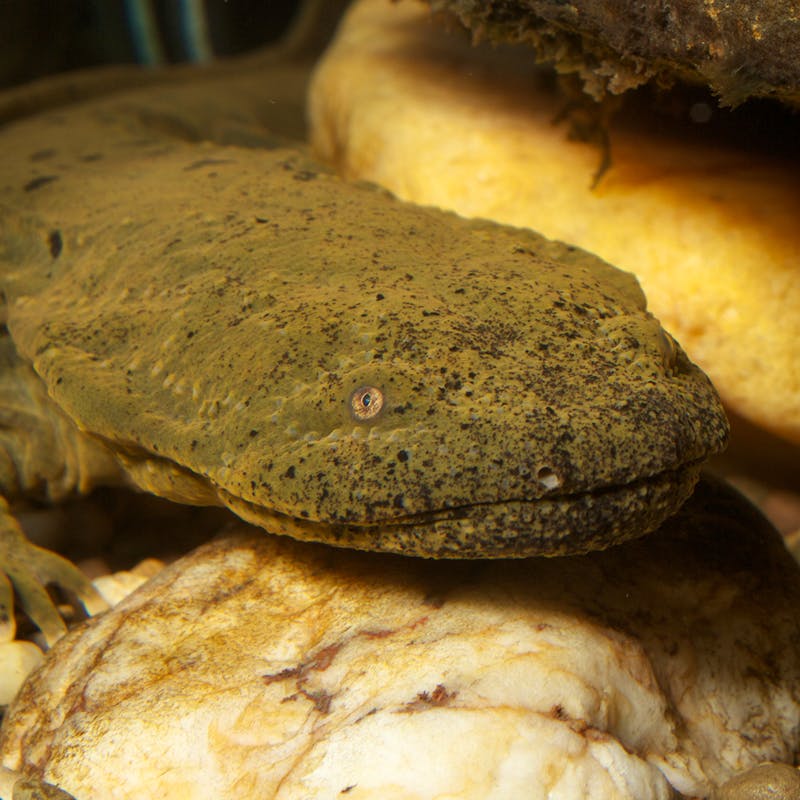
C. The Holston River in Tennessee is home to hellbenders. The Holston River watershed, stretching across southwest Virginia, northeastern Tennessee and parts of North Carolina, is historically prime habitat for the eastern hellbender.
Hellbenders are found under large, flat rocks in this river and others in the region. Our adoptable stuffed animal Holston is named after this area and river.
4. What animal is most often associated with wisdom and knowledge?
- Owl
- Panther
- Vulture
- Gopher tortoise
A. Owls are often associated with wisdom and knowledge. This association traces back to the Ancient Greek goddess, Athena, who had an owl as her sacred companion.
Snowy owls, like our adoptable plush Skylar, have sharp eyes and acute hearing, which helps them hunt during the day.
5. Where do Southern sea otters live?
- Northern Pacific Ocean off the coast of Alaska
- Gulf of Mexico off the coast of Florida
- Northern Pacific Ocean off the coast of California
- Northern Atlantic Ocean off the coast of Maine
C. Southern sea otters, also called California sea otters, live in the Northern Pacific Ocean off the coast of California, from San Mateo County to Santa Barbara County.
Sea otters spend much of their life in the water. They can dive up to 330 feet, though most dives are shallower, when foraging for urchins, mussels, clams, crabs, snails and other food.
While our adoptable stuffed sea otter, Sydney, is not waterproof like her real-life counterpart, she is as soft. Sea otters rely on their dense fur, along with their high metabolism to stay warm in the cold ocean.
6. Black-footed ferrets were declared extinct in 1979. What domestic animal helped in the rediscovery of the last remaining population on September 26, 1981, in Meeteetse, Wyoming?
- Shep the ranch dog
- Meep the sheep
- Bo-Peep the barn cat
- Goose the pond duck
A. Shep the ranch dog caught the first black-footed ferret sighted since the mid-1970s. His finding helped scientists discover the single remaining population of these thought-to-be extinct small mammals. Today, there are about 400 wild black-footed ferrets on 15 recovery sites in seven states.
While there is still a long way to go to fully recover the species, black-footed ferrets are considered to be conservation warriors for their comeback from the brink of extinction. Finley, our adoptable black-footed ferret stuffed animal, name means "fair warrior or hero" in honor of this progress.
7. What marine mammals were commonly mistaken for mermaids?
- Walrus
- Beluga Whales
- Bottlenose Dolphins
- Manatees
D. Manatees were often mistaken for mermaids by sailors and explorers.
European folklore often associated mermaids with deadly songs, similar to ancient Greek Sirens (who were bird hybrids, rather than fish). While manatees are not known for their vocals, they do commonly produce a high-pitched, almost bird-like squeak. Manatees, like our adoptable plush Melody, also use chirps and whistles to communicate, express excitement or maintain contact with other manatees.
8. While grizzly bear claws resemble gardening tools to help them dig up roots, polar bear claws resemble what?
- Arrowhead
- Horns
- Fishhooks
- Rose Thorns
C. Compared to other bears, polar bears have shorter, thicker and more curved claws that resemble fishhooks or knives and bumpy footpads. Both are ideal for gripping on the Arctic snow and ice.
While polar bears also use their claws to help them grab and hold their prey, like slippery seals, our adoptable Percy will only grab your heart.
9. When did the Bald Eagle officially become the National Bird of the U.S.?
- September 1776
- December 2024
- March 1872
- December 1973
B. Bald eagles have been recognized as the national symbol and emblem of the United States since 1782, but only recently became the official National Bird. Former President Biden signed a bipartisan bill in December 2024 designating bald eagles as our national bird. There was no national bird before this, but other longer-standing national symbols include: the bison as the national mammal, the rose as the national flower and the oak tree as our national tree.
Ellie’s, our adoptable stuffed eagle, name means “torch” alluding to how these birds are as much a symbol of the U.S. as the torch in the Statue of Liberty’s hand.
10. What is Latin and Spanish for “moon” and is used as popular name for dogs and fictional wolves?
- Diane
- Selene
- Moro
- Luna
D. Luna translates to moon in both Latin and Spanish. Wolves do not howl at the moon, but they will howl to help locate and gather their pack.