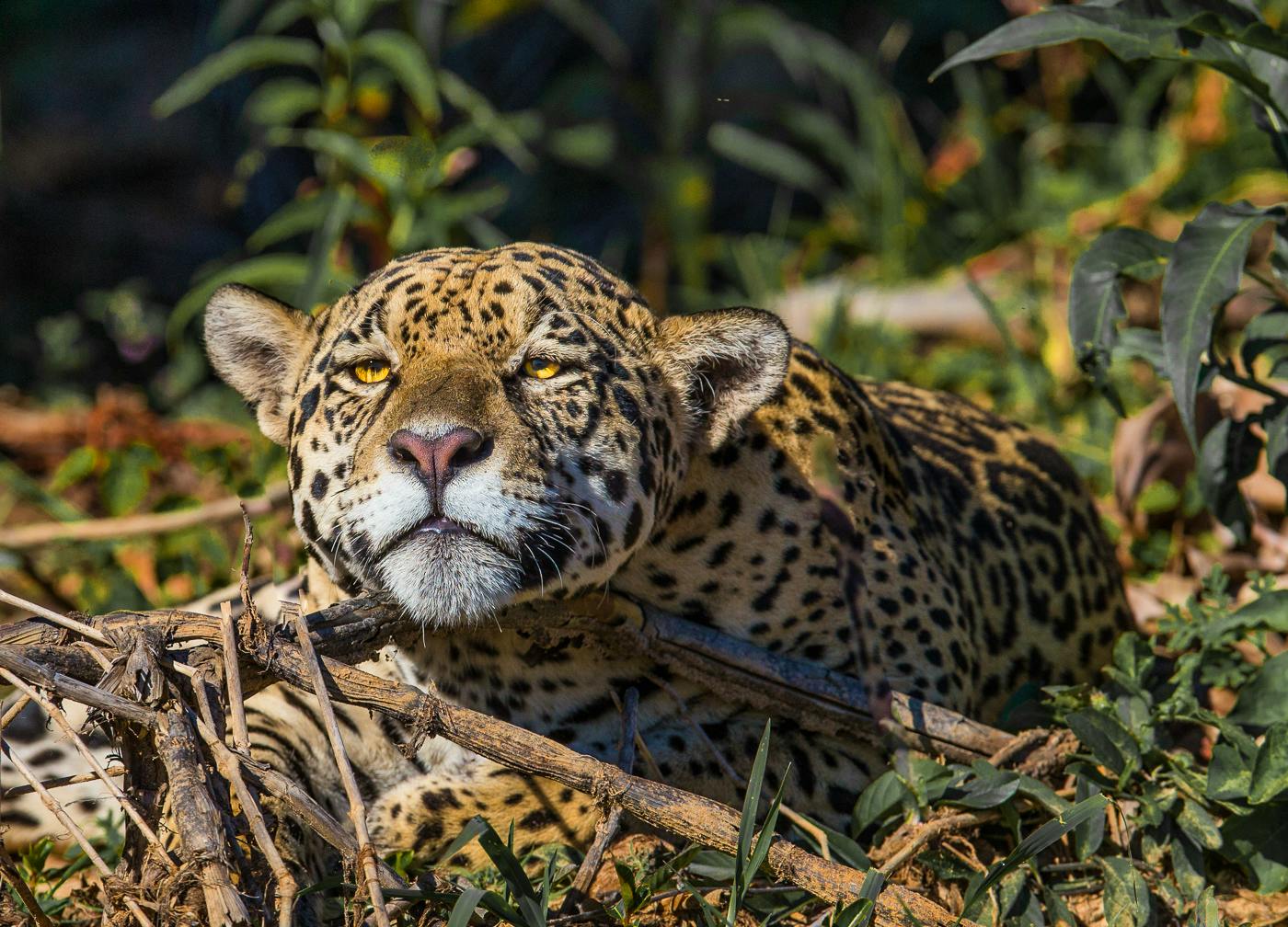
This blog post presents a recent op-ed in the Arizona Daily Star that highlights the importance of protecting wildlife corridor habitat following the recent sighting of a wild Jaguar in the state.
Sightings of wild jaguars, once believed extinct in the United States, in Arizona over the past 20 years have given hope for their recovery in the state. Just last week, the University of Arizona’s Wild Cat Research and Conservation Center confirmed a new jaguar was spotted on trail cameras three separate times in November. The aptly named “Cinco” is the fifth unique cat spotted in the state in more than a decade, and the second the university has caught on camera in just four months.
While there is still much to learn about this recent arrival, the cat’s presence is a powerful reminder both of Arizona’s rich biodiversity and the importance of conserving wildlife corridors to help animals move throughout the state. Arizona plays an important role in facilitating the movement of wildlife across the Southwest.
Throughout their range, jaguars are endangered, with approximately 173,000 across the Americas from Argentina through Mexico and into the southernmost parts of Arizona. Historically, jaguars were found as far north as the Grand Canyon and east into Texas. Lethal predator control programs and other factors nearly ensured wild jaguars would no longer roam across the U.S.
A breeding population has not lived in Arizona since the mid-20th century, when the last females were killed. Despite this history of persecution, male jaguars manage to persist at the northernmost extent of their range with an infrequent but steady record of sightings since the late 1990s. These sightings of cats from Macho B to El Jefe and now Cinco excite wildlife lovers across the country and provide hope for a jaguar-friendly future in Arizona.
While Cinco’s appearance suggests natural migration routes from Mexico remain for jaguars, many challenges loom on the landscape. For jaguars to successfully reestablish in the American Southwest, they must be able to safely travel across their vast home ranges — typically covering 100 square miles — and encounter others in order to breed. The U.S. Fish and Wildlife Service has designated more than 64,797 acres in Arizona as critical habitat for jaguars, and a systematic review led by Defenders of Wildlife in 2021 demonstrated enough habitat exists in Arizona and New Mexico for between 90 and 151 individual jaguars. However, for these cats to have space to roam and safe passage between protected areas, we must safeguard remaining habitat and ensure safe passage between key habitats.
Threats to jaguars abound through many human activities on the landscape: from the hazards of roadways like I-10 that present threats of vehicular collisions and create impenetrable barriers, to habitat destruction from large-scale mining operations, to increased fortification of national borders that threaten to cut off pathways jaguars have utilized for thousands of years. These are difficult challenges, and we must seek solutions that balance ecological priorities with political.
In welcoming Cinco, we can share a moment of hope for the future of the wildest Arizonans. Public surveys reveal growing and sustained bipartisan support for wildlife like our jaguars and the wild places they inhabit. Jaguars can again thrive in Arizona. We are incredibly fortunate that they persist in our midst, continuing to remind us of their revered presence. We must take concrete measures to protect this iconic wildcat and the habitat corridors it relies on for a new era of jaguar recovery in Arizona.
Author


