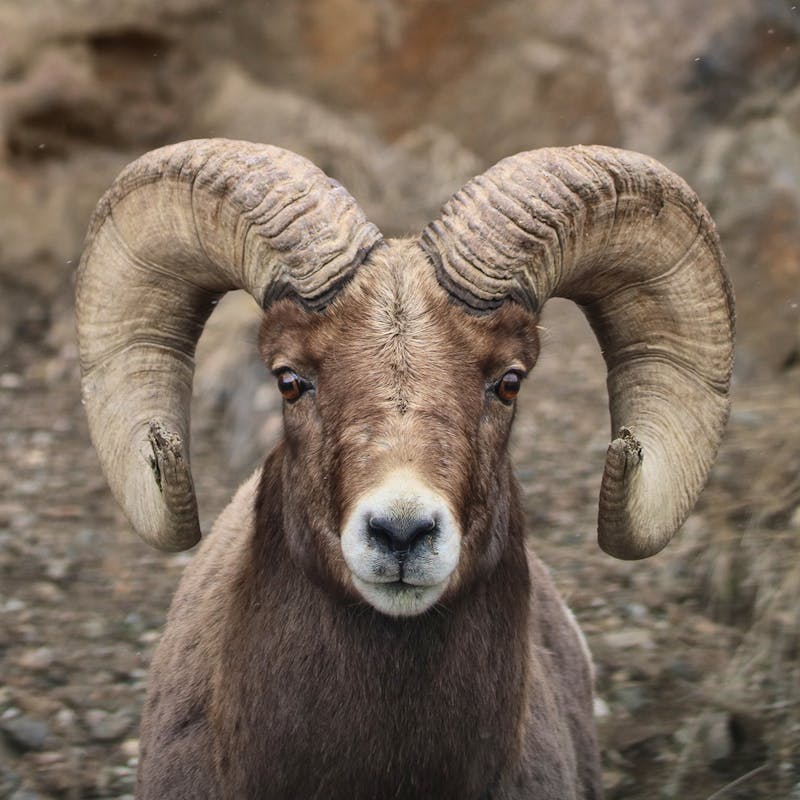
The small spring’s water glistened under the early morning sun as my colleague and I set up the camera equipment. We were looking to record how many desert bighorn sheep lived in the northern part of the Black Mountains in Death Valley National Park. It was a pleasant surprise when I glanced up and saw the large, curved horns of a ram. His band, or herd, of three other males were already drinking from the spring.

The desert bighorn sheep is one of four subspecies found in the United States. Virtually all mountain ranges in North America once supported large bighorn sheep populations, which totaled 1.5 to 2 million. Today, numerous individual mountain ranges can no longer support bighorn sheep populations, and major Interstate highways have cut off once-connected habitats. Bighorn sheep populations now total roughly 80,000 individuals.
Before we climb too high into why these animals are in trouble, let’s explore what makes them unique and why they are important to their home environments.
What are the types of bighorn sheep in the U.S.?
There is one species of bighorn sheep in North America (Ovis canadensis), which is divided into four subspecies. Each subspecies lives in a different area.

The Rocky Mountain bighorn (Ovis canadensis canadensis) and Sierra Nevada bighorn (Ovis canadensis sierrae) are found where their names suggest, in the Rocky Mountains and in the Sierra Nevada in California, respectively. The California bighorn (Ovis canadensis californiana) lives in the northern Great Basin, which extends from southeastern Oregon into Nevada and parts of southern Idaho. Finally, the desert bighorn (Ovis canadensis nelsoni) is found in the Southwest and northern Mexico. There is also a distinct population of desert bighorn sheep in the Peninsular Ranges of California.
Do ewes have horns?
Yes! Bighorn sheep, both ewes (females) and rams, develop horns soon after birth. Ewes’ horns, however, are much slimmer than the huge horns of their male counterparts and do not curl. Mature bighorn ram horns are curled and measure over 3 feet in length.

What do desert bighorn sheep eat?
Desert bighorn sheep are selective feeders and choose the most nutritious forage available. Their diet includes cacti, grasses, herbaceous plants, and shrubs. Leaves of mesquite trees and catclaw, and barrel cactus are especially important food sources for desert bighorn sheep in the Mojave Desert, especially during the hot summer months.
As a desert-dwelling species, what is their primary source of water?
Most desert bighorn sheep obtain water from springs, seeps and natural troughs in bedrock that hold rainwater. They will also get water from the barrel cactus they eat and from man-made rainwater catchments called guzzlers or drinkers.

Why are desert bighorn sheep important to their environment?
As they eat their herbivorous diet, desert bighorn sheep shape plant communities and open landscapes, which can benefit other species by creating diverse vegetation structures. They also contribute to nutrient cycling through their waste, enriching desert soils.
Desert bighorn sheep are also a food source for mountain lions, which prey on adults, and coyotes that feed on lambs. Golden eagles are also known to take lambs by grabbing them with long talons.

Finally, bighorn sheep are key to monitoring overall desert health. Their presence and health signals a robust, functioning desert ecosystem, particularly in areas with intact water sources and minimal disturbance.
Are bighorn sheep endangered?
Distinct populations of desert bighorn sheep in the Peninsular Ranges of California and the Sierra Nevada are listed as endangered under the federal and California Endangered Species Acts.

What are the biggest threats to desert bighorn sheep?
Some of the biggest threats to desert bighorn sheep include diseases carried by domestic livestock, habitat loss and fragmentation from urban sprawl, roads and recreation – like off-highway vehicles and hikers – and increased temperatures and drought propelled by climate change.
Is anything being done to help desert bighorn sheep?
Yes, there are three wildlife crossing bridges planned! The bridges will go over Interstate 15 to allow desert bighorn sheep to safely cross over this busy highway as well as the Brightline West High Speed Railroad once construction is completed. These bridges will restore bighorn sheep movement corridors that were blocked when I-15 was constructed in the early 1960s.

How you can help!
While exploring areas with bighorn sheep, please stay on trails and do not bring dogs into bighorn sheep habitat. Bighorn sheep see dogs in the same way they see coyotes, as predators, so it’s important for the sheep to not become accustomed to dogs. If you’re camping in their range, avoid camping at springs and water sources.
You can also report sightings to the California Department of Fish and Wildlife with photos, locations and the number of bighorn sheep you saw.
Author

Jeff Aardahl