As you close your eyes and envision the sun cresting the horizon above a tall grass landscape, images of elephants, giraffes and lions may spring to mind. Or maybe you pictured bison, prairie dogs and a bird of prey soaring overhead. When you hear “wildlife” the sound of bird songs and images of deer and foxes or tigers, gorillas and snakes may come to mind.
While seemingly disparate, the connection between all these animals is stronger than you may realize – so too are the efforts to help save the most endangered of them.

Join us as we explore some beloved wildlife from around the world and their amazing cousins, who may live in your backyard!
Lions and Tigers and Jaguars and Panthers – Oh my!
Do you know your big cats?
Lions, tigers, jaguars and panthers all belong to the family Felidae and are often referred to as “big cats.” True big cats belong to the genus Panthera and have a special hyoid bone allowing them to roar. Lions, tigers, jaguars, leopards and snow leopards all belong to Panthera.

Florida Panthers, a type of cougar or mountain lion, belong to the genus Puma. While they are big cats in terms of size, they lack a hyoid bone and do not have the ability to roar.
Where do tigers, jaguars and panthers live?
Tigers, jaguars and panthers live in a variety of habitats. Jaguars and panthers are habitat generalists because they can thrive almost anywhere food is present and they are not persecuted.

Tigers live in 13 countries across Asia. Jaguars live in the Americas and their range once stretched from Argentina, South America, to the Grand Canyon in Arizona, United States. Today, jaguars are very rare in the U. S. and are endangered throughout the rest of their range.
Panthers historically lived across the southeastern U.S. Now, the breeding population of Florida panthers is concentrated in the southwestern tip of Florida.

Despite not overlapping in range, these big cats share common threats including habitat loss, road kills and poaching. Tigers, jaguars and Florida panthers are all also listed as endangered under the Endangered Species Act.
Elephants and Manatees
Ancestry: A Family Search?
One of the manatee’s closest living relatives are elephants. While manatees are fully aquatic mammals, their skeletal structure indicates they evolved from a land-based animal. Scientists believe manatees and elephants’ common ancestor lived over 50 million years ago!

You can see the family connection today between manatees and elephants in their wrist bones, nails and molars. For example, elephants have three to five toenails and manatees have three to four nails on their flippers.
What do elephants and manatees eat?
Both elephants and manatees are herbivores, eating plants. Elephants eat grasses, leaves, bamboo, bark and roots. Manatees eat mostly seagrasses and freshwater vegetation.
Because of their herbivorous diets, both animals have a unique dental adaptation known as “marching molars.” They continuously grow new teeth at the back of their jaws, which then slowly move forward to replace the lost, worn-down teeth in the front.

Manatees and elephants face threats from their human neighbors. Both animals are facing habitat loss. Elephants are also threatened by poaching. Boats collide with manatees, the animals get entangled with gear and sometimes get trapped in water control structures.
Dolphins and Orcas
Are orcas dolphins?
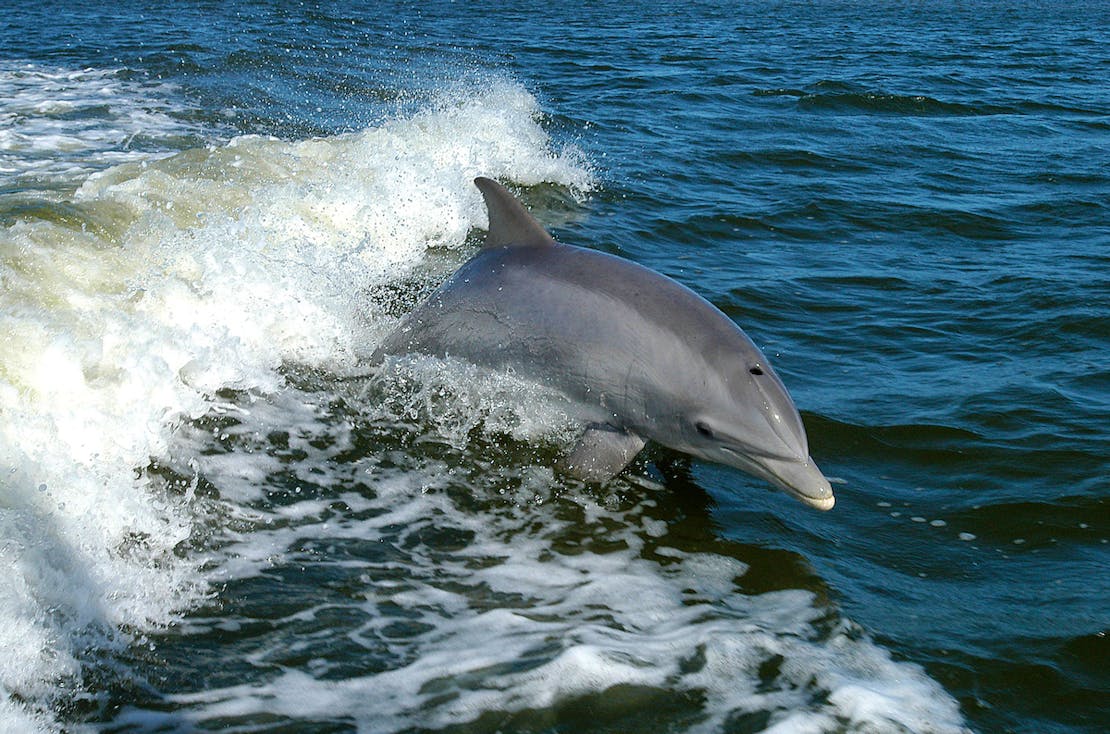
Yes, orcas are members of the dolphin family. Dolphins and orcas belong to the Delphinidae family, which is under the suborder of toothed whales. You read that right. All orcas are dolphins and all dolphins are whales!

Dolphins and orcas are found worldwide. Most dolphins live in shallow areas of tropical and temperate oceans, but five live in rivers. Orcas are found in all oceans and seas, but are most highly concentrated in cold, temperate waters.
Both orca and dolphins are protected under the Marine Mammal Protection Act. Dolphins are threatened by fisheries bycatch, plastic pollution and offshore oil and gas development. Orcas are specifically threatened by prey depletion, chemical pollution and noise pollution.
How You Can Help Animals Near and Far
Whether you are eager to protect the animals living in your backyard or the ones across the nation or ocean, there is something you can do.
The best starting point is to learn more about the animal and what threats it faces. Then, share facts, raise awareness and take action against their threats. Buying responsibly when looking to purchase products can go a long way for many animals. Look for bycatch free fish, avoid palm oil and threatened rainforest woods, and buy shade grown coffee and sustainable cocoa.
You can also support organizations like Defenders of Wildlife, who are working hard to ensure endangered animals remain protected until they are adequately recovered and who are promoting better coexistence measures so we can all share this beautiful world.
Author