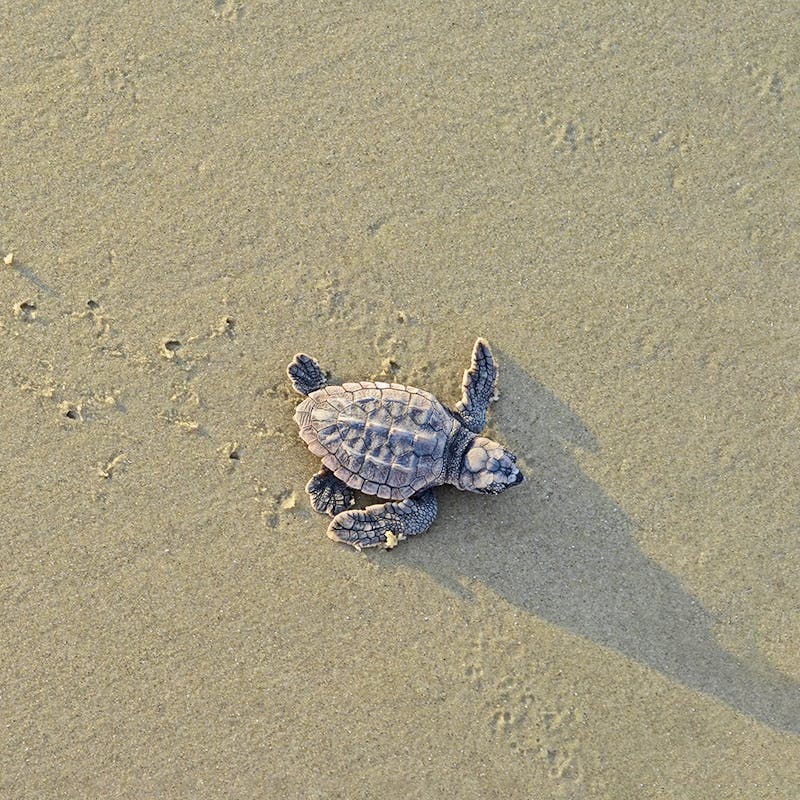
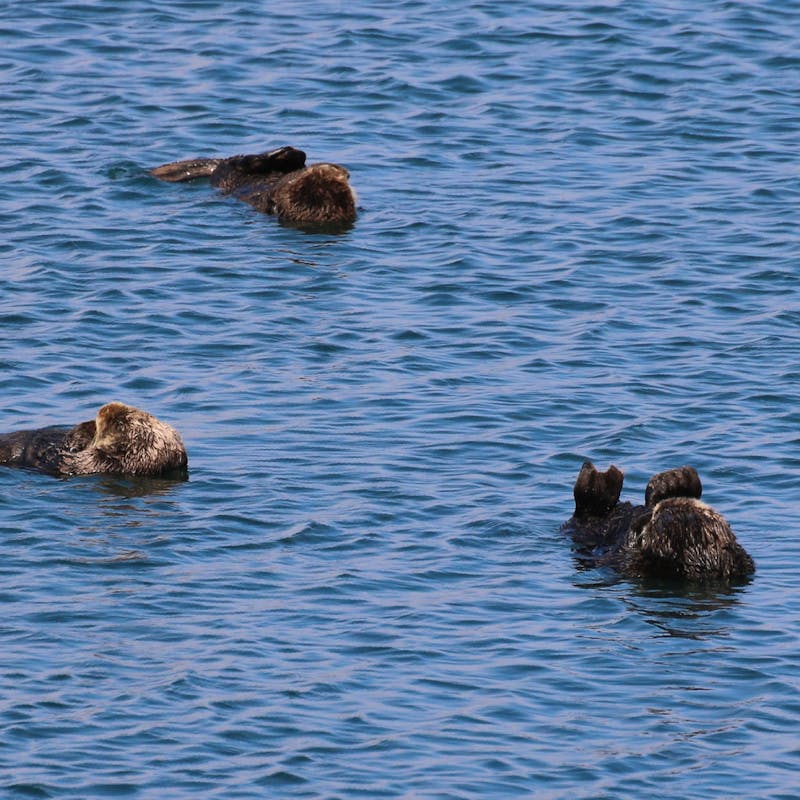
On March 14, 1903, President Theodore Roosevelt established the first National Wildlife Refuge, Pelican Island, to protect its namesake species from plume market hunters. This decision laid the foundation for what would become the National Wildlife Refuge System, the only federal lands system specifically managed for wildlife protection.

Roughly one-third of all federally listed species rely, at least in part, on refuges. There are now more than 570 refuges in the United States, with at least one in every state and within an hour drive of most major metropolitan areas.
As we celebrate another year of the NWR System, let’s explore five refuges that highlight the importance of this great institution. Then, we encourage you to find and explore a refuge near you!
Florida Panther National Wildlife Refuge
Florida Panther NWR is home to more than 900 plant and animal species. This refuge was established in 1989 to protect its namesake as it’s one of the most endangered mammals in the U.S. This refuge acts as a sanctuary and corridor for wildlife today, especially as urban sprawl continues to encroach on Florida panthers’ habitat and vehicle collisions take an unsustainable toll on these wild cats.
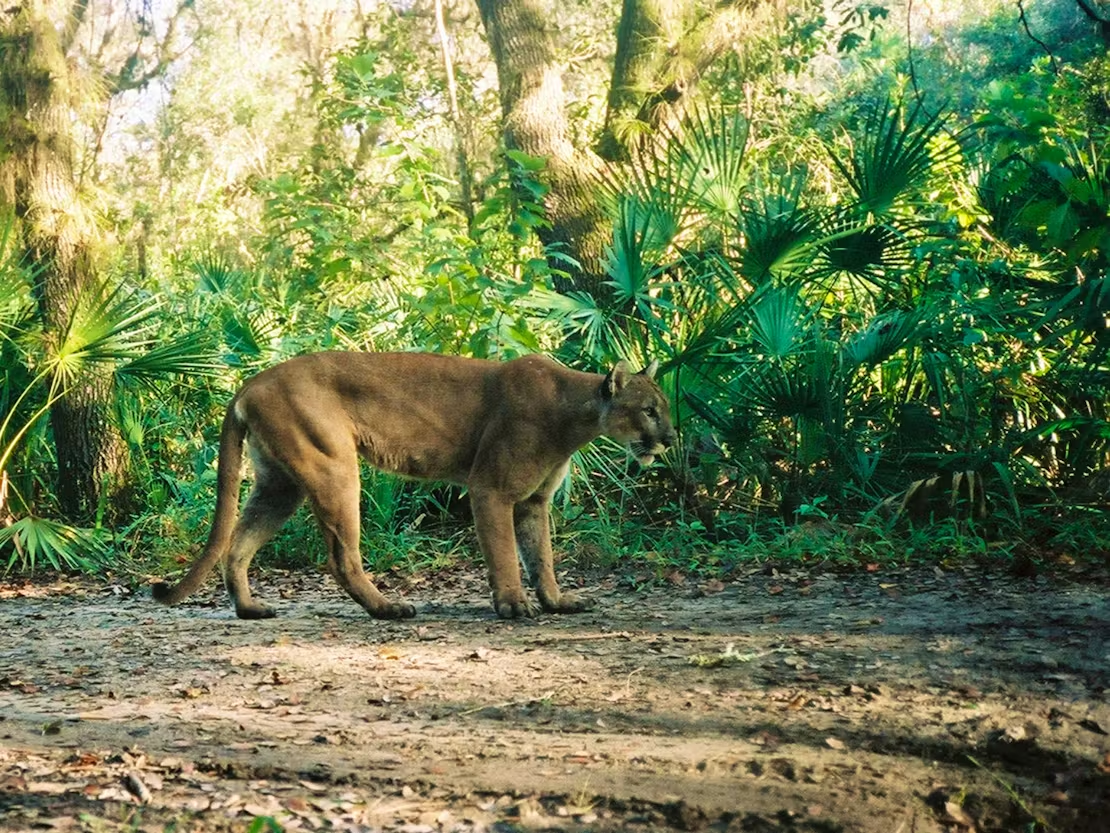
Florida Panther NWR is sandwiched between state forests and parks. It contains essential habitat for Florida panthers, including more than 26,000 acres of pine flatwoods, prairies and forested wetlands. This refuge is critical for helping expand the habitat these cats need to survive. Florida Panther NWR also protects many other animals including the wood stork and the red-cockaded woodpecker.
Thanks to conservation efforts, the Florida panther population has grown to almost 200 adults. This refuge is a testament to what’s possible when we set aside land for wildlife to flourish.
Ash Meadows National Wildlife Refuge
Surrounded by some of the hottest and driest deserts in North America lies one of the largest remaining oases in the Mojave Desert. Ash Meadows NWR is not, however, just glittering blue and green springs. It is the refuge with the most endemic species, or those found nowhere else in the world.

Established in 1984 under the Endangered Species Act, Ash Meadows NWR aims to protect these endemic species from urban development and groundwater pumping. The threats to groundwater, however, still remain today. In early 2023, a mining company submitted a notice to the Bureau of Land Management to conduct exploratory drilling for lithium just north of the refuge. The drilling would have interfered with spring flow in Ash Meadows NWR.
Defenders of Wildlife joined with coalition partners to oppose the proposed mine. The mining company thankfully abandoned the project in August 2025, likely due to pressure from the coalition and local communities.
Cape Romain National Wildlife Refuge
Located on the coast of South Carolina, Cape Romain NWR is a birder’s paradise. Established in 1932 to provide a safe haven for migratory birds, the refuge protects foraging and nesting areas for over 290 bird species, including the piping plover and red knot. It is also one of the four largest nesting habitats for brown pelicans.

Comprised of barrier islands, salt marshes, tidal creeks and open water, Cape Romain NWR is one of the most significant coastal refuges on the eastern seaboard. In addition to birds, the beaches also support the largest nesting population of loggerhead sea turtles outside of Florida. Horseshoe crabs are also an important animal in the refuge, as their eggs are essential food for migrating birds, such as the red knot.
Defenders has worked to safeguard Cape Romain NWR for years and successfully litigated to end the illegal harvesting of horseshoe crabs there. Sea-level rise and increasingly severe storms are among the biggest threats to the refuge today, as they erode vital nesting and roosting habitats, requiring the refuge to move further inland over time.

Accessible only by boat, Cape Romain NWR preserves a view of what the coastline looked like before urban growth, offering a reminder of why the refuge system was created.
Desert National Wildlife Refuge
In Nevada, the Desert NWR has 1.5 million acres spanning six mountain ranges and rising to almost 10,000 feet of elevation, making it the largest refuge in the lower 48 states. It was established in 1936 to protect desert bighorn sheep and remains one of the largest intact blocks of desert bighorn sheep habitat in the southwest.

Desert NWR has an astonishing diversity of habitats, from desert valleys to rugged mountain ranges, supporting over 500 species of plants and animals. One of the most notable is the Mojave Desert tortoise, a federally threatened species.
Repeated attempts to transfer control of much of the Desert NWR to the Air Force have been defeated, though there is a need to remain vigilant.
Hakalau Forest National Wildlife Refuge
The Big Island of Hawai’i is home to Hakalau Forest NWR. Established to protect endangered forest birds, including the ‘alalā (hawaiian crow), this refuge is now home to some of the rarest native species in the Hawaiian archipelago.

Hawaii has been called the bird extinction capital of the world and has lost dozens of species. As temperatures have risen, so too have avian malaria rates, threatening species such as the ‘I’iwi, one of Hawaii’s iconic honeycreepers. The high elevation of Hakalau’s rainforest habitats has kept malaria at bay, creating a vital sanctuary for Hawaiian birds.
To protect vulnerable wildlife from Rapid ‘Ōhi‘a Death — a fungal disease threatening native ‘ōhi‘a trees — the refuge is currently closed to the public, with limited access for tour guides.