From the redwood forest to the Gulf Stream waters, communities take root in the land and in water. We live, work, laugh and grow alongside our human and animal neighbors alike. We may not know their names or always see them, but we recognize their songs, their tracks and, when they’re gone, their absence.
When you conjure images of Tennessee, you get Elvis, Big Orange, country music, the Smoky Mountains and diverse landscapes, which help mark the crossroad between America’s east and west. Mountain peaks rise from the landscape like a steady heartbeat and streams and rivers run and flow through the state like veins.
Tennessee’s rich terrain does not just pulse with life for those who live and visit there. It teems with life itself.


Bottom row, left to right: a cave salamander, Blue Ridge Two-lined salamander and hellbender.
Meet the Salamanders of Tennessee
Tennesseans and tourists alike may catch one of three species of slimy salamanders or southern and eastern red-backed salamanders crawling among the forest litter. Explorers of the Blue Ridge Mountains may see one of two species of two-lined salamanders.
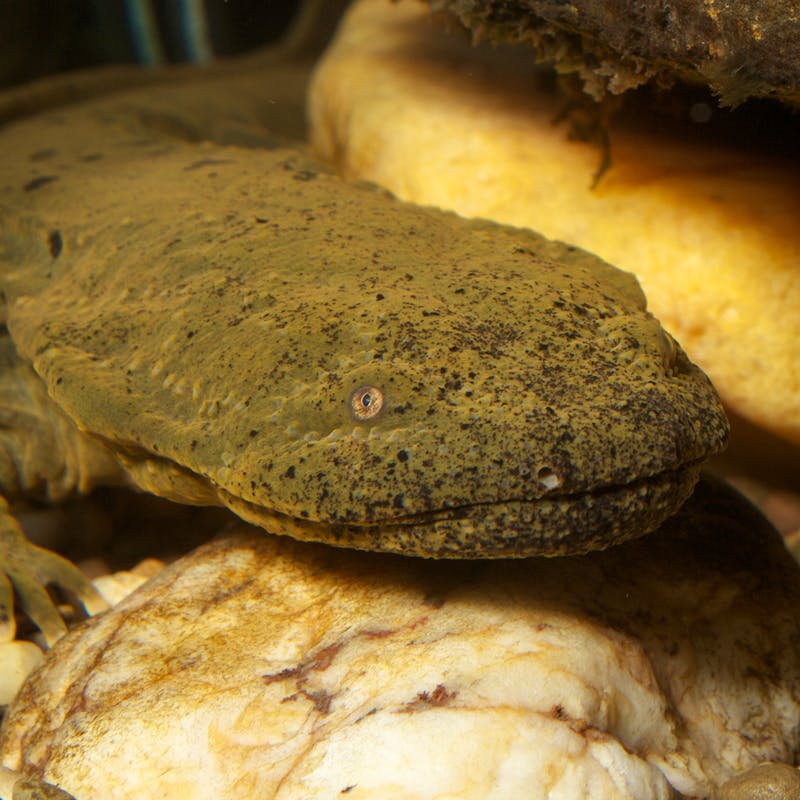
And, if lucky, those hiking along clear, fast-flowing rivers and streams may just see a hellbender, the largest salamander in the country, gliding between the rocks. But Tennesseans may know of a more secretive salamander in their state: the Tennessee Cave Salamander.

The Tennessee cave salamander is very rare and is found in specific, restricted limestone cave systems. In fact, these salamanders only dwell in caves where they can occupy stream and rimstone pools.
One subspecies, known as the pale salamander, is found in southern Tennessee, northern Alabama and in two caves in Georgia. These salamanders are nearly white to very light pink and are the palest of the two Tennessee cave salamanders.

The other subspecies, Big Mouth Cave salamanders, are only found in Tennessee. They are named after Big Mouth Cave, where they were once thought to exclusively live. Today they are also found in other caves in central Tennessee.

The next time you take advantage of one of Tennessee’s incredible trails or explore their extensive cave systems, keep your eyes open for each salamander’s unique patterns and colors. Cave salamanders – not to be confused with the aforementioned Tennessee cave salamanders which belong to a different genus – are especially striking with their bright orange skin and black sprinkle-like spots.
Tennessee cave salamanders, while unlikely to be seen, are particularly unique because they do not go through metamorphosis and look like they are forever in the larval stage. They have bright red, feathery external gills and small eyes which only detect light.

Tennessee: A Global Hotspot
What’s the draw, for a salamander, to Tennessee? Tennessee hosts one of the richest assemblies of salamanders and the Great Smoky Mountains National Park, which is partially located in North Carolina, and has the highest concentration of salamander species on the planet.
It's all about vertical diversity. Tennessee’s water flows across a vast array of terrain from high peaks and underground caves. There are over 31,800 miles of headwater streams and mineral rich groundwater that feeds the numerous surface freshwater systems. Additionally, the state hosts huge amounts of forest cover, which filters and keeps streams cool and clear.

The diverse landscape makes Tennessee a prime spot to attract and support a major diversity of salamanders and other aquatic life, like freshwater fish, mussels and crayfish.
A Shared Home in Need of Protecting
The greatest threats to our salamanders include damage to their freshwater homes from pollution, sedimentation, water withdrawals, and unchecked development and unregulated uses. Climate change, invasive pests and disease, and fragmentation and loss of connectivity also endanger these unique amphibians. The good news is, both Tennesseans and visitors to the Volunteer State can help.
Residents can protect existing, or plant native, vegetation to help filter pollutants. Fertilizers and pesticides can be eliminated or reduced, as these substances are soaked into the groundwater and washed off into nearby streams.

Anyone exploring should avoid insect repellants containing DEET. Instead, wear bug-repellent net jackets and pants over your clothes. Stay on designated paths to prevent stepping on salamanders.
Since these animals breathe through their skin, the oils, salts and lotions on your hands can do serious damage. Finally, avoid driving through forests and wetlands on wet spring nights, as some salamanders cross roads to get from their forest habitats to vernal pools to breed and lay eggs.

Tennessee displays pride for its salamander residents through a few educational events. Several of the State Parks offer guided hikes to search for salamanders. Roan Mountain State Park, for example, offers a nighttime hike in August and Searching for Salamanders will take place at Mousetail Landing State Park later in May.
One of the biggest events, Hellbender on the River, takes place in Nashville on May 28, 2026, to celebrate Cumberland River watershed’s freshwater systems through local music, food and community.
Take Pride in Your Salamander Neighbors
Imagine Tennessee without its inspiring musicians. Imagine the beautiful landscapes and flowing streams the state boosts without the flashes of color and splashes of life darting between rocks as adventurers hike past. What would the Volunteer State look like without its clean water and vibrant salamanders? Flat.
The next time you take pride in being a Tennessean, or Volunteer, take pride in the wild souls who share this home with you. Be present in the festivities. Be considerate to the trails and streams you visit. Be aware of the salamanders dwelling unseen. And then, when you think you know it all about your fellow Tennessee salamanders, challenge yourself to learn about the other wildlife sharing our beautiful home.
What's your favorite Tennessee wildlife? Have an incredible salamander story? Share with us in the comments! Then, meet our next wild locals in Massachusetts.
Author

Ben Prater