The full moon is rising over the lapping waves. It’s high tide in May and the edge of the beach looks almost rocky... except those aren’t rocks. They’re horseshoe crabs!
Each May and June these living fossils come to shore during new and full moon high tides. While they can be found on beaches all along the Atlantic Coast in the U.S., Delaware Bay sees the highest concentration.

Horseshoe Crabs are historic and have evolved incredibly, surviving mass extinctions and playing an essential role in their ecosystems. But they’re also not the creatures you would expect.
Are they really crabs? How old are horseshoe crabs? Are they dangerous? What is horseshoe crab blood used for? Read on to find out the answers to these questions and learn seven facts about these living fossils!
1. What’s in a name? Horseshoe crabs are arthropods.
Although “crab” is in their common name, these unique animals are not actually crabs or crustaceans. Horseshoe crabs are arthropods.
Arthropods are invertebrates belonging to the phylum, Arthropoda. Animals in this phylum have exoskeletons. Horseshoe crabs are named after their exoskeleton - their hard shell or carapace – which is shaped like a horseshoe! Arachnids, like spiders and scorpions, also belong to the Arthropoda phylum, which is why horseshoe crabs are nicknamed the “Sea Spider.”

Horseshoe crabs are in the scientific Class Merostomata, which translates to “legs attached to the mouth.” Funny enough, these creatures do in fact have a set of legs close to their mouth, which they use to pinch and crush their food.
2. How old are horseshoe crabs? They’re living fossils!
Horseshoe crabs are living fossils, with a history spanning around 450-million years. Atlantic Horseshoe crabs, the specific subspecies found on the U.S. coastline between Maine and Mexico, predate the dinosaurs by more than 200 million years.
These animals are resilient. It’s believed their hard shell, five walking legs and a primitive ability to feed on organic matter helped them survive five mass extinction events.

Today, these creatures continue to play a crucial role in their ecosystem, as well as science and medicine for humans.
3. What are the physical characteristics of a horseshoe crab? They use their tails to steer in the water!
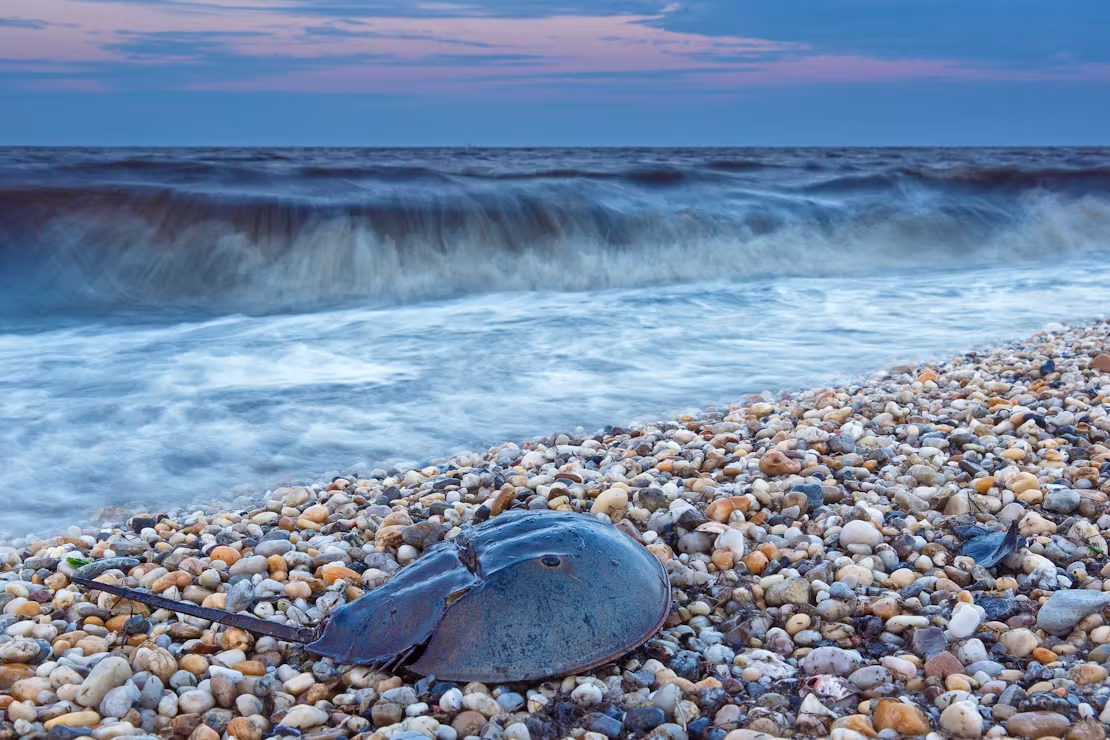
A horseshoe crab’s body is divided into three sections, which make up their hardened exoskeleton. The largest section is the Prosoma, or exterior shell. Their abdomen, or Opisthosoma, is the center section and attaches to the prosoma via a hinge. When looking from above, their moveable spines are visible alongside the edge of their abdomen.

Their long tail, or telson, is attached to the end of their abdomen. Horseshoe crabs use their tail to steer themselves in the water. They also use their telson as an anchor in the sand to help flip themselves over if they end upon their backs.
It’s not uncommon during rough weather or high tide for these animals to become stranded or stuck on their backs, though. If you ever see a horseshoe crab struggling on his back with his legs pointed up towards the sky, please help him out by picking him up by the shell and placing upright him where you found him.
4. Are horseshoe crabs dangerous? They are harmless creatures.
Horseshoe crabs are not dangerous to humans. They do not bite or sting. Some people think their tails look dangerous, but as mentioned above these are only used to help the animal.

5. What is horseshoe crab eyesight like? They have 10 eyes!
These creatures have a total of 10 eyes scattered across their body. Horseshoe crabs are the only living member of the subphylum Chelicerate to have compound eyes. Their two compound lateral eyes are used to help them find mates. Each of these compound eyes has 1,000 receptors that change the way they operate during the day and night.
They also have two ventral eyes located near their mouth to help orient the horseshoe crab while swimming. All other eyes are located around the shell to help the animal sense light. Horseshoe crabs are able to sense both visible and ultraviolet light!
6. Do male and female horseshoe crabs come to shore to mate? Both sexes can be seen on beaches.
During mating season, adult horseshoe crabs travel from deep open waters to beaches along the east and gulf coasts to breed. As the females approach the shore, they release natural chemicals called pheromones that signal to the males it is time to mate. Interested males will hook themselves to the top of the female’s shell using their front claws.
The linked pair head to shore together. There are often several males surrounding or attached to a single female.

Female horseshoe crabs will dig small, shallow nests on the beach and deposit upwards of 100,000 eggs. Males then fertilize the eggs externally. These eggs are a critical food source for migrating shorebirds, like rufa red knots.
7. Why is horseshoe crab blood valuable? It’s blue!
Horseshoe crabs carry an amazing secret: they have blue blood! Their blood is very valuable in modern medicine because it contains a protein called Limulus Amebocyte Lysate. This protein is used to test vaccines, drugs and medical devices for contamination with dangerous bacterial toxins called endotoxins.

8. Are horseshoe crabs endangered? You can help protect them!
In recent years, horseshoe crab populations have declined or maintained at impoverished levels. Habitat loss, overharvesting and exploitation by both the medical and fishing industries have contributed to their population decline over the years.
One specifically harmful practice is the draining of horseshoe crabs for their blood. Around 700,000 horseshoe crabs are removed from beaches during spawning season and subjected to blood collection. Even though the survivors are returned to sea, 30% of bled horseshoe crabs die.

Defenders of Wildlife has been a leader in protecting horseshoe crabs. We successfully litigated over the illicit harvesting of horseshoe crabs from Cape Romain National Wildlife Refuge, as well as unsustainable harvesting on other beaches across South Carolina. We are also advocating for the widespread adoption of the synthetic alternative to horseshoe crab blood.
You can help these living fossils by keeping the beaches and ocean they rely on clean! It’s also important to obey all posted signs on beaches to prevent harm or unneeded stress to the animals.
Author

Allison Cook