The Forest Service oversees a massive variety of habitats: from the cypress-lined springs of the Ocala National Forest in Florida that harbor threatened manatees to the mixed-grass prairies of the Buffalo Gap National Grassland that support endangered black-footed ferret. Because we cannot protect species without protecting their habitats, the Forest Service plays an essential role in conservation, managing more than 193 million acres of public lands across the nation.
The Forest Service has launched a major reorganization that will eliminate its nine regional offices and potentially most of its research facilities. The Forest Service has yet to finalize specific details of the reorganization and many questions remain outstanding. We are concerned with the agency’s lack of transparency, disregard of public and Tribal concerns, and inadequate consideration for programs and staff who steward our native wildlife.

A Growing Loss of Expertise
The Forest Service reorganization comes at a difficult time for the agency. Since 2024, the Forest Service has lost almost 30% of its staff, totaling over 11,000 employees. These losses have depleted expertise in disciplines like wildlife biology, fisheries and hydrology. For example, the Threatened, Endangered and Sensitive Species Program in the southwest region saw its staff drop from 12 people to two over the last year.
Forests now have critical gaps in expertise. This directly affects the agency’s ability to conserve and manage imperiled species. It also directly affects projects on the ground — for instance, whether an undersized culvert is replaced with a fish-friendly bridge, or if nesting raptors are properly surveyed and protected before a timber sale.

While the Forest Service claims that the reorganization will add capacity to ranger districts, the agency remains under a prolonged hiring freeze with the lowest staffing levels in over a decade. It is also unclear whether or how this reorganization will address fundamental barriers to staffing rural offices, such as lack of opportunities for dual-career couples, the elimination of remote work flexibility, and inadequate housing options. A primary concern is that the reorganization may cause further staff attrition and hinder effective resource management. Indeed, the USDA’s own press release described the plan as “another step of the Department’s process of reducing its workforce.”

Reduced Research and Loss of Regional Oversight
A key element of the reorganization is the closure and consolidation of Forest Service research offices. The agency’s world-class research program develops the science necessary to inform forest and wildlife management, including, for instance, monitoring rare and invasive species, understanding habitats post-wildfire, and tracking wildlife diseases. Approximately 57 of the current 77 Forest Service research stations are being evaluated for closure, threatening to jeopardize long-term, place-based scientific work.
Forest Service research is not just used by Forest Service managers. Other federal agencies like the National Park Service and state natural resource agencies rely on it as well. Any erosion of the research program will be felt far and wide.

Additionally, the reorganization will eliminate the Forest Service’s nine regional offices and the roles of Regional Foresters. These regions generally represent large geographies with similar ecological conditions, making a regional management perspective highly relevant. Regional specialists possess deep institutional knowledge and expertise. Further, regional offices are uniquely situated to contribute to conservation efforts that span state boundaries — such as developing regional management plans for the Canada lynx, sage-grouse, and grizzly bear, or strategies for distinctive regional habitats.
The Forest Service is now shifting to a state-based management model, with skeleton-staffed state-based offices focused on operations. This may diminish opportunities for integrated, broader-scale conservation effort and may subject decision-making to heightened political pressure.

An Uncertain Future for Sensitive Species
An important role of Regional Foresters is designating “sensitive species” – those not listed under the Endangered Species Act but facing population viability concerns. The Forest Service has two categories of sensitive species: “Regional Forester Sensitive Species” and “Species of Conservation Concern”. Both are designated at the regional level.
The Forest Service manages habitat for thousands of sensitive species that require special consideration to prevent population declines and avoid future federal listings. Under the reorganization, the oversight structure for these species remains unclear.
Meet Five Forest Service Sensitive Species


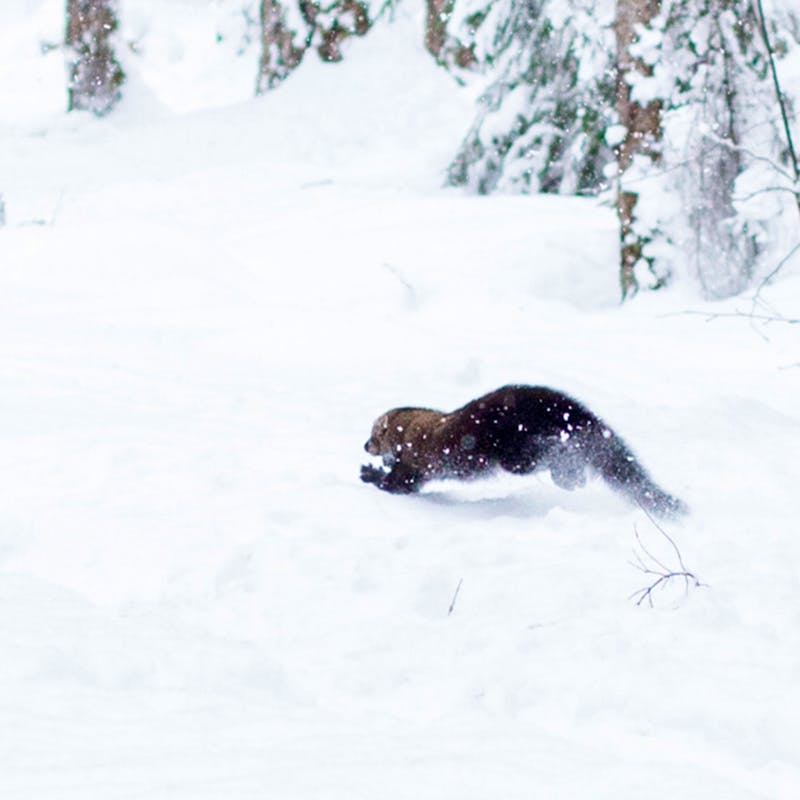
The fisher is a prime example of the value of sensitive species designation. National Forest System lands contain the majority of suitable fisher habitat. The Forest Service has been an active partner in multi-agency recovery efforts for fisher, including translocating animals to restore populations to their former range.
Forest Service research stations also play an important role, contributing to a better understanding of the fisher’s specific habitat needs. Preserving an institutional emphasis on sensitive species is essential to continuing this kind of concerted conservation work.

The mission of the Forest Service is “to sustain the health, diversity, and productivity of the nation’s forests and grasslands to meet the needs of present and future generations.” Fulfilling this commitment requires sufficient agency staffing, a supportive culture, and institutional stability. Yet as the Forest Service reorganization moves forward, it risks further backpedaling on the Forest Service’s ability to deliver on its core responsibilities.
Instead, the Forest Service should prioritize rebuilding its biological expertise, bolstering place-based research, and sustaining the irreplaceable diversity these lands harbor.
Author