California’s approximately 840-mile coastline is a rich region for watching whales and dolphins. Gray whales mesmerize winter and spring visitors, while humpback and blue whales wow summer and fall crowds. But did you know California’s coasts are home to another impressive marine mammal? Orcas!

Orcas, also known as killer whales, have captured the hearts and attention of people for decades. As top predators, they have expanded into every ocean. Regardless of where they reside, all orcas maintain tight family bonds through which elders pass down cultural information.
Dive down to learn about the types of orcas in California, where to view them, why they are important to California’s marine ecosystems and how California can help save the most endangered orcas!
Types of orcas in California
There are at least 10 distinct orca ecotypes globally, each displaying different behavioral and genetic differences, pursuing different diets and showing slight variances in appearance. California’s coasts host four of these ecotypes: Offshore, Southern Resident, Transient (also known as “Bigg’s”) and, since 2018, Eastern Tropical Pacific.

Offshore orcas are the most elusive of these types. They typically live far from land and have an extensive range that stretches from the Bering Sea (between Russia and Alaska) and Southern California. These orcas are known to prey on fish and sharks.
Resident orcas have the smallest range and only eat fish. The Southern Residents will eat most salmon species but prefer Chinook salmon. Their range is strongly linked to major river systems where Chinook salmon out-migrate to the ocean.
The presence of salmon compels them to spend half the year in the Salish Sea and the other half foraging along the coasts of Washington, Oregon and California. Their range in California has expanded as far south as Monterey Bay in recent years. Southern Residents, the most endangered orca, number fewer than 80 animals.

Transient orcas, like the Offshore type, have large ranges that extend from the Arctic Circle to Southern California. These orcas prey on other marine mammals, including seals and sea lions, small whales, dolphins and porpoises, and whale calves. Similar to Resident orcas, groups of Transients tend to prefer different marine mammals as prey.
Eastern Tropical Pacific killer whales are not an official ecotype. Little information exists about these orcas, and scientists have not yet determined whether they are distinct from the known types. They typically live in waters off Mexico and Central America. They prefer to prey on common dolphins, which likely lured them to Southern California waters.
What brings orcas to California?
Orcas follow their food source.

Take the Southern Resident orca, for example: During the summer months, salmon are plentiful in the Salish Sea. In the winter, however, salmon numbers decrease, so the Southern Residents must disperse to find food in the open North Pacific Ocean. Some pods travel north – as far as Southeast Alaska – and others travel south, as far as Monterey, California.
Orcas are important to California’s marine ecosystems
As top predators, orcas help control prey populations and maintain a balanced ecosystem.
They can also serve as bioindicators of their environment’s health. If the orcas thrive, then their habitat is healthy. However, declines in their population could reflect impacts on their prey from overfishing or poor water quality from pollutant runoff from land sources.
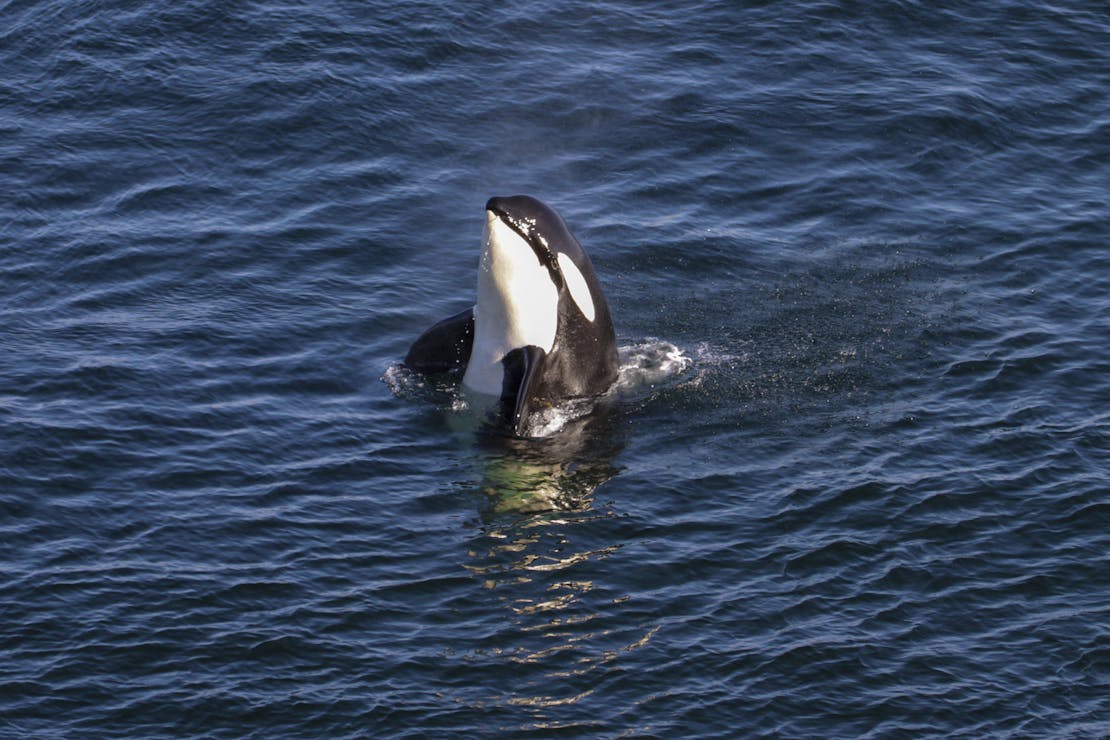
Unfortunately, it appears Southern Resident orcas are slowly starving. Large dams on rivers, destruction of salmon habitat and climate change impacts have caused many Pacific salmon stocks to plummet, leaving the orcas with less to eat. The result? The Southern Resident population is losing its ability to recover, reproduce and function as an ecosystem influencer.
Defenders of Wildlife believes we have an obligation to establish additional protections in California so that state agencies and commercial enterprises can implement new ways to promote healthier habitats and abundant food sources for Southern Residents.
How California can help Southern Residents
Southern Resident orcas currently receive protections under the Marine Mammal Protection Act, U.S. Endangered Species Act, Washington state’s ESA and Oregon’s ESA. Yet the population has continued to decline. It will take all the states hosting these orcas to help save them.

Washington was the first state to list Southern Resident orcas as endangered in 2004. The federal ESA followed a year later, in 2005. Defenders and partner organizations succeeded with a listing petition under Oregon’s ESA in 2024, leaving California as the missing linkage in the chain of state protections.
To address this issue, the Orca Conservancy filed a listing petition with the California Fish and Game Commission in November 2025. Defenders has joined the Conservancy to help navigate the petition through California’s state ESA listing process.
Stay tuned to hear more about what a California state listing could do to assist these incredibly imperiled orcas and how you can support this important cause.
You can help orcas now!
Whether you are visiting or living in California (or anywhere in the Northwest), you can help protect orcas and other marine animals!

Oil from our cars, chemicals sprayed on lawns and pet waste left in yards wash into our storm drains and eventually reach the oceans. Help reduce this toxic soup of runoff by keeping your cars in good working order, going chemical-free in your yard and garden, and picking up after your pets.
It’s also important to take your car to a commercial car wash or wash your car on your lawn, so that soap, oil and other pollutants don’t wash directly into storm drains. And all of us can help by using reusable bags, straws, cups and bottles to reduce plastic pollution that harms marine wildlife.
Author

Andrew Johnson