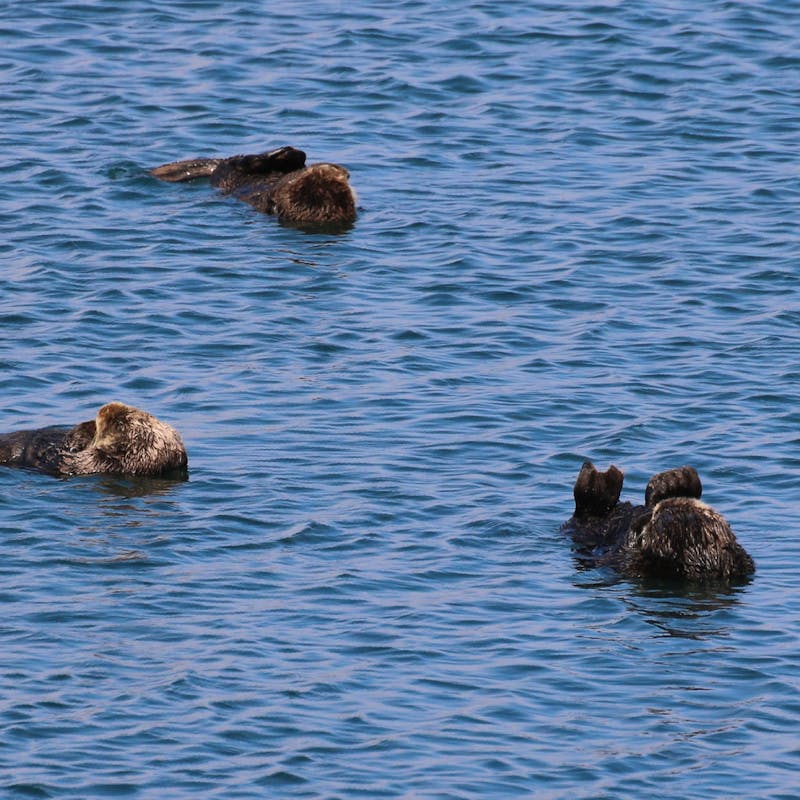
The U.S. Fish and Wildlife Service recently released its proposed rule expanding hunting and fishing opportunities across the National Wildlife Refuge System.
Framed as a means of “moderniz[ing] federal regulations,”1 the proposed rule opens new refuge areas and lifts closures on others to hunting and fishing. Although most refuges are already open to such activities, Secretary Burgum baselessly claims hunting and fishing have been obstructed “for too long,” and the public has supposedly been deprived access.

Following mass staffing cuts, and the dismantling of land management agencies, the proposed rule follows a playbook designed to transform how and for whom public lands are managed.
For refuges long starved of adequate funding, these proposed changes will deprive wildlife of needed resources and weaken an already fragile network of lands and waters.
Stacking the Deck for the Largest Expansion of Hunting and Fishing Opportunities in History
In anticipation of the proposed rule to come, Secretary Burgum ordered FWS to identify barriers to hunting in January. In an affront to the law that protects refuges, the Secretary suggested that compatibility determinations, which are the documents used to prevent negative impacts on wildlife, have improperly limited recreation.2
His order required that all determinations of incompatibility — that is, hunting and fishing activities considered by FWS managers to be harmful — must be personally reviewed by the FWS director. The implication was those decisions would be overturned, even if FWS lacked the resources to oversee the use in a way that protects wildlife.

Secretary Burgum also ordered refuge managers to align their management practices with those of the states and prohibited restrictions on the use of lead ammo and tackle, removing needed protections for bald eagles among other species.
With the proposed rule that followed, the result was the largest expansion of refuge hunting and fishing opportunities in the history of the Refuge System.

Robbing Peter to Pay Paul
Of the 573 refuges nationwide, not a single unit is fully staffed and over half have no staff on site at all. With roughly 200 officers spread across the entire country, law enforcement is virtually nonexistent. Infrastructure is crumbling.
And, most importantly, needed management projects, including wildlife inventorying and monitoring, have virtually ceased due to chronic funding shortfalls. By any measure, the Refuge System is in substantial decline.
More recreation without the resources needed to oversee those activities will only exacerbate these challenges.

Take Laguna Atascosa, for example. Located in the Lower Rio Grande Valley, this refuge supports the country’s only population of endangered ocelots.
As the center of recovery efforts for these cats, it requires intensive management, monitoring and restoration of habitats. To fulfill these and other management goals, Laguna Atascosa needed nearly double its existing resources two decades ago.
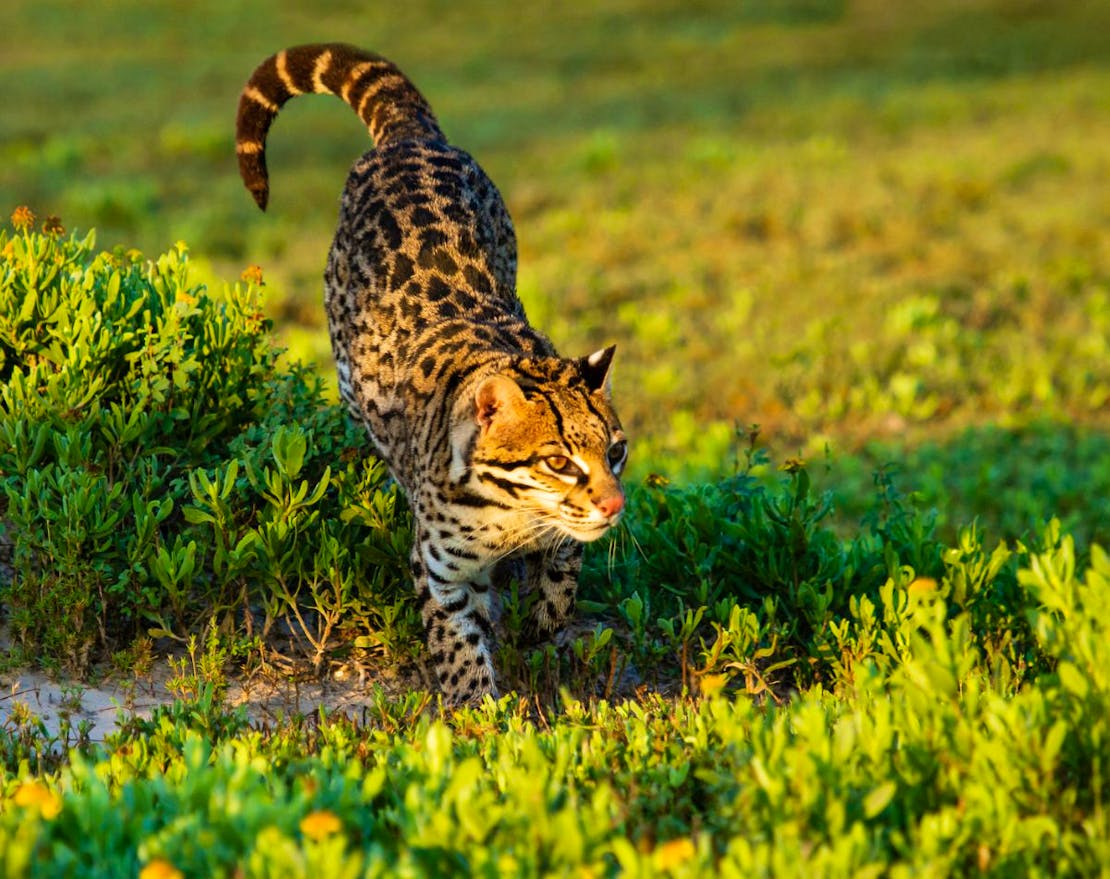
Funding has since further declined, yet the hunting program will “increase administrative costs,” requiring roughly $100,000 annually.3
In California and Oregon, the impacts are similar. Fifteen years ago, the Klamath Basin Refuge Complex had over 30 full-time staff. Since then, the workforce has declined by one-third. The strain has become so great, “we [can] barely keep the front doors open,” according to a FWS retiree. Without the necessary staff, “all these things we could offer to the community are just gone.”
$400,000 per year in resources and staff time, none of which are available, are needed to properly oversee the expanded hunt at the Complex, according to the proposed rule.4

Cahaba River supports five aquatic species listed under the Endangered Species Act, as well as the largest known grouping of the imperiled shoals lily. The refuge management plan describes the need for surveys, monitoring and hands-on management to protect and restore its uniquely important habitats.
Ten years ago, “the biggest issue for the refuge” was the “lack of sufficient resources to address [these] management [objectives].”5 Cahaba River now has no law enforcement, biologists or maintenance staff devoted to its management and protection.6
Unfortunately, the only way to facilitate the hunt and solve Cahaba River’s staffing problem is to create another by siphoning resources from Wheeler National Wildlife Refuge, a refuge managed for the endangered whooping crane.7

Staff at Wheeler, however, are already stretched to manage Key Cave, Sauta Cave and Fern Cave, three refuges established for endangered species, from over 50 miles away.
By necessity, their time will be even further diluted to manage the expanded hunt from afar.

Compounding the Deficit
In the view of Congress, hunting and fishing, alongside wildlife observation and photography, have a time and place on refuges.
Nevertheless, in enacting the law that protects refuges, Congress stressed that no single activity could tip the scales at the expense of wildlife. “Even wildlife observation,” warned former Senator Bob Graham (D-FL), “[could] become incompatible if not carefully regulated and managed.”8
When in doubt, Congress stressed that “wildlife and wildlife conservation must come first.”9

Although the details differ, every refuge implicated by the proposed rule suffers from the same affliction of inadequate funding. By papering over these shortcomings, while conflating user access with conservation outcomes, the proposed rule loses sight of the needs of wildlife. It also confuses what’s beneficial for hunters and anglers with what’s good for the broader National Wildlife Refuge System.
The reality is that FWS morale has never been lower. Refuges have never received less Congressional support or attention. And, most critically, needed management activities are no longer occurring.
By demanding more of an already broken system, the proposed rule will make an already desperate situation worse for wildlife.
Footnotes:
1 “Department of the Interior Announces Proposed Expansion of Hunting and Fishing Opportunities-New Opportunities at 107 National Wildlife Refuges and Four National Fish Hatcheries,” https://www.fws.gov/press-release/2026-05/department-interior-announces-proposed-expansion-hunting-and-fishing.
2 Secretarial Order 3447 - Expanding Hunting and Fishing Access, Removing Unnecessary Barriers, and Ensuring Consistency Across the Department of the Interior Lands and Waters.
3 U.S. Fish and Wildlife Service, “2025 Laguna Atascosa Texas Hunt Plan” (2025), 20.
4 U.S. Fish and Wildlife Service, “Draft Hunt Package Documents for Lower Klamath, Tule Lake, and Upper Klamath NWRs” (2025) 31.
5 Id. at 91.
6 U.S. Fish and Wildlife Service, “Cahaba River National Wildlife Refuge Draft Hunt Plan Amendment 2026-2027” (2026) 4.
7 Id. at 4.
8 Congressional Record, Senate, Sept. 11, 1997, Vol. 143, No. 120, “National Wildlife Refuge System Administration Act of 1996,” remarks of Senator Bob Graham, p. S9238.
9 H. Rept. 105-106, 9.
Author