From the redwood forest to the Gulf Stream waters, communities take root in the land and in water. We live, work, laugh and grow alongside our human and animal neighbors alike. We may not know their names or always see them, but we recognize their songs, their tracks and, when they’re gone, their absence.
When you conjure images of Georgia, you get peaches, swamps, sets for many blockbuster films and pristine nature. The largely untouched nature scene is particularly important when you look along Georgia’s coast. While some of the beaches and barrier islands have become popular vacation destinations, the Peach State hosts one-third of the remaining salt marshes on the United States’ east coast and 11 virtually unspoiled barrier islands.
Some of Georgia’s oldest residents take root on these barrier islands and link Georgia in a unique way to the ocean.


Meet the Sea Turtles of Georgia’s Coasts
Lucky Georgians and tourists alike may witness leatherback, Kemp's ridley, hawksbill and green sea turtles riding the waves and feeding in the state’s waters. But Georgians may be more acquainted with the most common sea turtle on their coasts: the loggerhead sea turtle.

While all of Georgia’s barrier islands host sea turtles, Cumberland Island’s 18-mile undeveloped beach has the most loggerhead nesting in the state, with up to 30% of Georgia’s total nests built there.
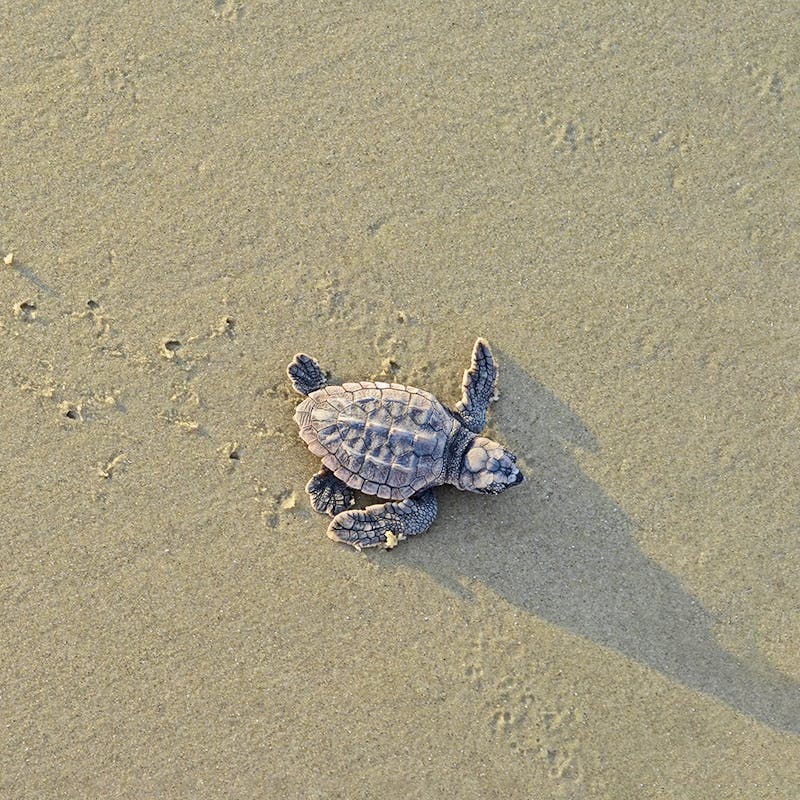
Sea turtles are not year-round residents to Georgia or its waters. Only female sea turtles come to shore at night to nest and lay their eggs. She will dig a deep pit to lay her eggs and then cover them over with sand before following the brightest horizon – the moon and stars reflecting on the water - back to the ocean. About two months later, baby turtles will hatch and make their own journey to the ocean.

Adult female loggerhead and green sea turtles come to shore to nest between May and August. Their hatchlings then make their mad dash to the ocean between August and October.
Adult loggerhead and green, along with juvenile Kemp’s ridley sea turtles, may also be spotted foraging in the water throughout the summer. Leatherback sea turtles are a winter resident, as they are in Georgia’s waters between December and June. These turtles forage in the colder months and are the first to nest in the spring.

The next time you take advantage of the over 100 miles of pristine coastline or the barrier islands in the early morning, keep your eyes open for ridged grooves in the sand heading for the ocean. You may be looking at turtle tracks!
Loggerhead sea turtles leave alternating, 3-foot wide, comma-shaped flipper tracks. Leatherback and green sea turtle tracks are parallel marks from a butterfly-stroke-like crawl, with the former’s tracks being much wider (6 to 7 feet) than the latter’s tracks (4 feet).

Georgia’s coasts: A Sentimental Spot
What’s the draw, for a sea turtle, to Georgia’s coasts? Georgia’s beaches are soft and warm, and the dunes provide some protection. An ideal environment for an egg to incubate.
Additionally, Georgia’s waters and estuaries are rich with crabs, jellyfish and macroalgae; all great food items for juvenile and adult sea turtles. Combine these tasty snacks with the placement of the state on the Atlantic Ocean and Georgia is a great pit stop for migrating sea turtles on this coast.

But it’s not all about placement. Georgia’s beaches may have a bit of a sentimental value to some of these animals. Female sea turtles return to the beach they hatched at when it’s time for them to nest. Scientists believe sea turtles use the Earth’s magnetic field to help them navigate when migrating, and hatchlings memorize their birth beach’s unique magnetic signature, a process known as “geomagnetic imprinting.”
A Shared Home in Need of Protecting
The greatest threats to our sea turtles are fisheries bycatch, habitat loss and disturbance due to development, oil spills and other pollution, artificial lighting, rising sea levels and warming sands. The good news is, both Georgians and visitors to the state’s beautiful coasts can help.
Residents and vacationers can help ensure the brightest horizon for sea turtles remains the moon over the ocean by turning off or redirecting beach-facing lights. It’s also important to only use turtle-safe lights when exploring the beach at night. Turtle-safe lights typically are amber or red instead of the harsh white or blue.

If you are lucky enough to see a sea turtle, give it space and allow it to do its thing. Avoid disturbing tracks, as scientists use them to identify species and rope off nests to protect them. Reporting these sightings to Georgia’s Department of Wildlife Resources at (478) 994-1438 can help ensure the animals and area is properly protected.
Everyone can also help by picking up after ourselves. Chairs and umbrellas left behind at night become obstacles for females coming ashore to nest and hatchlings trying to reach the ocean. Additionally, turtles mistake trash like plastic bags and Styrofoam for food. Reducing the amount of waste we produce, even at home, can help keep our oceans clean.

Georgia displays pride for its sea turtle residents through several events around the state. Jekyll Island is home to the state’s only sea turtle education and rehabilitation center. They host a variety of turtle themed events throughout the year including dawn and night patrol rides and walks. Tybee Island hosts a Turtle Talk throughout the summer where guests can learn about and even get an up-close experience with a captive loggerhead. For folks looking to go a step further, Georgia’s Department of Natural Resources, as well as several of the other barrier islands, host volunteer programs to help patrol for the animals during nesting season.
Take Pride in Your Sea turtle Neighbors
Imagine Georgia without its sweet peaches. Imagine the pristine and virtually unspoiled coastlines without its most precious visitors. What would the Peach State’s coast look like without its sea turtles? Vapid.
The next time you take pride in being a Georgian, take pride in the wild beachgoers who share this home with you. Volunteer to count and secure nests. Vote for leaders and policies that aim to protect these pristine habitats. Visit and clean a beach in your favorite turtle’s honor. And then, when you think you know it all about your fellow Georgia sea turtles, challenge yourself to learn about the other wildlife sharing our beautiful home.
What's your favorite Georgia wildlife? Have an incredible sea turtle story? Share with us in the comments or send us your photos! Then, meet our next wild local in Washington state.
Author