
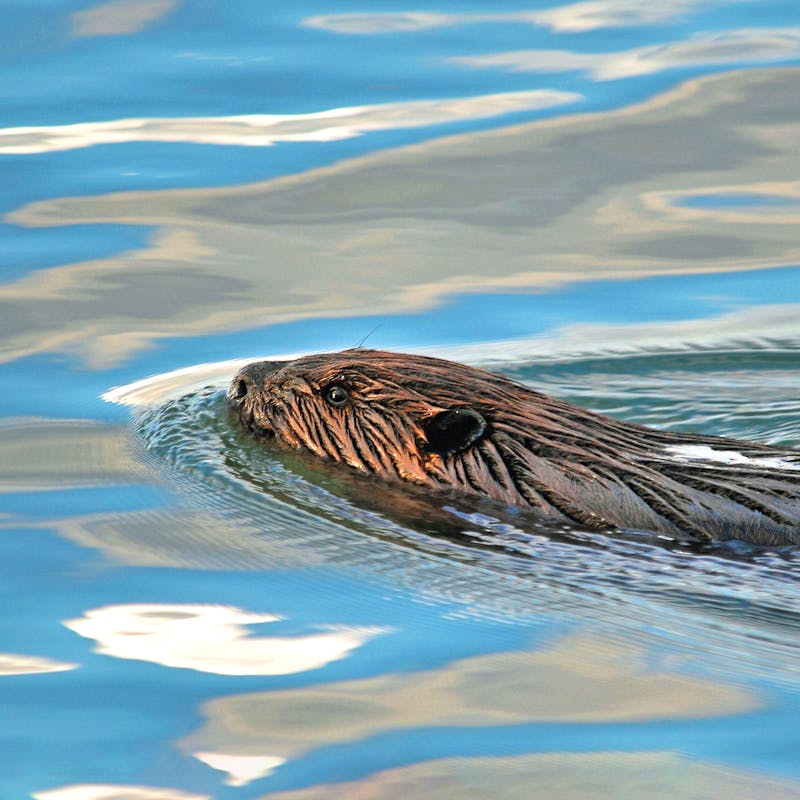
Defenders of Wildlife is proud to announce it has been awarded a grant from the National Fish and Wildlife Foundation to support our on-the-ground efforts to restore riparian habitat in the Rio Grande headwaters through beaver coexistence. This is a multi-year project made possible through support from NFWF, the World Wildlife Fund and other supporters.
“The beavers’ return is already revitalizing depleted ecosystems along the Rio Grande,” said Peggy Darr, New Mexico representative for Defenders of Wildlife. “This support will enhance the foundational work of creating stable, abundant water supply in a region that critically needs it.”
For nearly 80 years, Defenders of Wildlife has worked to protect and restore America’s wildlife at risk of extinction, advancing a vision of a future in which wildlife thrives, sustained by broad public support and a resilient network of healthy lands and waters. With a network of more than 2 million supporters, Defenders is an advocate for innovative solutions to safeguard wildlife for generations to come. To learn more, please visit https://defenders.org/newsroom or follow us on Instagram @defendersofwildlife.
Related

News

Prairie Dog Coalition Urges Colorado to End Recreational Prairie Dog Shooting on Public Lands
