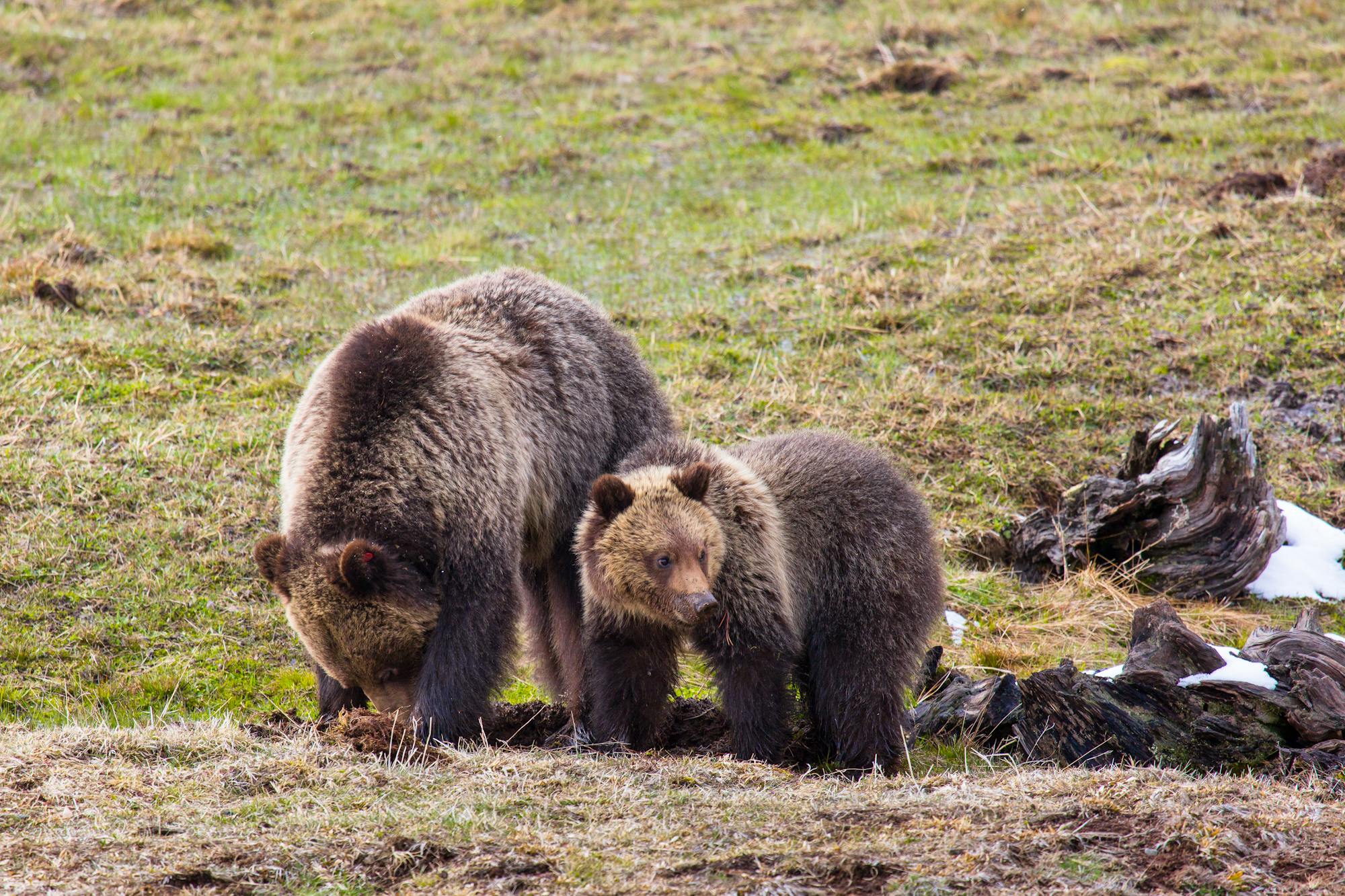
 WASHINGTON (June 22, 2017) – Today, the U.S. Fish and Wildlife Service announced the formal removal of Endangered Species Act (ESA) protections for grizzly bears in the Greater Yellowstone Ecosystem, turning over management of the bears to agencies in Montana, Idaho and Wyoming. Though grizzlies have made a strong comeback in the Greater Yellowstone Area, expanding from 136 to over 650 bears since their listing under the ESA in 1975, their recovery is ongoing and strong conservation efforts must be maintained.
Jamie Rappaport Clark, Former president and CEO of Defenders of Wildlife, issued this statement:
"The ongoing recovery of Yellowstone grizzly bears is an undeniable example of how the ESA can bring a species back from the brink. However, we are concerned over how grizzly bears and their habitat will be managed after delisting. We cannot allow the decades of work and investment to save these bears go down the drain.
"Defenders of Wildlife is going through the delisting rule with a fine-toothed comb, and we will hold federal and state wildlife and land management agencies accountable for strong stewardship and management of grizzly bears and their habitat post delisting.
"Additionally, Defenders will continue our work with local ranchers and landowners in the region to promote coexistence efforts between humans and their grizzly neighbors that can prevent bear mortalities and conflicts."
For nearly 80 years, Defenders of Wildlife has worked to protect and restore America’s wildlife at risk of extinction, advancing a vision of a future in which wildlife thrives, sustained by broad public support and a resilient network of healthy lands and waters. With a network of more than 2 million supporters, Defenders is an advocate for innovative solutions to safeguard wildlife for generations to come. To learn more, please visit https://defenders.org/newsroom or follow us on Instagram @defendersofwildlife.
News

Defenders of Wildlife Welcomes Stefan Ekernas as New Vice President of Species Conservation & Coexistence
