A Once Rare Occurrence is Becoming the New Norm
The North Cascades of Washington is a prime example of what true wilderness looks like. Jagged mountains reminiscent of the Swiss Alps, vivid blue alpine lakes, expansive evergreen forests, flowing rivers and lush valleys. This diverse landscape offers a variety of habitats from rainy old-growth forests to dry shrub-steppe. Fire scars also dot the landscape, and while they are indicative of a natural process, their increasing size and severity are worrisome.
For millennia, both lightning-ignited wildfires and Native American burning practices were integral in maintaining forest structure, minimizing disease outbreaks, and promoting biodiversity. Frequent low-intensity fires cleared the landscape of understory debris and occasional high-intensity fires thinned forests, maintaining a diverse age class structure. These wildfires were allowed to take their natural course before European settlement. But settlers misunderstood the importance and benefits of wildfires, and thus the era of fire suppression in the United States began.

Fire suppression has been the default in forest management practices for more than a century. No matter how the fire started, it was snuffed out. We now understand how detrimental this practice is to forest health. Fire deprived landscapes — combined with longer, hotter and drier summers due to climate change — have created the perfect environment for megafires, or high-intensity fires that burn 100,000 acres or more of land.
While high-intensity fires have always occurred, they used to be infrequent. We are now seeing these megafires more often and at such extreme intensities that some impacted areas are not recovering as expected. And, as these megafires become the new norm, they pose the questions: how is wildlife impacted and will they be able to adapt?
How Will Wildlife, like Canada Lynx, Adapt?
The largest impact megafires have on wildlife involves the alteration of wildlife habitats. Animals most at-risk are those that are naturally rare and sensitive to changes, such as the Canada lynx.
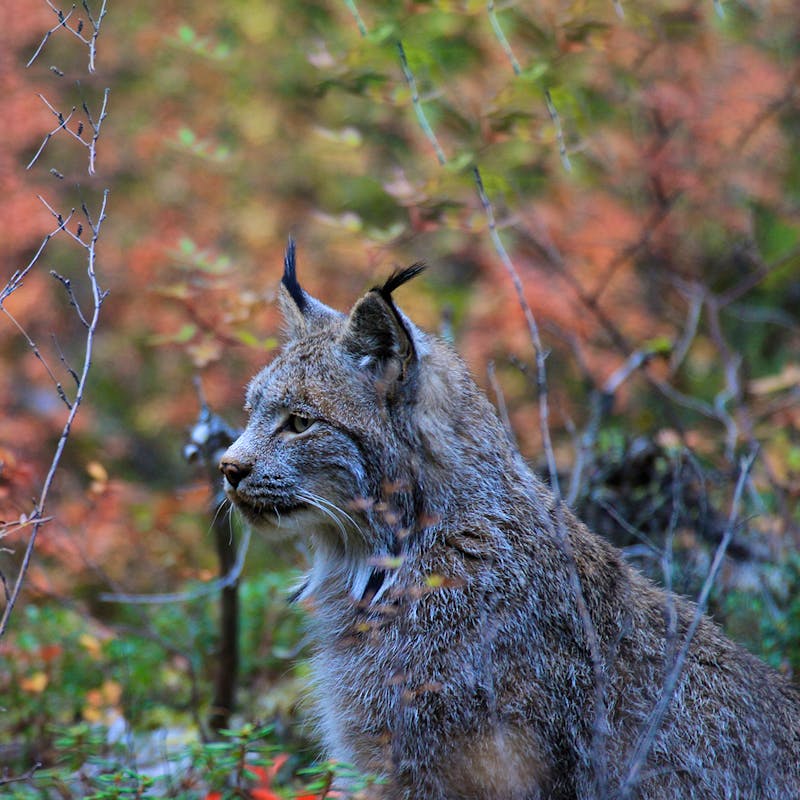
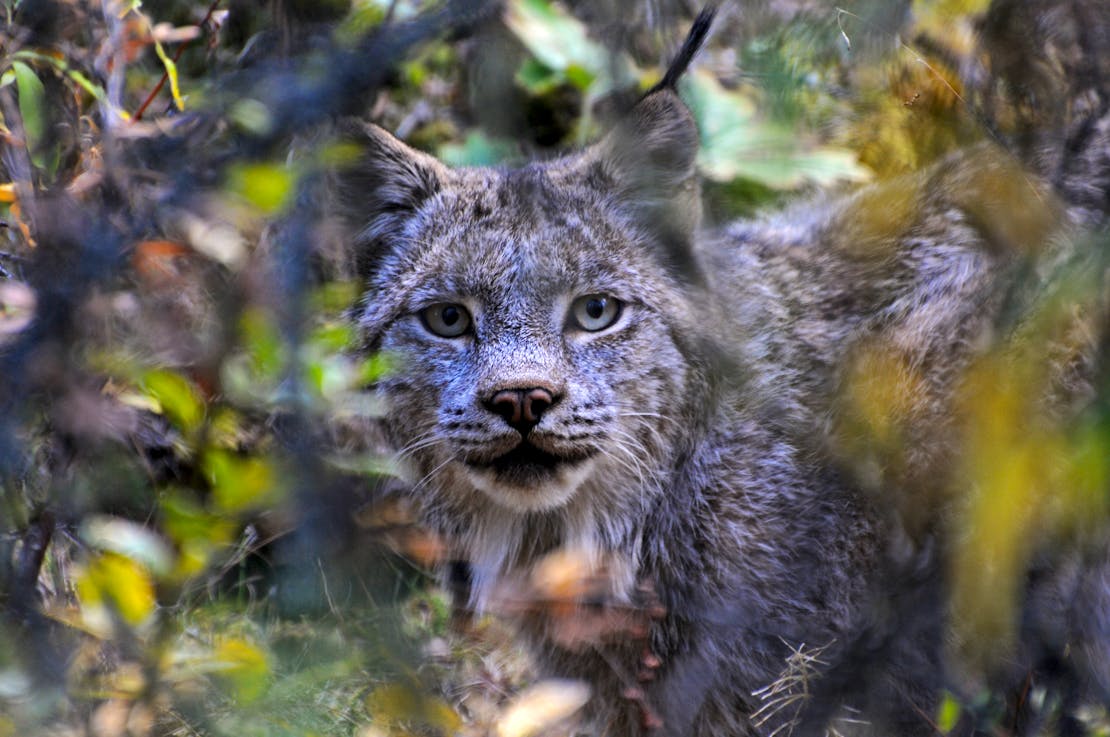
Canada lynx thrive in harsh climates and are considered boreal forest obligates, meaning they are only found in, and are highly adapted to, living in coniferous forests consisting mostly of pines, spruces, and larches. Washington is home to one of the largest remaining lynx populations left in the lower 48, numbering between 50 to 100 individuals. Even so, they still only occupy 20% of their historic range within the state, with most living in high-elevation forests in the North Cascades in western Okanogan County.

Megafires are a very real concern for the lynx’s future in the North Cascades due to the large tracts of boreal forest lost and the increased fragmentation of remaining habitat patches. Lucky for lynx, a crew of biologists are working to better understand the degree of impacts and whether these wild cats are adapting.
How Are Canada Lynx Adapting?
Defenders of Wildlife is supporting Home Range Wildlife Research’s Canada lynx wildfire impact study to learn how these cats are adapting. Since 2023, Home Range has been capturing and fitting lynx with GPS radio-collars, conducting backtracking surveys and camera surveys to learn how lynx are using the landscape in the era of megafires. While they have only just begun to formally analyze the data, several preliminary results are promising for lynx’s future in the North Cascades.

The bulk of Home Range’s study took place in the 175,000 acre burn scar of the 2006 Tripod Fire. Biologists were uncertain of whether this high-intensity burn had regenerated enough quality habitat to sustain hunting activity of lynx. Previous studies suggested it would take 20 to 30 years post-fire for lynx to establish home ranges in the burned areas. Not only have Home Range biologists documented several lynx using this burn area to hunt but also identified individuals maintaining home ranges within the burn area and even successfully reproducing and rearing kittens.
Although preliminary, these observations suggest that lynx may be adapting to the shift in habitat types caused by megafires.

Alongside Home Range’s wildfire study in the North Cascades, another study — the Cascades Carnivore Monitoring Program — is taking place with the ambitious goal of monitoring lynx, as well as the similarly sensitive wolverine, for 20 years. This is a massive collaborative effort between government agencies, tribes and nonprofit organizations — including Defenders! — to capture long term occupancy trends of these sensitive medium sized carnivores, or mesocarnivores.
The Cascades Carnivore Monitoring Program uses trail cameras to monitor these sensitive animals across the entire North Cascades ecosystem. Defenders is actively deploying cameras and tagging photos for this project.
The data collected will provide biologists with important baselines which will allow them to identify changes in population trends, such as notable decreases or increases, and changes in land use, including if the animals are expanding or contracting their ranges.
How You Can Help
Both short-term and long-term studies provide crucial information about lynx and their needs, allowing us to better conserve them now and in the future. You can help if you see a lynx while exploring Washington! Try to get a picture and record the location, then report the sighting to the Washington Department of Fish and Wildlife.

No matter where you are adventuring, check with the respective U.S. Forest Service Office or your state’s natural resources agency for local fire restrictions and burn bans. Although wildfires are important, unintentional human-caused fires add to the problem rather than help it.
Author