
They are, officially, the Florida state animal and the namesake for the Florida Panthers hockey team. The hype for this wild cat that prowls the forest and prairies of the greater Everglades in Southwest Florida is well deserved.

Florida panthers are the only member of the genus Puma established east of the Mississippi River. Depending on where pumas occur in North America, they are referred to as cougars, mountain lions and catamounts, among other names. Florida panthers were one of the first species to be saved from extinction under the Endangered Species Act and are currently listed as endangered.
Pounce on these fun facts to learn where panthers live, what panthers eat and how many Florida panthers are left in the wild.
What do panthers eat?
Florida panthers are obligate carnivores, meaning their entire diet consists of meat. Their primary prey is white-tailed deer, but as opportunistic predators, they will also hunt feral hog, rabbit, raccoon, birds and other animals.
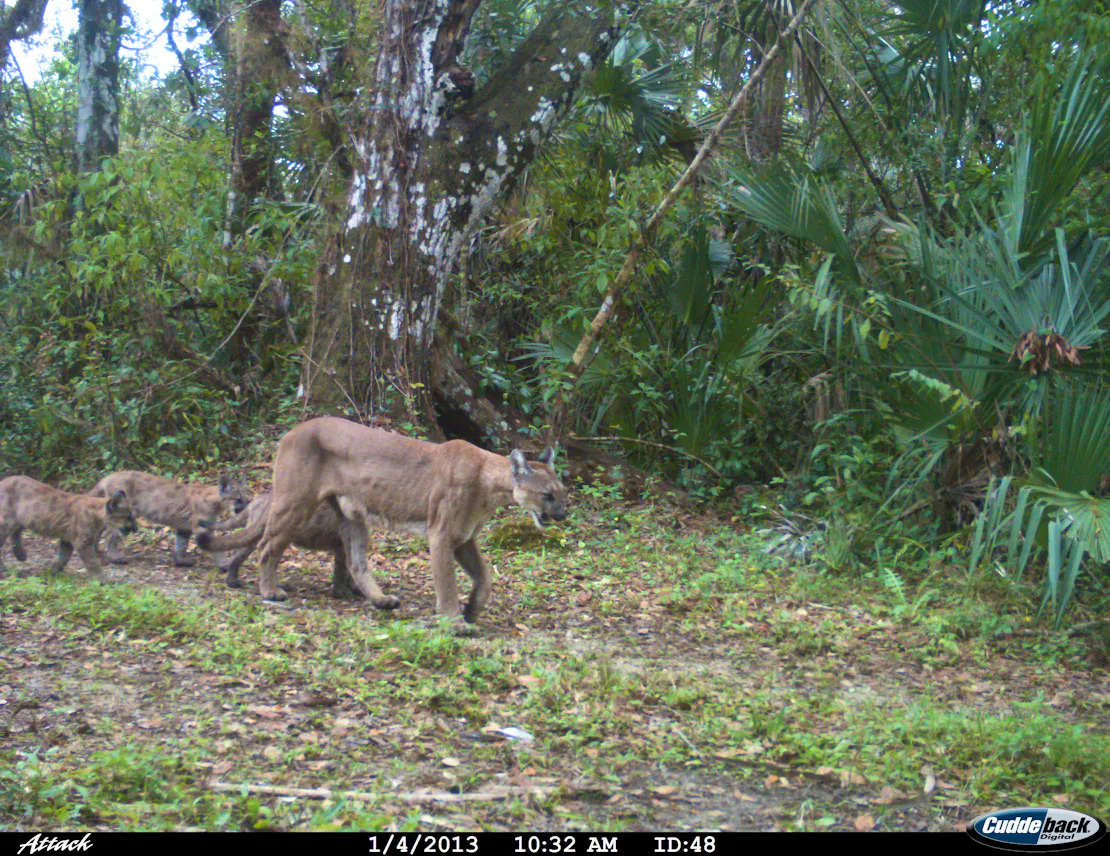
Where do panthers live?
Panthers are wide-ranging habitat generalists that live in a variety of habitat types. Florida panthers occupy the forests, prairies and swamps primarily in southwest Florida. Panthers do travel further up through the state and individuals have pushed northward with at least one reaching as far as west central Georgia.
Are there panthers in Florida?
Panthers historically ranged across the southeastern United States including Arkansas, Louisiana, Mississippi, Alabama, Georgia, Florida and parts of Tennessee and South Carolina. When European settlers arrived in the 1600s, however, direct prosecution, overhunting and destruction, degradation and fragmentation of the panthers’ habitat nearly wiped them out.
Today, the only breeding population of these cats is limited to the southwestern part of Florida. For these panthers to recover, they will need to be able to expand their territories northward.

How many Florida panthers are left?
There are only an estimated 120 to 230 adults and subadults living in southwest Florida.
Why are Florida panthers endangered? What threatens them today?
While there are places, like the Florida Panther National Wildlife Refuge, that provide a safe home for these cats, the wide-ranging cats rely upon a mosaic of public and private lands to roam in search of territory, food and mates. Some landowners are, however, resistant to sharing the landscape with these cats. Panthers need to be able to travel through and utilize both private and public lands to expand their range.
The high degree of isolation, as well as the small size of the population, makes Florida panthers vulnerable to genetic problems and catastrophic events such as disease, parasite outbreaks and exposure to toxins. In recent years, for example, some Florida panthers and bobcats have been impacted by a neuromuscular disorder of unknown origins. Affected animals exhibit varying degrees of rear leg weaknesses that lead to difficulty walking. The Florida Fish and Wildlife Conservation Commission is monitoring efforts to locate and examine affected animals.

Another major obstacle impeding panthers’ ability to expand their range northward is vehicular mortality, which is the largest cause of panther deaths. Dozens of panthers are killed on roads every year roaming across their large home ranges. A record 34 were killed crossing roads in 2016 and last year, in 2025, 17 panthers were killed by vehicle collisions.
What can we do to help Florida panthers?
Thankfully, several organizations are working to help Florida panthers recover. Defenders of Wildlife has been a leader in Florida panther recovery since we advocated for the cats to be listed under the ESA. We’ve helped fund and construct more than 75 predator-resistant enclosures since 2014 to protect pets and small livestock and prevent human-wildlife conflict in rural neighborhoods.
To address conflict on cattle ranches and other larger agricultural lands, we provide input and support to FWC’s two pilot programs that involve compensation for losses and funding to landowners who support panther presence. In 2025, FWC’s Payment for Ecosystem Service’s program enrolled more than 40,000 acres of vital panther habitat across six counties with approximately $1.7M allocated over the next three years to support payments to landowners to manage their lands in ways that benefit panthers.
Defenders has also served as the conservation representative on the federal Florida Panther Recovery Team, where we help identify dangerous road segments to prioritize wildlife crossings. More than 70 wildlife crossings have been constructed specifically to allow safe passage for panthers across dangerous roads, several others are under construction and more are planned. Defenders also partners with community members (like this gun range owner) to get panther-protective fencing and gates to keep panthers and countless other animals from accessing dangerous highways.
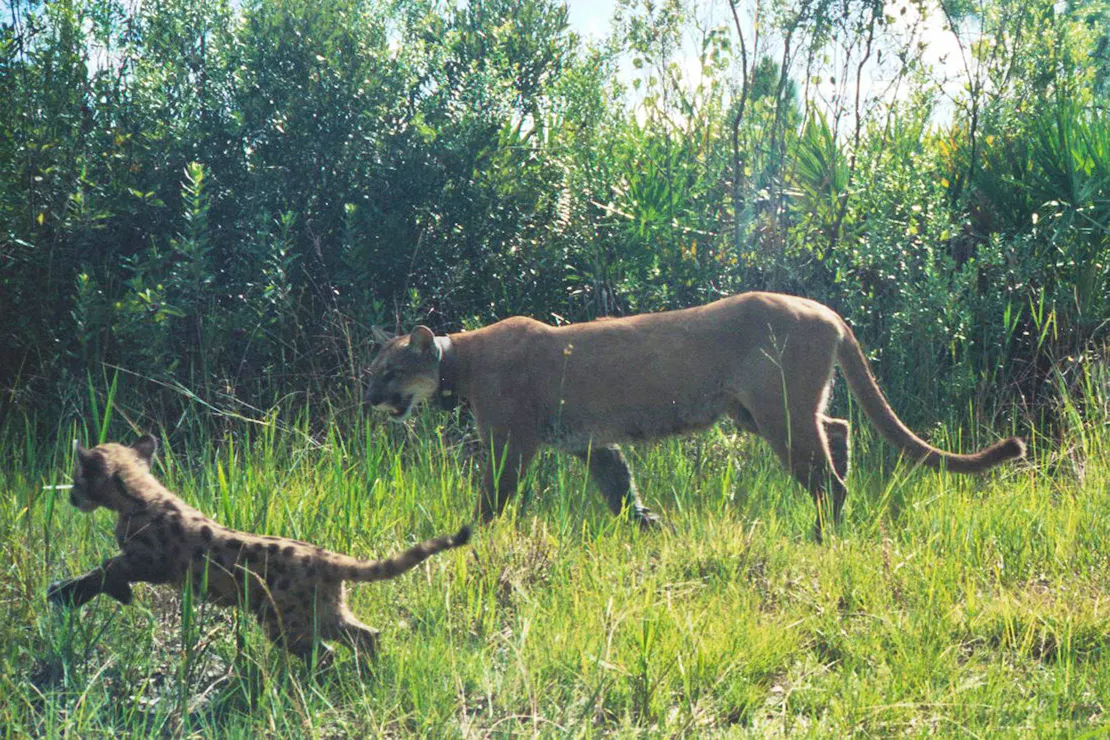
You can help protect habitat for Florida panthers through supporting land conservation efforts. Public support helped establish the Everglades to Gulf Conservation Area, for example, in 2024. This area is comprised of four million acres of Southwest Florida wetlands, woodlands and prairies that provide habitat critical to more than 100 protected species, including Florida panthers. There are several state land acquisition and easement programs the Florida legislature needs to fund annually, so if you live in Florida, be sure to let your state representatives know you want to protect habitats!
And let us not underestimate the power of public outreach and advocacy. Having the Florida panther as the official state animal has helped raise awareness and pride in saving the species. You can help raise awareness for these endangered cats too! Share some of the facts you learned today with your friends, followers and community.
Author

Elizabeth Fleming


