From the redwood forest to the Gulf Stream waters, communities take root in the land and water. We live, work, laugh and grow alongside our human and animal neighbors alike. We may not know their names or always see them, but we recognize their songs, their tracks and, when they’re gone, their absence.
When thinking about Delaware Bay, you may conjure an image of brackish, fresh and saltwater lapping at the shore and the thousands of boats passing through each day. It is the second busiest waterway in the United States after the Mississippi River.
Some of Delaware Bay’s most important visitors only pass through in the spring. They literally flock to the shores in the hundred-thousands.

Meet the Shorebirds of Delaware Bay
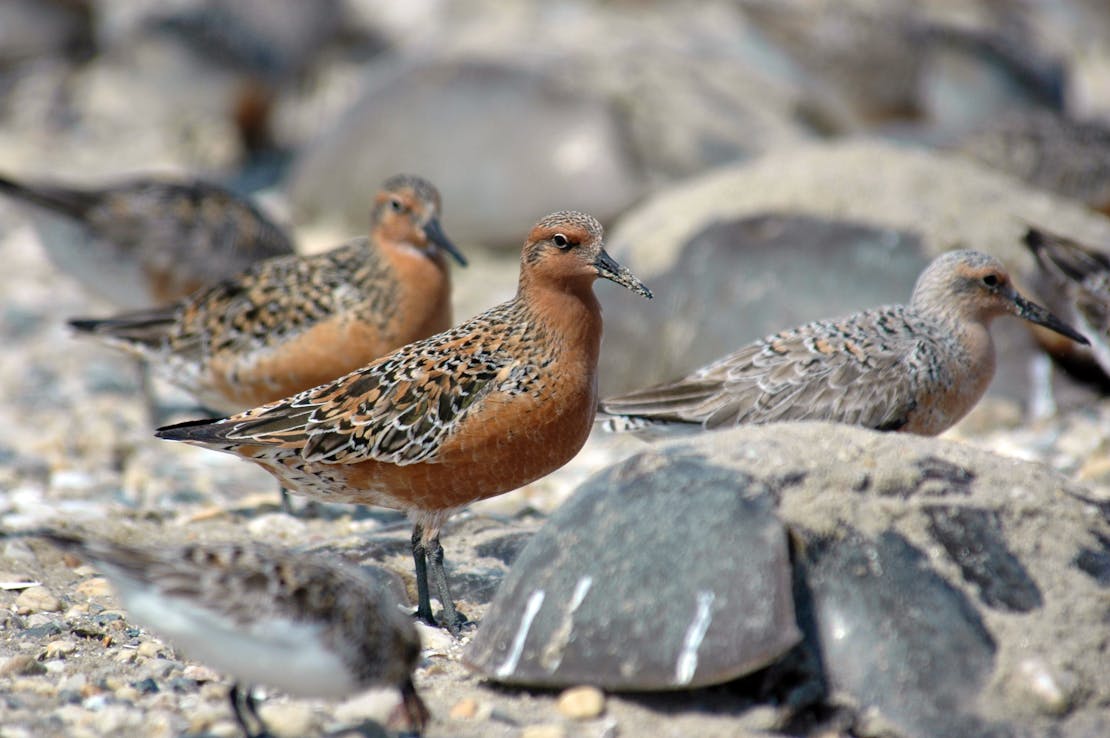
Whether you are standing on the Delaware or New Jersey shore of the Delaware Bay, residents and tourists alike may see huge numbers of sanderlings, semipalmated sandpipers and ruddy turnstone forage. Adorable, 6-to-7-inch long piping plovers scurry short distances in search of food. But most notably are the roughly 25,000 rufa red knots congregating on the shore.
Delaware Bay is not known for having endemic or unique shorebirds, but it alone supports up to 80% of the migrating population of rufa red knots. These birds arrive in early May, with peak numbers appearing from mid-to-late May through early June. They then head to their breeding grounds in the arctic.

The next time you take advantage of New Jersey’s 1,792 miles of shoreline, or Delaware’s 381 miles, keep your eyes alert for each shorebird’s unique plumage. Many shorebirds have brighter and unique colors during the spring, known as their breeding plumage.
Rufa red knots, for example, are adorned with a bright rust-orange-red breast and face and a dark, russet back during this season. It is said the sky turns scarlet under their migrating flocks. Their journey is one of Earth’s longest migratory events, at over 9,000 miles from South America to the Arctic.
Delaware Bay: A Critical Stop
What’s the draw, for a shorebird, to Delaware Bay? The key is Delaware’s state marine animal: the horseshoe crab. Delaware Bay hosts the largest spawning population of horseshoe crabs in the world.

These arthropods live in the deep Atlantic waters off Delaware Bay year-round. Each spring, between May and June, they come ashore to lay their eggs. These eggs are a critical food source for rufa red knots. So important, in fact, that the shorebirds are timed to arrive right during peak spawning.
A Shared Home in Need of Protecting
The loss of food sources, including horseshoe crabs, and habitat from coastal development and rising seas are the greatest threats to our shorebirds. Horseshoe crabs are also threatened by habitat destruction, as well as harvesting for medical use and as bait. The good news is Delawareans, Jersey boys and girls, and visitors to this great bay can help.
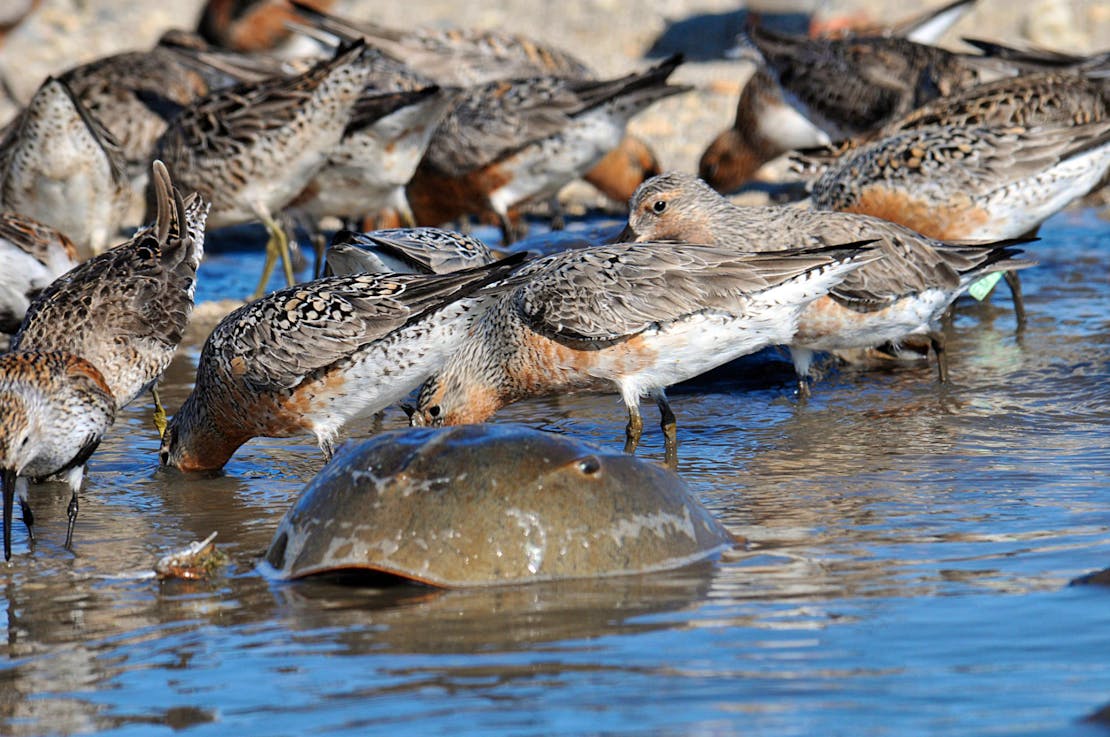
You can help these birds stay healthy and fit for their flight by keeping your distance, keeping your dogs off the beach or on a leash, not feeding the birds and disposing litter you come across properly. Remember, every shorebird stopping in Delaware Bay is in the middle of a marathon. They need to conserve the little energy they have and focus on gaining more from the food they catch while visiting so they can finish their migration to their breeding grounds.
If you happen to see a horseshoe crab with its walking-legs pointed upwards, please flip this harmless, overturned animal over. Horseshoe crabs are unable to flip back upright. But please do not pick them up by their tail, instead pick the animal up by their shell.
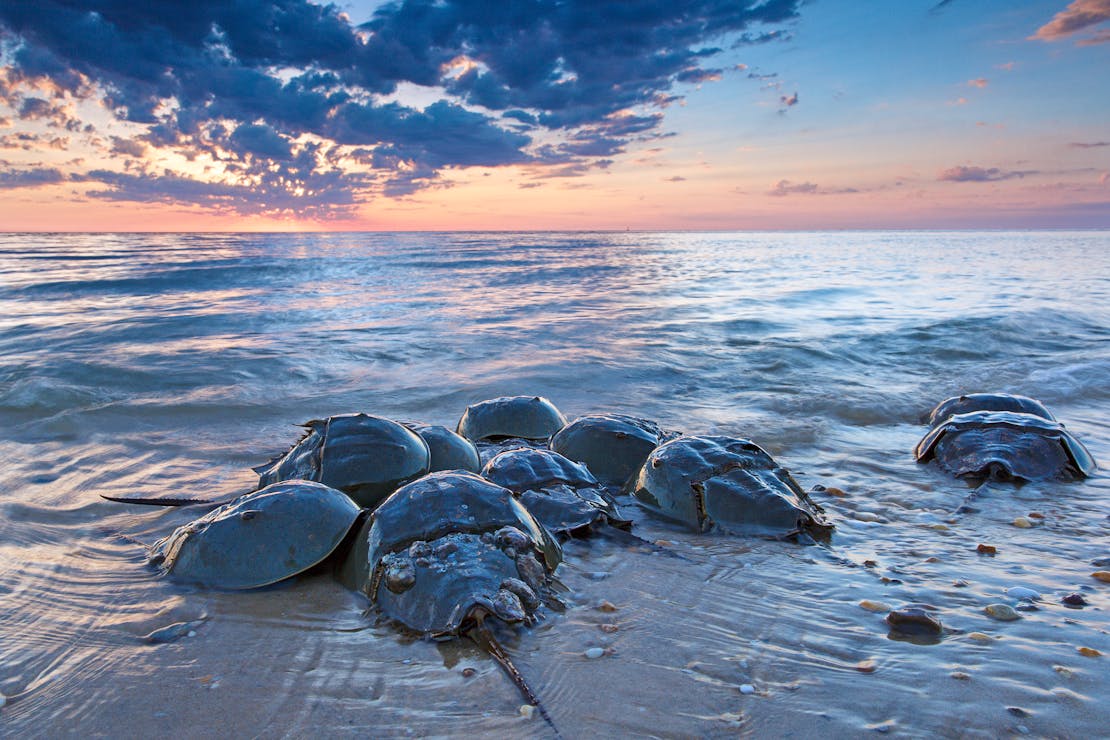
Both Delaware and New Jersey display pride for their shorebird visitors and horseshoe crab residents through various events in May and June. One of the biggest celebrations is the Horseshoe Crab & Shorebird Festival in Milton, Delaware. Delaware’s Department of Natural Resources and Environmental Control also hosts Horseshoe Crab Beach Walks and Shorebirds Along the Bayshore hosts talks to learn more about the animals. Many of New Jersey’s most popular events, including the Sunset on the Bay event in June, involves volunteer opportunities along with beach walks to look for wildlife and expert talks on the animals.
Take Pride in Your Shorebird and Horseshoe Crab Neighbors
Imagine Delaware Bay without ships passing through. Imagine the robust beaches without the chorus of bird chirps to welcome you onto warming sand. What would Delaware Bay look like without its vibrantly colored shorebirds? Dull.
The next time you take pride in being a Delawarean or New Jersey boy or girl, take pride in the wild, seaside icons who share this home with you. Celebrate with old and new friends. Clean the beach in your favorite bird’s honor. Casually stroll along the shore in the spring to observe the horseshoe crabs and shorebirds in action. And then, when you think you know it all about your fellow Delaware Bay shorebirds, challenge yourself to learn about the other wildlife sharing our beautiful home.
What's your favorite Delaware or New Jersey wildlife? Have an incredible shorebird story? Share with us in the comments! Then, meet our next wild local in Tennessee.
Author