
The Refuges
In the southeast corner of Texas, where the Rio Grande flows into the Gulf of Mexico, a unique convergence of climates and ecosystems has created one of the most biologically diverse regions of the United States. It’s no coincidence that two of the premier refuges in the National Wildlife Refuge System are located there.

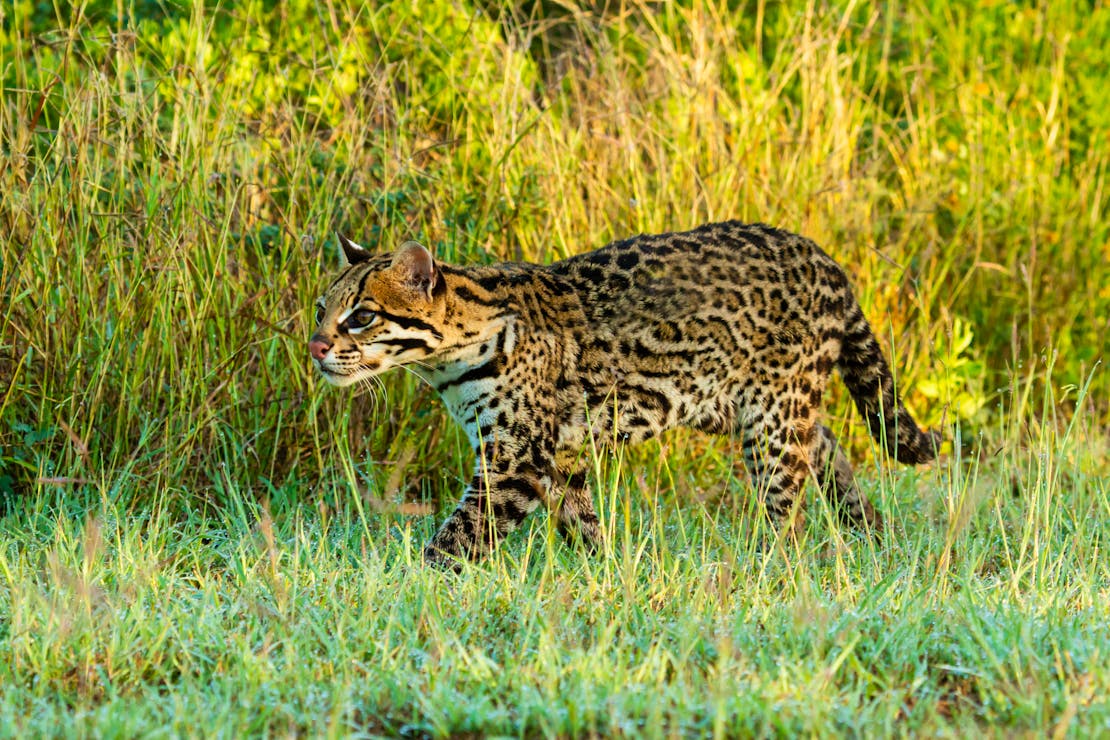
Lower Rio Grande Valley National Wildlife Refuge is an emerald necklace of refuge tracts strung along the final 150 miles of the river. It supports at least 18 threatened or endangered species, the seventh most among the 573 refuges nationwide. Just a few miles up the coast, Laguna Atascosa National Wildlife Refuge is home to the only population of endangered ocelots in the Refuge System.
Because this part of Texas has one of the fastest growing human populations in the country, the refuges have plenty of neighbors. One neighbor, however, has been more challenging than the others. The facilities of the rocket company SpaceX are surrounded by the Boca Chica tract of Lower Rio Grande Valley NWR.

SpaceX has rapidly developed land at the refuge’s doorstep. It has regularly shut down the only road to the beach at Boca Chica, blocking access to the public and refuge staff alike. Most significantly, SpaceX has tested and launched some of the largest rockets ever constructed. When these events have been successful, they have bombarded the surrounding area with noise, light, heat, shock waves, and air and water contaminants. When they have gone awry—sometimes to the point of spectacular, explosive failure—they have rained debris onto the refuge and triggered wildfires.
SpaceX has not hidden its desire to expand its operations in Boca Chica. The U.S. Fish and Wildlife Service is now preparing to make that possible.
The Proposed Exchange
FWS has released a Draft Environmental Assessment for a proposed land exchange that would give the company 712 acres of Lower Rio Grande Valley NWR in exchange for 692 acres owned by the company, most of which would be added to Laguna Atascosa NWR.
The Draft EA acknowledges that the land to be acquired by SpaceX would be used for “residential, commercial, industrial, and infrastructure purposes” but claims this sacrifice would be offset by the land received by the refuges. This proposal does not satisfy the laws governing refuge system land exchanges and would not be a win for wildlife.

The National Wildlife Refuge System Administration Act only authorizes FWS to exchange refuge land that is “suitable for disposition,” regardless of what it receives in return. The Draft EA makes no mention of this requirement, which is intended to prevent the loss of habitats that play a key role in achieving a refuge’s purposes or management goals.
Lower Rio Grande Valley NWR was established to protect and restore a corridor of riparian habitat along the lower Rio Grande, something that is essential for the future of wildlife in the region. The exchange would undermine that goal by allowing riparian habitat to be bulldozed. The expanded footprint of SpaceX would plug the corridor like a cork in a bottle, putting the goal of an unbroken stretch of habitat permanently out of reach. For this reason alone, the land in question cannot be considered eligible for an exchange.
The Refuge Act is not the only applicable law in this case. In addition to valuable wildlife habitat, the land sought by SpaceX also contains an important historical resource—the Palmito Ranch battlefield, site of the final skirmish of the Civil War and a designated National Historic Landmark.

The National Historic Preservation Act requires that any exchange involving a landmark must be designed to minimize impacts, which the Draft EA claims would be accomplished by preserving just 4.5 of the 712 acres. It also ignores the NHPA’s requirement that the land received in return must be a “comparable historic property.” There is no indication that the exchange would meet this condition.
To support the exchange on biological grounds, the Draft EA offers an analysis comparing the habitat quality of the lands on either side. It found that the refuge land to be traded away was mostly “low quality” habitat, while the parcels to be received were all “high quality.”
Unfortunately, the methods that produced this result are kept under wraps, making it difficult to judge. Most concerningly, the Draft EA reveals that SpaceX “collaborated” with FWS to develop the analysis, calling into question the integrity of the results. Habitat value should be assessed independently by FWS biologists, who are the experts, not the corporation seeking the refuge land.
Holding the Line for the Lower Rio Grande
In an internal memo written late last year, the agency noted that “SpaceX construction and operations have and will continue to impact resource management on the Refuge” and that the exchange is an opportunity for FWS to “divest of lands likely to be impacted by SpaceX activities.”

This suggests the land to be traded away has been made suitable for disposition by the degradation of its habitats at the hands of SpaceX. This is inappropriate, as it would effectively reward the company for the damage it has caused. It would also provide a roadmap for others who might desire part of a refuge.
If the exchange is motivated by a desire to lessen the impacts of development on the refuge, it will have the opposite effect. By approving it, FWS would knowingly accelerate the same development it blames for the habitat degradation that has pushed the agency to consider the exchange.
And making this offering to SpaceX will not buy safety for the remaining refuge land in Boca Chica. The tracts to be traded away by FWS would still be bordered by the refuge on several sides. Once developed, they would expose the surrounding habitats to a new source of disturbance at close range. Those habitats would thus be degraded in ways that would never occur without the land exchange.
By proposing this exchange, FWS has opened the door to a cycle of exchange, development, and degradation that may leave wildlife without a home in the Lower Rio Grande Valley.
Join us in calling for FWS to defend the integrity of the refuge by canceling this land exchange. Submit your comments on the Draft EA to r2plancomments@fws.gov by March 31.
Author


