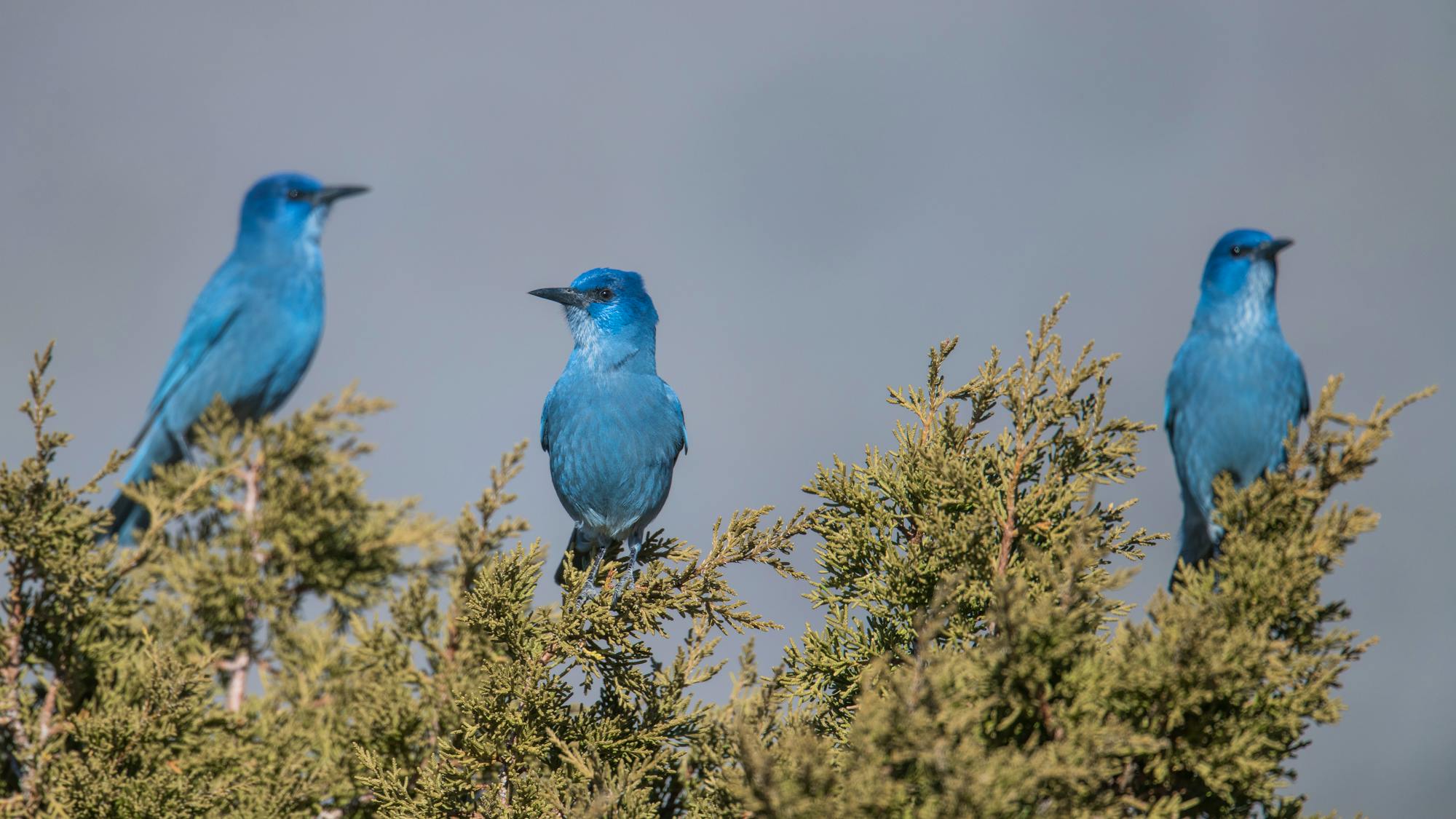
The U.S. Fish and Wildlife Service has quietly punted the next phase to federally protect the Pinyon Jay under the Endangered Species Act to 2028 – adding another four years to a delayed process that began in 2022. Defenders of Wildlife once again calls on FWS to urgently assess Pinyon Jay status before its population drops to irreparable numbers.
"The Pinyon Jay is another victim of chronic underfunding of the ESA and FWS’s choice to avoid and delay rather than address threats to pinyon jay and piñon pines,” said Peggy Darr, Defenders of Wildlife New Mexico representative. “The FWS must move forward now with a final decision that protects the pinyon jay and its habitat under the ESA or risk losing the animal altogether.”
In April 2022, Defenders of Wildlife petitioned FWS to protect the pinyon jay under the ESA. More than one year after missing its deadline to produce a 12-month species review as part of the federal listing process, FWS has now announced it does not intend to complete the review until 2028.
For nearly 80 years, Defenders of Wildlife has worked to protect and restore America’s wildlife at risk of extinction, advancing a vision of a future in which wildlife thrives, sustained by broad public support and a resilient network of healthy lands and waters. With a network of more than 2 million supporters, Defenders is an advocate for innovative solutions to safeguard wildlife for generations to come. To learn more, please visit https://defenders.org/newsroom or follow us on Instagram @defendersofwildlife.
Media Contact

Related


News

A Much-Needed Win for Wildlife: Senate Introduces Bill to Improve Endangered Species Act Implementation
