Tweet“The First Circuit’s decision represents a major victory for right whale conservation. The wedge closure affects only a handful of lobstermen for three months but protects right whales from the deadly fishing gear entanglements driving this species towards extinction.”
Conservation groups applaud a First Circuit Court of Appeals decision reinstating a 2024 National Marine Fisheries Service (NMFS) rule that protects critically endangered North Atlantic right whales from fishing gear entanglements — one of two major threats to the species’ survival and recovery.
In May 2024, Conservation Law Foundation (CLF), Defenders of Wildlife, and Whale and Dolphin Conservation appealed a federal district court decision rejecting a NMFS rule that annually closes 200 square miles of federal waters off the Massachusetts coast to lobster fishing during the three months when right whales are present in high numbers. The federal appeals court overturned the district court’s decision.
Surrounding areas are already seasonally closed thanks to 2015 and 2021 rules issued by NMFS. The 2021 rule unintentionally left this wedge area open for fishing, creating a high-risk hotspot for entanglement as lobster gear piles up. NMFS temporarily closed the wedge by emergency rules in 2022 and 2023. The Massachusetts Lobstermen’s Association challenged the 2024 final rule that would close the wedge area every year between February and April.
The district court judge cited the FY2023 Consolidated Appropriations Act, a must-pass appropriations bill that “deems” state and federal lobster fishery authorizations “in full compliance” with the Endangered Species Act and Marine Mammal Protection Act through Dec. 31, 2028. That citation came in spite of a separate court ruling identifying NMFS’s legal violations of these laws when finalizing the 2021 rule. The district court judge claimed that the 2022 emergency rule wasn’t “in place” when the Consolidated Appropriations Act was enacted in December 2022. However, the appeal court’s ruling confirms that NMFS finalized the 2024 rule consistent with the Consolidated Appropriations Act.
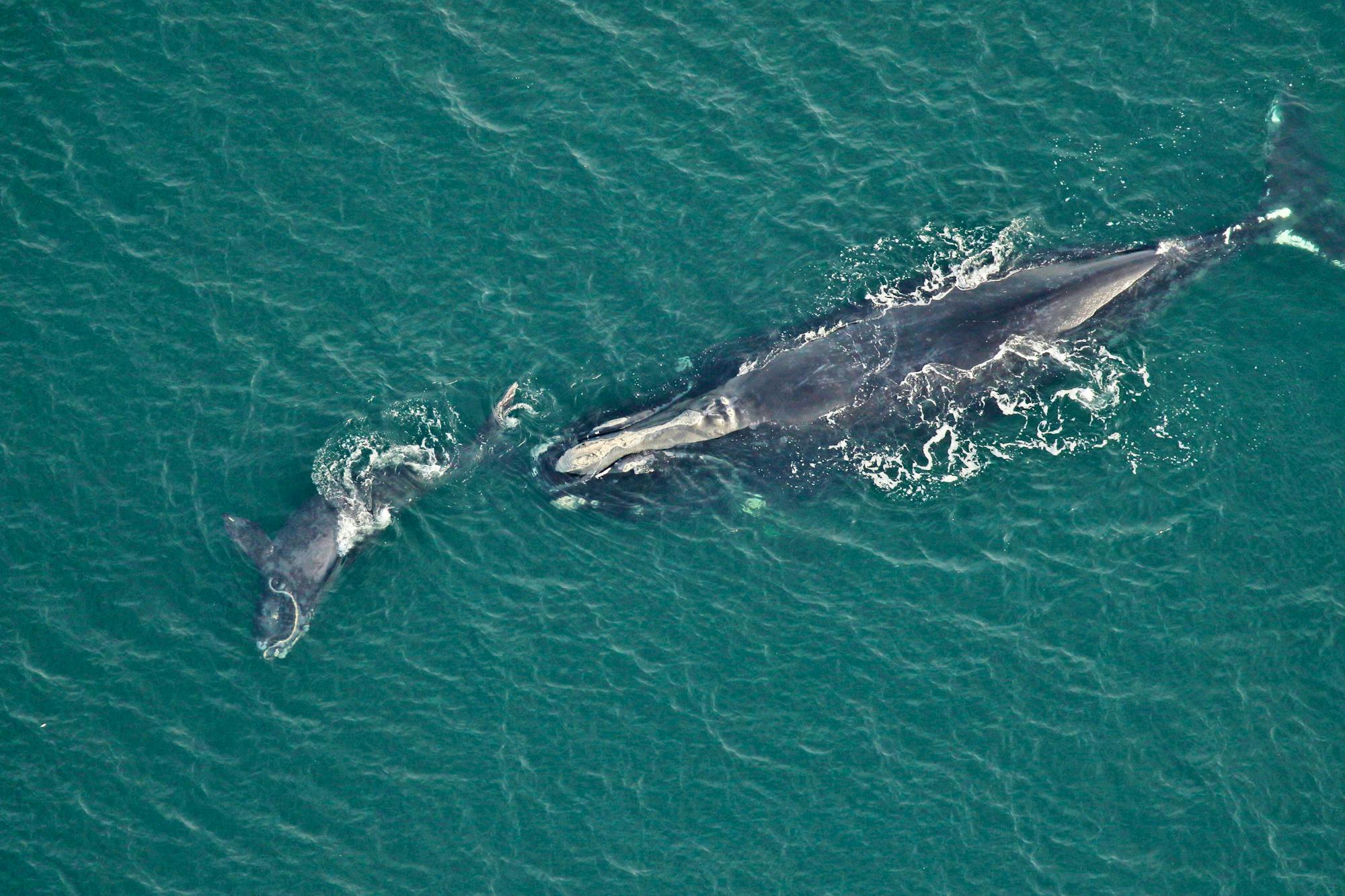
With only 370 surviving animals, including only 70 reproductively active females, the right whale is approaching extinction in large part due to two major threats: entanglements and vessel strikes.
“Just like school speed zones are always in place but are only in effect when school is in session, the 2022 emergency rule to seasonally protect right whales in the wedge off Massachusetts was also in place in December 2022,” said Regina Asmutis-Silvia, Executive Director of Whale and Dolphin Conservation. “That was the intent of Congress when it referenced the emergency rule in the Consolidated Appropriations Act language. We are grateful that the appellate court acknowledged it.”
“The First Circuit’s decision represents a major victory for right whale conservation,” said Jane Davenport, senior attorney at Defenders of Wildlife, who argued the case for conservation groups. “The wedge closure affects only a handful of lobstermen for three months but protects right whales from the deadly fishing gear entanglements driving this species towards extinction.”
“With seasonal closures on either side, these waters have become a gear parking lot littered with lines that threatened to entangle and harm right whales,” said Erica Fuller, senior counsel at Conservation Law Foundation. “We’re pleased the First Circuit recognized that the 2024 rule, annually closing risky waters to vertical lines in the spring, is consistent with congressional intent to fix an inadvertent gap in protection off the Massachusetts coast.”
CLF, Defenders of Wildlife, and Whale and Dolphin Conservation have federally appointed members on the Atlantic Large Whale Take Reduction Team and had brought the gap in protections to NMFS’s attention in late 2021. Attorneys from Defenders of Wildlife and Conservation Law Foundation represent their organizations and Whale and Dolphin Conservation in the litigation.
For nearly 80 years, Defenders of Wildlife has worked to protect and restore America’s wildlife at risk of extinction, advancing a vision of a future in which wildlife thrives, sustained by broad public support and a resilient network of healthy lands and waters. With a network of more than 2 million supporters, Defenders is an advocate for innovative solutions to safeguard wildlife for generations to come. To learn more, please visit https://defenders.org/newsroom or follow us on Instagram @defendersofwildlife.
Media Contact

Related


News

Trump Administration Opens Door to Bear Baiting, Den Hunting in Alaska Preserves
