Family is defined as “a group of people connected by blood, marriage, adoption, legal bonds or deep emotional ties who share support, care and responsibility for one another.” For some humans and animals, this may look like a dad and mom raising their offspring. It may look like a single parent. It may even look like grandparents sticking around or stepping in.

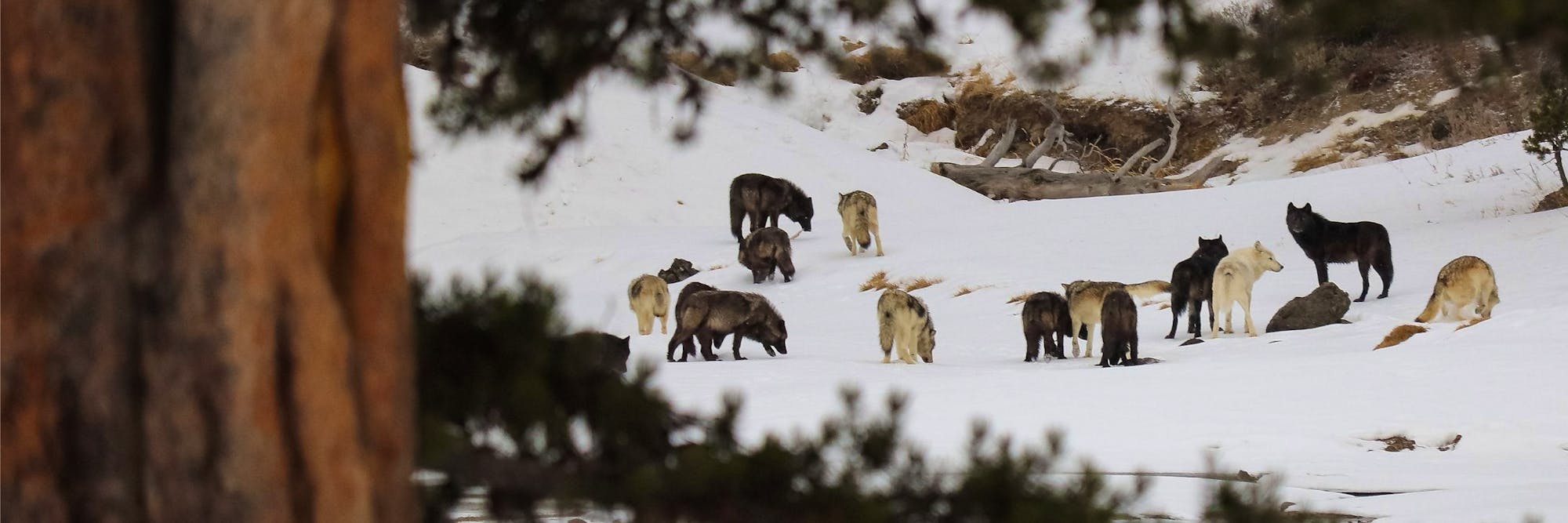
In the world of animals, wolves are a well-known example of wildlife who live and rely on their family group, or pack. Gray wolf packs typically have six to eight members but may have upwards of 20 depending on prey availability, habitat and local management practices. Endangered Red Wolf packs, however, are much smaller and are more commonly called "family groups" instead of packs.
Family dynamics are critical for the success of these animals, and losing a member can be detrimental to current and future generations.

Do all canids live in family groups?
Almost all wild canids form monogamous pairs, meaning they share territory, hunt, mate and raise litters with one other partner. Not all canids live in family groups, meaning they mate for life and have multiple generations of offspring who follow their parents for years.

Red and swift foxes, for example, do not mate for life, but they will maintain the same partner for a year who they mate and raise kits with. Once the kits move on in late summer, the pair goes their separate ways too.
Wolves, on the other hand, will often mate for life, or for as long as both mates are living. The breeding pair will lead their pack, consisting of their offspring, year after year. Wolf pups may also stay in their parents’ pack after the next litter is born to help raise their younger siblings.

Take Colorado’s North Park Pack as an example. Male gray wolf 2301 was part of the first known and documented litter of pups born in Colorado since their statewide eradication in the 1940s. He and his father stuck together to maintain their territory after the rest of his littermates and mother died in 2022.
This father-son duo began a new chapter in 2025 when they met two wolf sisters reintroduced from Oregon. Together these wolves formed the new One Ear Pack and have already had two successful litters. 2301 has remained with this pack and his father, likely helping raise his younger half-siblings.

When do wolf pups stop relying on their mother?
Wolf pups will begin eating solid food around 5- or 6-weeks old. They are typically fully weaned from their mother’s milk by 8 or 10 weeks.
In July of 2026, when Red Wolf breeding female, 2503F, was struck and killed by a vehicle, she left her mate and two 4-month-old pups behind. While the pups were weaned off mom’s milk, they still needed their pack leaders to teach them the ways of a wolf. Pups don’t start learning to hunt themselves until they are around 6 months old. They rely on their parents and older siblings to teach them how to hunt, along with other survival skills, until they are at least a year old.

Luckily, 2503F’s mother, 2225F, had stayed close by after being displaced by her daughter and was able to step back in to help lead the pack with breeding male, 2191M. Having their grandmother step in to help teach them along with their dad and older siblings is setting them up for greater success!
Do wolves ever adopt pups?
Unlike many top predators, like lions and bears, wolves will sometimes take in and raise pups from other packs. Because of this nurturing instinct, biologists have been able to "cross-foster" genetically valuable newborn pups from captive populations of endangered Mexican Gray wolves into the dens of wild packs with litters of the same age.

These pups are raised by their adoptive parents and older siblings, just as any wild wolf pup. At least 23 Mexican gray wolf pups cross-fostered into the wild have achieved breeding age (around 2 years old) and produced at least 30 litters of their own since 2016.
Cross-fostering works alongside other recovery tools, including releasing bonded family groups, and is dependent on the same thing every wolf family is: stable parents who stay alive to raise their young.

When do wolves leave their pack?
Juvenile wolves over a year old may choose to leave their pack, a process known as dispersal. Most disperse closer to 2-years of age, which is also around the time they become physically mature. Because packs only have one breeding pair, young wolves need to leave their natal pack and territory if they wish to establish a pack of their own.
Red Wolf 2411M was born on Alligator River National Wildlife Refuge in 2022 to the Milltail family group. When he reached maturity, he dispersed from his natal territory and traveled west to find 2361F in Pocosin Lakes National Wildlife Refuge. This wild female wolf was one of the few unrelated wolves on the landscape, and the two young canids pair bonded. In April 2026, this couple welcomed a litter of eight pups.

In contrast, Red Wolf 2503F decided to challenge her mother for the pack and territory instead of finding her own. While family group dynamics can change over time, it was surprising to see a 2-year-old wolf overthrow a well-established matriarch. 2503F was part of 2225F’s first litter in 2022, sired by a male who passed in 2023. This was also the first litter of Red Wolves born in the wild since 2018.
What is the greatest threat to wolf pack dynamics?
Mortality of adults, specifically members of the breeding pair, is the greatest threat to wolf pack dynamics. When this happens, the surviving leader may find a new mate, get overthrown or let the pack dissolve.
The timing of mortality can lead to further issues. Younger wolves’ education may also be disrupted if leaders of the pack are killed or removed. Instead of learning to properly hunt, these wolves may resort to “easier” prey like livestock.
If a breeding Red Wolf male is killed before he and the female can breed, for example, there is a higher chance of a coyote hybrid. This hybridization impacts the genetic integrity of the already small and valuable population.

For endangered Mexican gray and Red Wolves, every individual — including well raised pups — is critical to restoring their populations.
How many Red Wolves are there in the world?
There are less than 30 adult Red Wolves left in the wild, all found in northeastern North Carolina. Over the summer of 2026, the Red Wolf Recovery Program confirmed the birth of four wild litters, estimating 12 to 16 pups total.
How many Mexican gray wolves are there?
There are at least 317 wild Mexican gray wolves in Arizona and New Mexico. This number has grown steadily for years, but the population is still vulnerable.

How can we help wolves?
If you want to help wolves like the ones you met here, be sure to drive slowly as you explore areas wolves are known to roam and always keep an eye out for wildlife trying to cross the road. This is particularly important after dark when many animals are most active.
You can also help directly support efforts to restore these vulnerable wolf populations! North Carolinians will be able to purchase a Red Wolf license plate starting in 2027. All proceeds from these specialty plates will go directly to help support the continued recovery of these animals.

Similarly, residents in Colorado can purchase the Born to be Wild license plate, which has already raised over $2 million for range riders and other state-led nonlethal wolf coexistence efforts.
We also need wolf supporters across the country to engage in public decision making to help defend wolves from politically motivated efforts. We need your help securing strong policies, increasing funding and maintaining protections for recovering wolf populations.
And of course, advocating for and donating to organizations like Defenders of Wildlife helps ensure these wild canids have a thriving future.
Author

Heather Clarkson

Craig Miller