Join our mobile Rapid Response Network!
You can be the first to hear about how we’re going to hold this administration accountable and how you can fight back for wildlife!
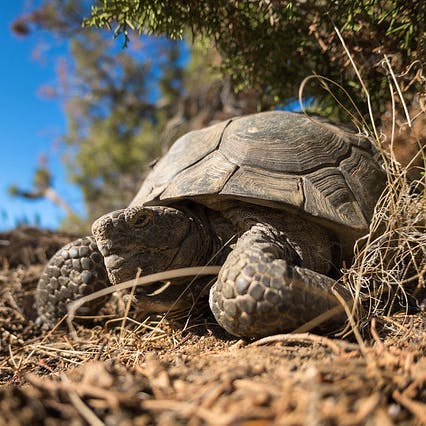
Mojave Desert tortoises have a high, dark tan or brown, domed shell.
As their name suggests, they live in the Mojave Desert west and north of the Colorado River. They are one of three desert tortoises native to North America.
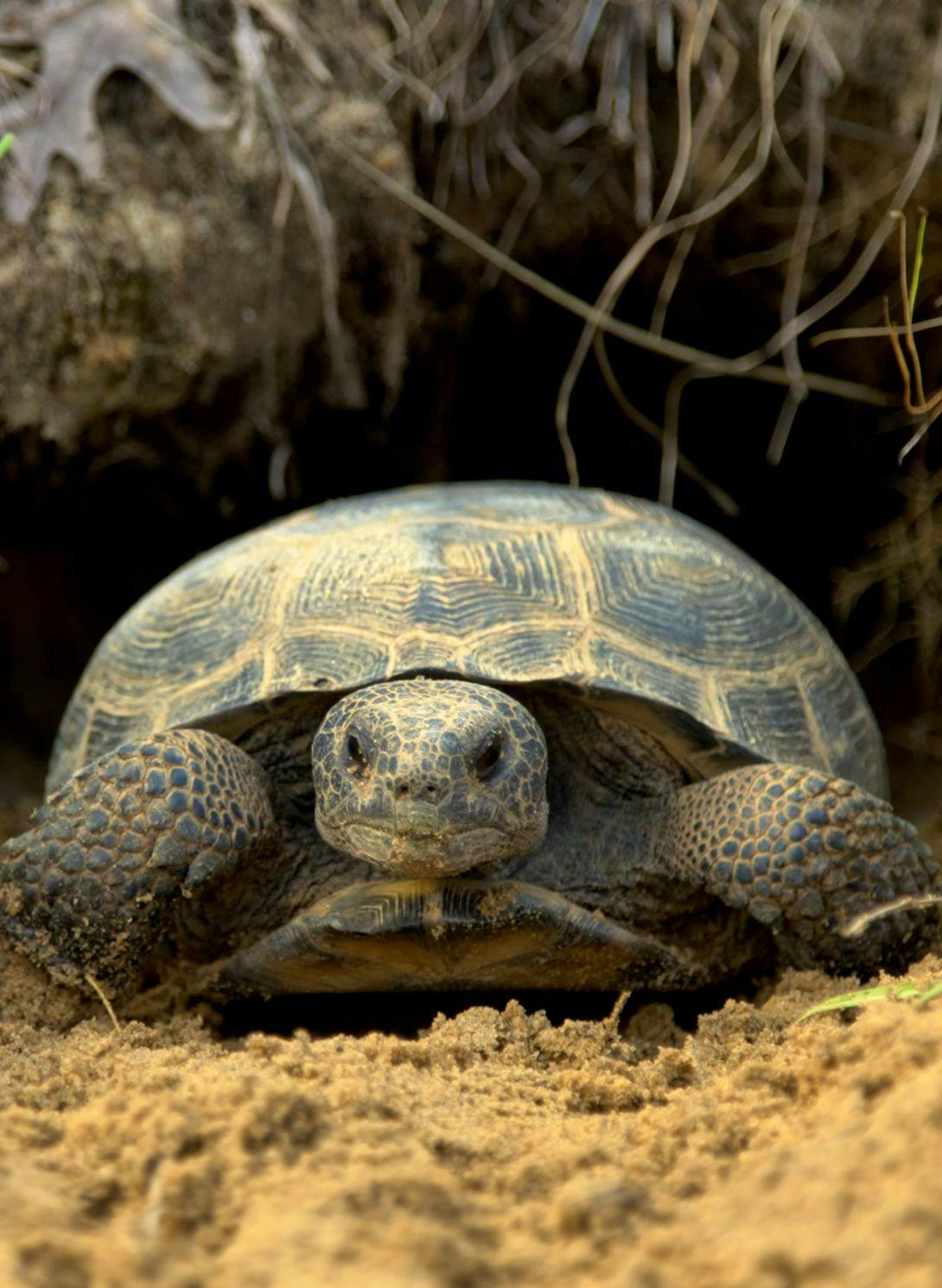
Their scientific name, Gopherus, alludes to their powerful limbs equipped with claws to dig underground burrows. These 3-to-30-foot-long burrows provide shelter for the tortoises and hundreds of other animals.
All tortoises are turtles that belong to the Testudinidae family. Tortoises live entirely on land, unlike other families of turtles, which spend most of their lives in or near water.
What Threats Do Desert and Other Tortoises Face?
Habitat loss is one of the biggest threats to tortoises, especially those belonging to the Gopherus genus. Climate change and human development are the two biggest drivers of this habitat loss.
Scientists estimate that the majority of desert tortoise habitats will become uninhabitable in the next 50 years because of climate change. Climate change will increase ambient air temperatures which results in loss of soil moisture and decreases the abundance of shrubs and wildflowers, which provide shade and food.
Additionally, a large amount of high-quality desert tortoise habitat has been lost to human land uses. Military base expansions, solar energy projects, road construction, livestock grazing and excessive off-highway vehicle recreation are all occurring within desert tortoise critical habitats.
Mojave desert tortoises are listed as threatened under the ESA. The western distinct population segment of gopher tortoise is also listed as threatened, but the eastern distinct population segment is not federally listed at this time. The Sonoran desert tortoise is also not federally listed.
Bolson tortoise
Mojave Desert, Gopher and Bolson tortoises are all critically endangered under the IUCN Red List.
Defenders' Impact
Defenders of Wildlife helped to get Mojave’s desert tortoise listed as a threatened species under the Endangered Species Act in 1990 and critical habitat designated in 1994. We also successfully petitioned the California Fish and Game Commission to uplist the desert tortoise as endangered under the California Endangered Species Act in 2025.
Defenders has challenged many federal, state and local government programs that allow excessive human activity and development in Mojave’s desert tortoise habitats. We continue to oppose excessive and improper livestock grazing, unmanaged off-road vehicle use, military base expansion, renewable energy generation development and electrical transmission installations.
Defenders is working in Florida to protect eastern indigo snakes, which rely on gopher tortoises’ burrows for shelter.
Defenders staff in Florida serve on the Florida Gopher Tortoise Technical Advisory Group, which advises the Florida Fish and Wildlife Commission on conservation policies and permitting guidelines for the species. Defenders staff in California serve on the Desert Tortoise Recovery Implementation Team sponsored by the U.S. Fish and Wildlife Service.
Defenders supports “smart-from-the-start” renewable energy siting, which identifies high-value natural resource lands for avoidance and guides potential surface disturbance projects to low-value, low-conflict areas and degraded agricultural lands. The goal is to avoid or minimize adverse effects to imperiled species.
What You Can Do
Limit off-road vehicle use in sensitive habitats and obey all posted signs.
Do not release captive tortoises into the wild, even if it's their natural habitat, to prevent the spread of diseases.
About
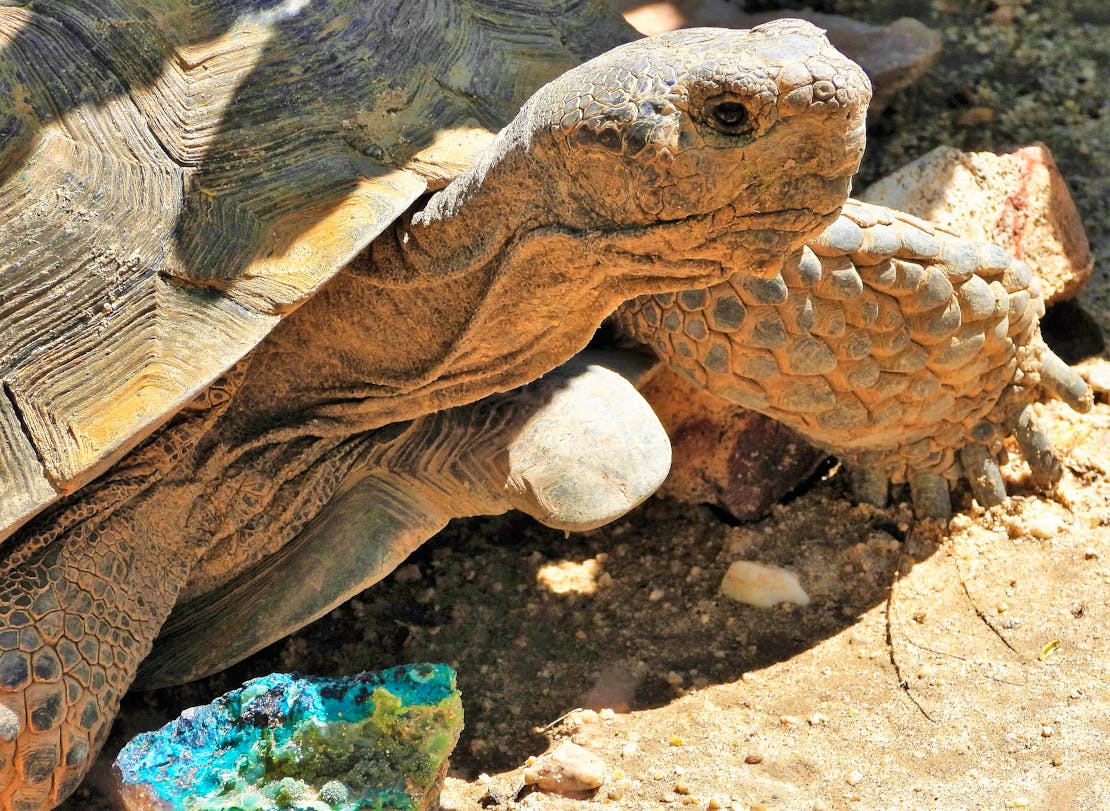
Mojave’s desert tortoises occur throughout the Mojave Desert in California, Nevada, Utah and Arizona.
Most desert tortoises live in habitats typical of valley bottoms that include plant communities like creosote bush scrub. They often prefer streambanks in desert washes where the soil is more suitable for construction of their burrows.
The gopher tortoise is the only tortoise naturally found east of the Mississippi River. They live in dry, sandy uplands, scrub, pine flatwoods and coastal dunes of the southeastern U.S.
Tortoise populations are hard to quantify because they blend into their natural habitat and have declined to very low numbers over the past 30 years.
Tortoises belonging to the genus Gopherus are known to dig burrows. Gopher tortoise burrows can be up to 10 feet deep, 40 feet long and are as wide as the length of the tortoise that made it. They provide shelter to 360 other species including the endangered eastern indigo snake.
Mojave’s desert tortoises can live where ground temperatures may exceed 140 degrees Fahrenheit due to their ability to dig underground burrows three to six feet deep to escape the heat of summer and the cold of winter.
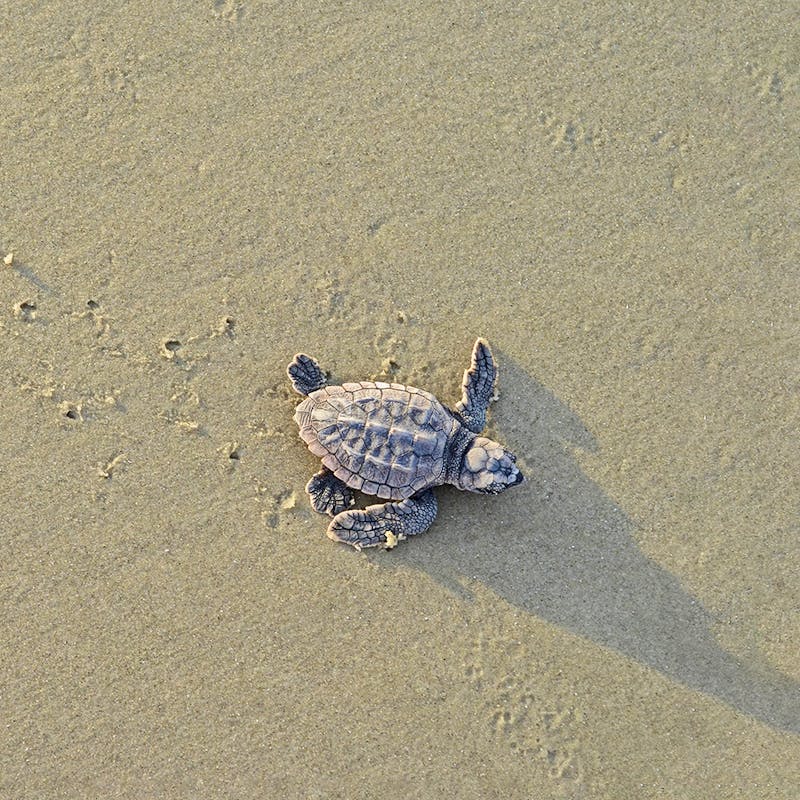
Like most tortoises, desert tortoises are long-lived and slow to reproduce. They reach sexual maturity between 15 and 20 years. Females only lay eggs once or twice in the spring and early summer. Only about 2% of hatchlings survive to adulthood.
Tortoises are herbivores, eating a variety of flowers, grasses, shrubs and cacti. They get water from plants, dew and rainfall.
Featured

California's Desert Tortoise
Rapid, continuing population declines may lead to extinction.
News