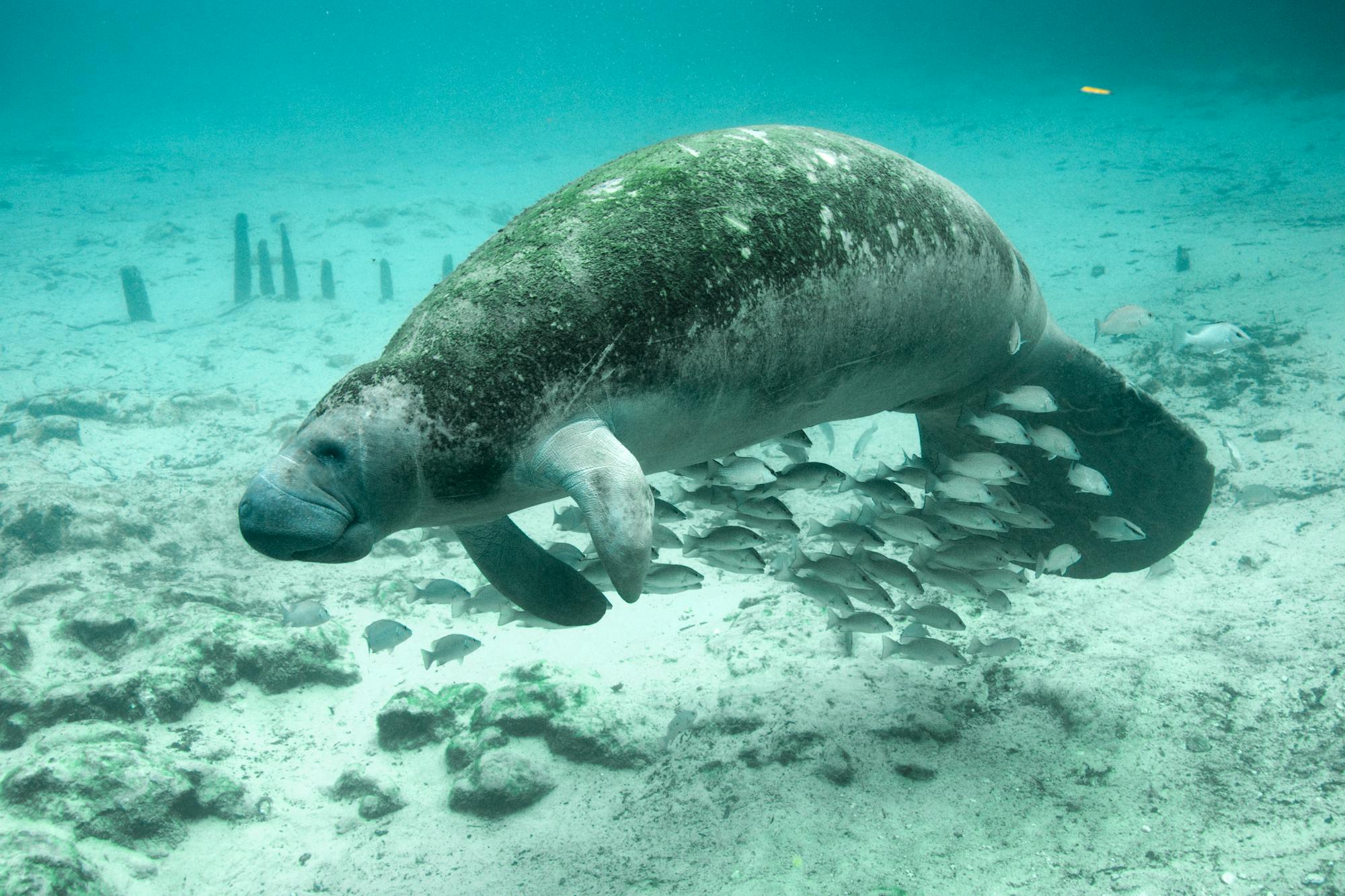
The U.S. Fish & Wildlife Service this week released a proposal to list two subspecies of the West Indian manatee — the Florida manatee and the Antillean manatee — separately under the Endangered Species Act. Under this proposal, the Florida manatee will remain listed as threatened with full protective regulations, and the Antillean will be listed as endangered.
Katherine Sayler, Southeast Representative with Defenders of Wildlife, released the following statement:
“Both species share plenty of challenges to their survival, including vessel strikes, a lack of secure and lasting habitat, and the impacts of climate change. At the same time, Florida manatees are also threatened by the loss of critical warm water sites surrounding power plants, as companies transition to other technologies. The Antillean manatee doesn’t have that problem, but is further challenged by poaching and low genetic diversity. Both species urgently need protections. It’s now up to the incoming administration to recognize what the science shows is necessary.”
FWS is accepting public comments until March 17.
For nearly 80 years, Defenders of Wildlife has worked to protect and restore America’s wildlife at risk of extinction, advancing a vision of a future in which wildlife thrives, sustained by broad public support and a resilient network of healthy lands and waters. With a network of more than 2 million supporters, Defenders is an advocate for innovative solutions to safeguard wildlife for generations to come. To learn more, please visit https://defenders.org/newsroom or follow us on Instagram @defendersofwildlife.
Media Contact

Related


News

Prairie Dog Coalition Urges Colorado to End Recreational Prairie Dog Shooting on Public Lands
