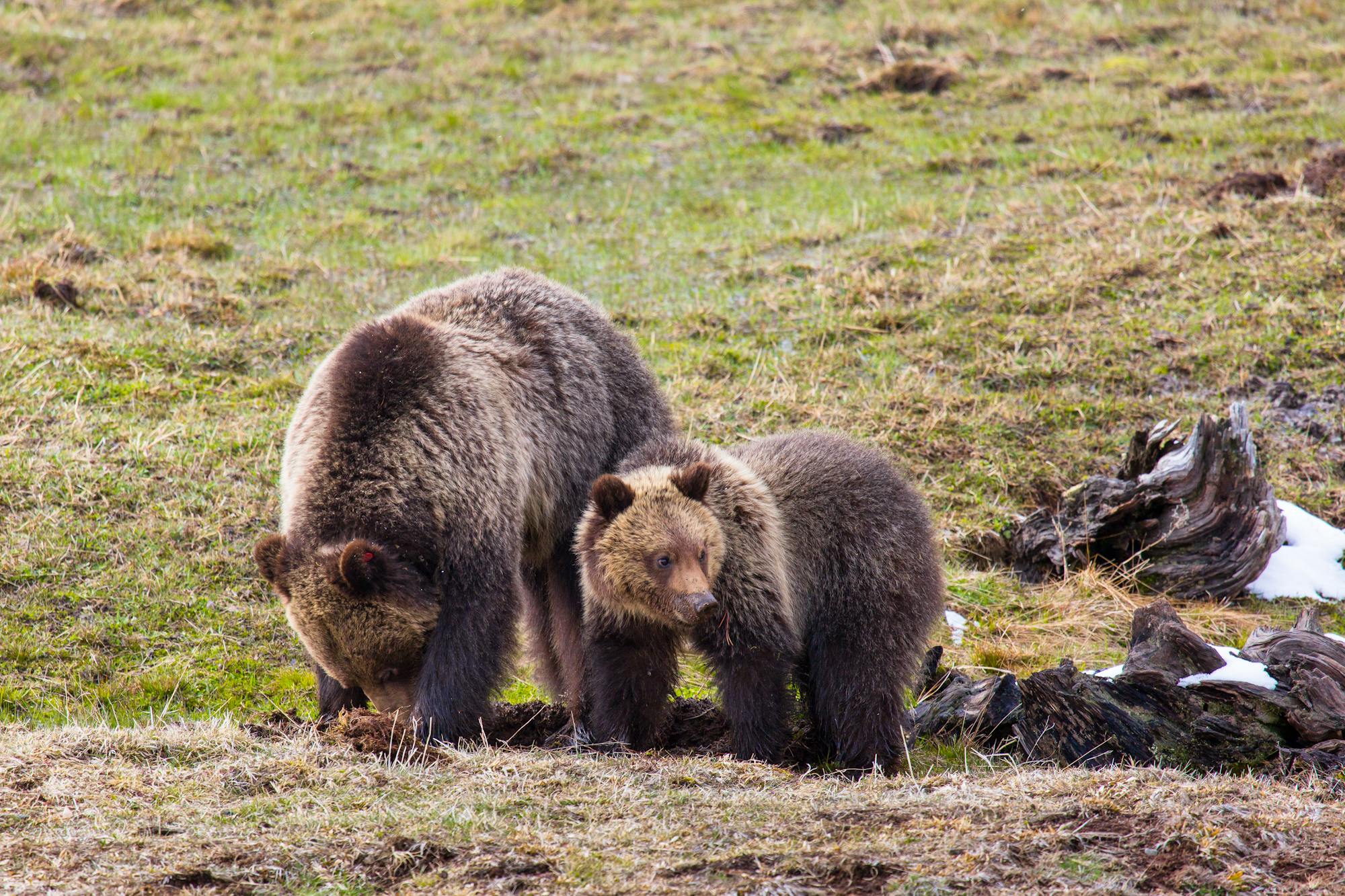
The Montana Fish and Wildlife Commission approved a Fish, Wildlife and Parks (FWP) recommendation to not open a hunting season for Yellowstone grizzly bears in 2018, less than a year after their delisting.
On February 8, Montana Fish, Wildlife and Parks proposed that the Commission keep the grizzly bear hunting season closed this year due to concerns over low allowable mortality and pending litigation on delisting.
Erin Edge, Rockies & Plains representative at Defenders of Wildlife, issued this statement:
“We’re encouraged by Montana’s decision to keep grizzly bear hunting off the table in 2018. This science-based approach highlights Montana’s commitment to ensuring a healthy and resilient population of grizzly bears in the state.
“Yellowstone grizzly bears still face challenges, like high human-caused grizzly bear mortalities and isolation from other grizzly bear populations. Through our comprehensive grizzly bear program, Defenders of Wildlife will continue to work with multiple partners, including FWP, to reduce human-caused mortalities, secure safe habitat and reconnect populations of grizzly bears.
“We believe it is important for humans and grizzlies to coexist, and will continue our efforts to ensure safety for all.”
For nearly 80 years, Defenders of Wildlife has worked to protect and restore America’s wildlife at risk of extinction, advancing a vision of a future in which wildlife thrives, sustained by broad public support and a resilient network of healthy lands and waters. With a network of more than 2 million supporters, Defenders is an advocate for innovative solutions to safeguard wildlife for generations to come. To learn more, please visit https://defenders.org/newsroom or follow us on Instagram @defendersofwildlife.
News

Defenders of Wildlife Welcomes Stefan Ekernas as New Vice President of Species Conservation & Coexistence
