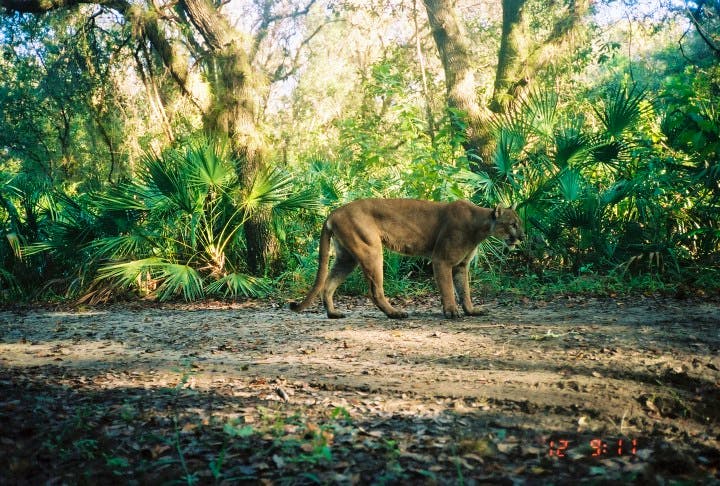
On Monday, Florida’s Fish and Wildlife Conservation Commission shared several videos showing eight endangered panthers and one bobcat exhibiting difficulty walking. Government agencies and scientists are testing for diseases, rodenticides and other possible causes.
Ben Prater, Director of Southeast Program at Defenders of Wildlife, issued the following statement:
“These videos are particularly troubling because Florida panthers have had steady population growth in recent years, but are far from recovered. We are deeply concerned and we’re working with agency partners to understand the cause and how best to respond.”
For nearly 80 years, Defenders of Wildlife has worked to protect and restore America’s wildlife at risk of extinction, advancing a vision of a future in which wildlife thrives, sustained by broad public support and a resilient network of healthy lands and waters. With a network of more than 2 million supporters, Defenders is an advocate for innovative solutions to safeguard wildlife for generations to come. To learn more, please visit https://defenders.org/newsroom or follow us on Instagram @defendersofwildlife.
Media Contact
Related


News

Defenders of Wildlife Welcomes Stefan Ekernas as New Vice President of Species Conservation & Coexistence
