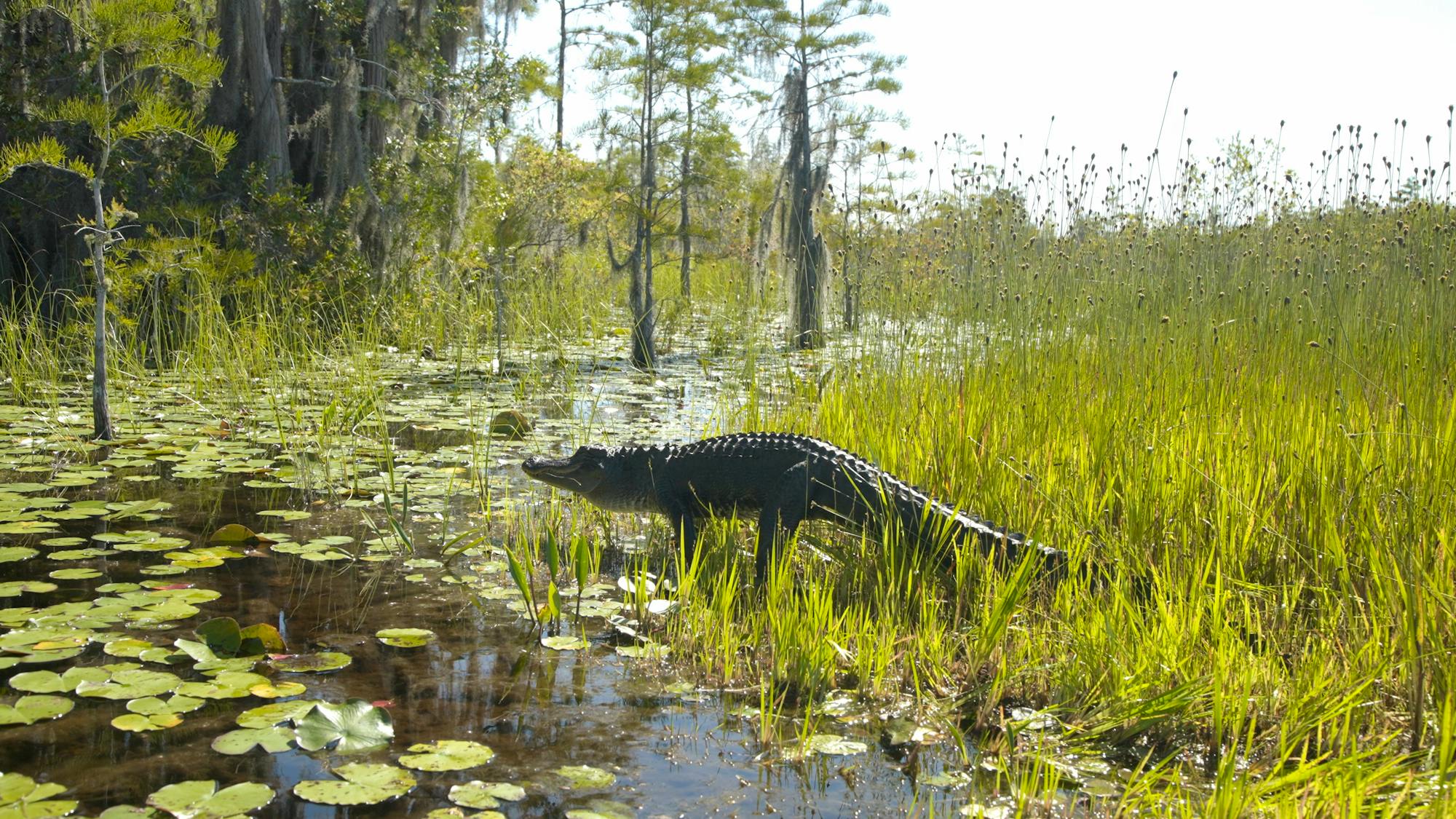
The U.S. Fish and Wildlife Service today announced its final decision to expand the acquisition boundary of the Okefenokee National Wildlife Refuge by roughly 22,000 acres. At over 400,000-acres, the Okefenokee is the largest refuge east of the Mississippi, and home to thousands of species.
“With the threat of mining adjacent to this refuge imminent, the expansion comes not a moment too soon,” said Christian Hunt, Senior Policy Analyst with Defenders of Wildlife. “We applaud the Service for taking the first step toward a solution that forever protects the refuge and the wildlife that depends on it. Mining simply cannot occur next to a world-class treasure like the Okefenokee.”
The Department of the Interior recently announced its decision to nominate the refuge to the UNESCO World Heritage List. If designated, the refuge would join a list of 1,223 cultural and natural sites of universal importance.
For nearly 80 years, Defenders of Wildlife has worked to protect and restore America’s wildlife at risk of extinction, advancing a vision of a future in which wildlife thrives, sustained by broad public support and a resilient network of healthy lands and waters. With a network of more than 2 million supporters, Defenders is an advocate for innovative solutions to safeguard wildlife for generations to come. To learn more, please visit https://defenders.org/newsroom or follow us on Instagram @defendersofwildlife.
Media Contact

Related


News

BLM Prepares Illegal Move to Open Ouray National Wildlife Refuge to Oil & Gas, a Dangerous Precedent for Wildlife
